Visualizzazione post con etichetta Climate Change. Mostra tutti i post

domenica 2 agosto 2015

CLIMA (mutazioni del) E CIVILTA' (livello di)


Abrupt climate change 

may have 

rocked the cradle of civilization 


Ancient Environment, ArchaeoHeritage, Archaeology, Breakingnews, Climate Change, Earth Science, Egypt, Iran, Iraq, Palaeontology 

New research reveals that some of the earliest civilizations in the Middle East and the Fertile Crescent may have been affected by abrupt climate change. These findings show that while socio-economic factors were traditionally considered to shape ancient human societies in this region, the influence of abrupt climate change should not be underestimated. 


The monumental ziggurat at the ancient city of Ur located in the  Thi Qar province, southern Iraq 
[Credit: The National] 


A team of international scientists led by researchers from the University of Miami (UM) Rosenstiel School of Marine and Atmospheric Science found that during the first half of the last interglacial period known as the Holocene epoch, which began about 12,000 years ago and continues today, the Middle East most likely experienced wetter conditions in comparison with the last 6,000 years, when the conditions were drier and dustier. "Evidence for wet early Holocene was previously found in the Eastern Mediterranean Sea region, North and East African lakes and cave deposits from Southwest Asia, and attributed to higher solar insolation during this period," said Ali Pourmand, assistant professor of marine geosciences at the UM Rosenstiel School, who supervised the project. "Our study, however, is the first of its kind from the interior of West Asia and unique in its resolution and multi-proxy approach." 


The Fertile Crescent 
[Credit: Encyclopædia Britannica] 


The Fertile Crescent, a region in west Asia that extends from Iran and the Arabian Peninsula to the eastern Mediterranean Sea and northern Egypt is one of the most climatically dynamic regions in the world and is widely considered the birthplace of early human civilizations. "The high-resolution nature of this record afforded us the rare opportunity to examine the influence of abrupt climate change on early human societies. We see that transitions in several major civilizations across this region, as evidenced by the available historical and archaeological records, coincided with episodes of high atmospheric dust; higher fluxes of dust are attributed to drier conditions across the region over the last 5,000 years," said Arash Sharifi, Ph.D. candidate at the department of marine geosciences and the lead author of the study. Climate variability during the past 5000 years as told by the concentration of titanium (Ti) in sediment core from Neor Lake, NW Iran. The vertical orange bands denote periods of dry and dusty condition, which correlate with historical records of drought and famine in Iranian Plateau, Mesopotamia and Eastern Mediterranean (brown and black horizontal bars respectively). 


Transition between ruling dynasties (gray arrows) in Iran and North Mesopotamia coincides with the episodes of dry and dusty condition in the region (peaks in Ti intensities) 
[Credit: Arash Sharifi]


The researchers investigated climate variability and changes in paleoenvironmental conditions during the last 13,000 years based on a high-resolution (sub-decadal to centennial) peat record from Neor Lake in Northwest Iran. Abrupt climate changes occur in the span of years to decades. 
The findings appear in the Quaternary Science Reviews.


Source: University of Miami Rosenstiel School of Marine & Atmospheric Science [July 27, 2015]

domenica 19 aprile 2015

Il Clima e l' Uomo.

Esiste una correlazione diretta tra la geografia e l'Uomo, si sa. E questa correlazione - che vale per tutte le creature viventi - è mediata dal Clima, una variabile che ha sempre influenzato gli spostamenti, la quantità e la qualità di vita di tutti i viventi.


Earliest humans migrated to Europe 

1.4 million years ago 

thanks to rising temperatures 


 A warming climate may have enabled the earliest humans to venture into Western Europe 1.4 million years ago, a new study suggests. 

The Acheulean tool technology period - between 700,000 an 300,000 years ago - followed  the more primitive Oldowan period. 


Tools at the time included large stone hand-axes  made from flint and quartzite, used to scavenge from carcasses  
[Credit: Nico Tondini/Robert Harding World Imagery/Corbis]


 Researchers believe that the spread of our distant human ancestors, the hominins, had been halted by colder and drier temperatures. 
But as conditions warmed, they were able to branch out from Africa into Spain, and ultimately spread across Europe. The research was led by Dr Jordi Agusti from the Catalan Institution for Research and Advanced Studies (ICREA). 

Published in the Journal of Human Evolution, the paper suggests climate change affected the amount of resources available.

The theory is based on analysis of the Barranco León site in the Guadix-Baza Basin in southeast Spain. 
Here, simple Oldowan tools have previously been found, linked to the earliest known hominins 1.4 million years ago.
 But they were not able to migrate to this region until conditions improved.

 The researchers said that the early Pleistocene era (the era lasted from 2.59 million to 11,700 years ago) was characterised by colder and drier weather. 
This ‘possibly impeded the settlement of this region by the early hominin population from the southern Caucasus,’ the researchers wrote. 

But shortly afterwards, ‘when the climatic conditions were again favourable, a hominin presence is suddenly evidenced.’ 
It should be noted that the warming climate referred to here is on a vastly longer time scale than modern climate change. 
At the time 1.4 million years ago, though, temperatures warmed above 13°C (55°F) and humidity increased, allowing hominins to inhabit the region - scavenging carcasses in the region with the help of tools. 
‘The data reported here clearly support the idea that the early hominin occupation of Europe was strongly constrained by climatic and environmental conditions, rather than by physiography or cultural factors,’ the researchers wrote. 

Author: Jonathan O'Callaghan | Source: Daily Mail Online [April 14, 2015]

sabato 14 febbraio 2015

GREEN SAHARA

Rapid end of the Green Sahara 8000 years ago 

9,000 years ago most of the Sahara was not the ultra-arid desert as we know it today. Due to higher precipitation it was covered by large lakes and savannah that were populated by herds of wild game. Scientists from the GEOMAR Helmholtz Centre for Ocean Research Kiel and the Royal Netherlands Institute for Sea Research (NIOZ) now have discovered that vegetation at the end of the Green Sahara disappeared much faster than previously assumed. This probably forced the Neolithic populations to start farming. The study has been published in the international open-access journal PLOS ONE. 


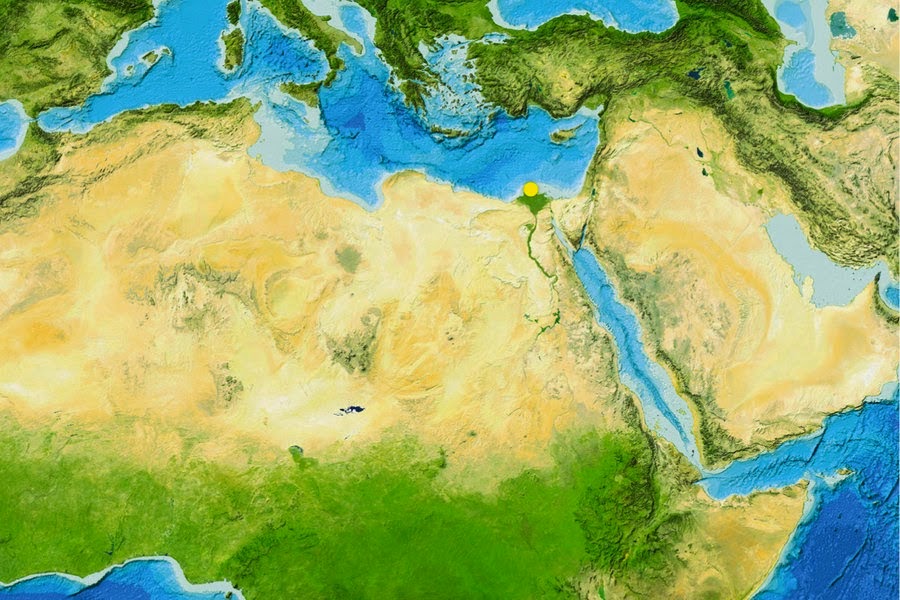
The Sahara is one of the most arid regions in the world. 9000 years ago, it was a green  savannah. Details on the transition could now be reconstructed from samples obtained  off the the mouth of the river Nile in the Mediterranean (yellow dot) [Credit: GEBCO world map 2014] 


Reconstructing the climate of the past is an important tool for scientists to better understand and predict future climate changes. This also applies to the relationships between human activities and environmental changes. In that respect, the Sahara Desert and the Nile valley are key areas since they underwent drastic environmental modification during the course of the last 10,000 years. In the same period, called Holocene by scientists, they were as well the scene of crucial steps of human evolution. At the beginning of the Holocene precipitation in northern Africa was much higher than today. The Sahara was a green savannah where large herds of wild game lived. But in the following millennia the region became one of the most arid areas on Earth. Now researchers from the GEOMAR Helmholtz Centre for Ocean Research Kiel and the Royal Netherlands Institute for Sea Research (NIOZ) have discovered that the vegetation in the Sahara changed much faster than previously assumed. “Though the changes in temperatures and precipitation needed millennia, the vegetation changed dramatically in the course of centuries or even decades”, says Dr. Cecile Blanchet. She is lead author of the study. The initial forcing of the climatic changes during the Holocene was a southward migration of the African monsoon and its associated rain belt. “But there are large regional discrepancies in timing and intensity of the changes, the underlying mechanisms of which remain equivocal”, explains Professor Martin Frank, palaeo-oceanographer at GEOMAR and co-author of the study. During the same epoch, Neolithic human populations also underwent important evolution, such as the initiation of food production and the sedentariness of previously mobile hunter-gatherer populations. 


Approximately 8,000 year-old rock carvings of two giraffes from Dabous, Niger,  documenting that the Sahara was a green fertile Savannah at that time [Credit: Albert Backer/WikiCommons] 


“Providing a more precise timeframe for the wet-dry transition at the end of the African Humid Period is therefore crucial to understand early human-environment relationships”, adds Professor Stefan Schouten from NIOZ, also co-author. For the study Blanchet, Frank and Schouten analyzed a marine sediment core collected off the mouth of the Nile River in 700 metres depth by the German research vessel POSEIDON. Using an innovative combination of geochemical methods they were able to detect traces of the vegetation and eroded soil which had been transported by the river down to the Mediterranean. This allowed them to precisely reconstruct the changes in vegetation, erosion and river runoff in the Nile watershed and their driving mechanisms during the past 9500 years. This high-resolution reconstruction shows that a rapid degradation of the vegetation occurred about 8000 years ago while the overall river runoff only decreased gradually. These asynchronous changes highlight the role of threshold mechanisms in controlling the timing of environmental changes. Furthermore, the rapid shifts in vegetation and sediment source occurred earlier than in other regional records and may have exerted a significant pressure on the Neolithic population in northern Africa. “Maybe these fast changes forced people to use domesticated cattle as a sustainable food resource instead of hunting and gathering”, says Dr. Blanchet. Finally the aridification may have forced most of the population to move to the fertile Nile valley, which ultimately gave rise to the development of the high cultures of the Egyptian Pharaonic Kingdoms. "Of course, further research is needed to confirm this relationship between climate and human evolution. But with our results, we have strong evidence that even a slow climate change can cause rapid and dramatic changes in the environment, which would surely impact human societies" says Dr. Blanchet. 

Source: GEOMAR Helmholtz Centre for ocean research [February 10, 2015] 

giovedì 14 agosto 2014

Influenza della siccità sulle Antiche Civiltà


Ecco un interessante studio dell'Università tedesca di Tubinga  (pubblicato su PNAS), che spiega come l'influenza del Clima sull'Agricoltura abbia rappresentato un fattore chiave 
sulla nascita (e sulla caduta) delle società dell'antico Medio Oriente.

Materiale: 1037 prelievi da 33 aree geografiche di semi di Orzo (Hordeum Vulgaris) di data variabile da 12.000 a 2500 anni fa.

Metodi: studio degli isotopi stabili del Carbonio contenuto nei semi prelevati: quando l'erba dell'orzo riceve acqua in quantità insufficiente durante la crescita, la proporzione di isotopi pesanti di carbonio che fissa è più elevata del normale. 12C e 13C sono stabili per migliaia di anni e possono essere convenientemente misurati e paragonati con le colture moderne della stessa regione.

Scopi: La dimostrazione, solamente iniziata, di come molte aree del Medio Oriente furono pesantemente influenzate, nei rimedi tecnici necessari e che furono ideati dalle popolazioni locali per i propri stanziamenti (irrigazione, canalizzazione) e nelle scelte che presero (in estremi casi, l'abbandono) a seconda della fluttuazione del clima.


Climate change and drought in ancient times 


The influence of climate on agriculture is believed to be a key factor in the rise and fall of societies in the Ancient Near East. 
Dr. Simone Riehl of Tübingen University’s Institute for Archaeological Science and the Senckenberg Center for Human Evolution and Palaeoenvironment has headed an investigation into archaeological finds of grain in order to find out what influence climate had on agriculture in early farming societies. 
Her findings are published in this week’s PNAS – Proceedings of the National Academy of Sciences.


 Archaeological researchers are using stable carbon isotope data from archaeobotanical  barley grains to measure drought stress signals to study climate-related changes  in agricultural production 
[Credit: Simone Riehl, University of Tübingen] 


She and her team analyzed grains of barley up to 12,000 years old from 33 locations across the Fertile Crescent to ascertain if they had had enough water while growing and ripening. 
Riehl found that periods of drought had had noticeable and widely differing effects on agriculture and societies in the Ancient Near East, with settlements finding a variety of ways to deal with the problem.

The 1,037 ancient samples were between 12,000 and 2,500 years old. 

They were compared with modern samples from 13 locations in the former Fertile Crescent. Dr. Riehl and her team measured the grains’ content of two stable carbon isotopes. 
When barley grass gets insufficient water while growing, the proportion of heavier carbon isotopes deposited in its cells will be higher than normal. 
The two isotopes 12C und 13C remain stable for thousands of years and can be measured precisely – giving Simone Riehl and her colleagues reliable information on the availability of water while the plants were growing. 
They found that many settlements were affected by drought linked to major climate fluctuations. 
“Geographic factors and technologies introduced by humans played a big role and influenced societies’ options for development as well as their particular ways of dealing with drought,” says Riehl. 
Her findings indicate that harvests in coastal regions of the northern Levant were little affected by drought; but further inland, drought lead to the need for irrigation or, in extreme cases, abandonment of the settlement. 
The findings give archaeologists clues as to how early agricultural societies dealt with climate fluctuations and differing local environments. 
“They can also help evaluate current conditions in regions with a high risk of crop failures,” Riehl adds.
 The study is part of a German Research Foundation-backed project looking into the conditions under which Ancient Near Eastern societies rose and fell. 

Source: Universitaet Tübingen [August 12, 2014] 

Read more at: http://archaeologynewsnetwork.blogspot.it/2014/08/climate-change-and-drought-in-ancient.html?utm_source=feedburner&utm_medium=feed&utm_campaign=Feed:+TheArchaeologyNewsNetwork+(The+Archaeology+News+Network)#.U-xKiCh7DfU
Follow us: @ArchaeoNewsNet on Twitter | groups/thearchaeologynewsnetwork/ on Facebook

mercoledì 30 luglio 2014

Non è il Pianeta delle scimmie.


Great apes face extinction: conservationist Jane Goodall


   The world's great apes face extinction within decades, renowned chimpanzee expert Jane Goodall warned Tuesday in a call to arms to ensure man's closest relatives are not wiped out. 


A chimpanzee at the zoo in Abidjan, Ivory Coast, 2014  [Credit: AFP/Sia Kambou]


 "If we don't take action the great apes will disappear, because of both habitat destruction as well as trafficking," Goodall told AFP in an interview in Nairobi. 
In the past half century, chimpanzee numbers have slumped from two million to just 300,000, spread over 21 countries, said Goodall, a British scientist who spent more than 
five decades studying chimpanzees in Tanzania's Gombe National Park.

 "If we don't change something, they certainly will disappear, or be left in tiny pockets where they will struggle from in-breeding," said 80-year-old Goodall, the first scientist to observe that apes as well as humans use tools. 

Experts predict that at the current rate, human development will have impacted 90 percent of the apes' habitat in Africa and 99 percent in Asia by 2030, according to a UN-backed report last month. 
Infrastructure development and extraction of natural resources -- including timber, minerals, oil and gas -- have devastated the prime habitat of apes and pushed chimpanzees, gorillas, bonobos, orangutans and gibbons closer to extinction. 

'We're schizophrenic' For Goodall, the destruction is part of mankind's wider attack on nature. "If we don't do anything to protect the environment, which we've already partially destroyed, I wouldn't want to be a child being born in 50 years time," Goodall added. "We're schizophrenic: we've got this amazing intelligence, but we seem to have lost the power of working in harmony with nature." 


British primatologist and anthropologist Jane Goodall gestures as she gives a talk on  her new book "Seeds of Hope" in Nairobi, Kenya in July 2014  
[Credit: AFP/Tony Karumba] 


As well as a tragic loss, Goodall said the death of man's closet relatives would act as a stark warning sign of climate change and global warming. "If we lose them (apes), it is probably because we have also lost the forests, and that would have a totally devastating impact on climate change," she said. 
"Climate change is so evident everywhere. There are leaders who say they don't believe in climate change, but I can't believe they really believe that, maybe they are just stupid." All species of apes are listed as endangered by the International Union for the Conservation of Nature (IUCN), some critically so. 
'Your life makes a difference' 
"People are losing the connection to the natural world," said Goodall. "You'd think that the most intellectual creature on the planet would know better than to destroy its only home, but we are destroying the planet very, very quickly." 


A Bornean orangutan (Pongo pygmaeus) in a close-up portrait in the rainforest  of Borneo.Orang Utans are critically endangered, mostly because their  habitat has decreased rapidly due to logging 
[Credit: Getty] 


But Goodall, who has set up volunteer conservation groups across the continent, urges people not to despair but to take action. "Climate change threatens every little part of the planet, and we can't stop that, but if we get together we can help to slow the effects," she said. 
Goodall recounted how in war-ravaged eastern Democratic Republic of Congo, children inspired by her conservation group negotiated with a local militia force, persuading the intially puzzled commander to give them access to replant trees on a hillside. 
"Within 30 minutes, all four soldiers with them had laid aside their guns and were helping the children to plant the trees," she said. "It is symbolic of what can happen if we can work together." 

"My last message to everybody, really, is to understand that your life matters, your life makes a difference," she said. "So many people give up and they feel hopeless.. and so do nothing. But if you take action locally, you can do something." 

Source: AFP [July 29, 2014]

Read more at: http://archaeologynewsnetwork.blogspot.it/2014/07/great-apes-face-extinction.html?utm_source=feedburner&utm_medium=feed&utm_campaign=Feed:+TheArchaeologyNewsNetwork+(The+Archaeology+News+Network)#.U9kRYih7DfW
Follow us: @ArchaeoNewsNet on Twitter | groups/thearchaeologynewsnetwork/ on Facebook

venerdì 9 maggio 2014

Tree ring Divergence

Arctic study sheds light on tree-ring divergence

 problem 


  Changes in tree-ring density in the Arctic may be evidence of changes in light intensity during the trees' growth, according to a new study by San Francisco State University researcher Alexander Stine. 


Changes in tree-ring density in the Arctic may be evidence of changes in light intensity  during the trees' growth, according to a new study by San Francisco State University  researcher Alexander Stine
 [Credit: Victor Zastolfskiy/Fotolia]


 The finding has direct implications for the tree-ring "divergence problem," a phenomenon that has received considerable media attention but has been widely misinterpreted, said Stine, an assistant professor of Earth & climate sciences. 

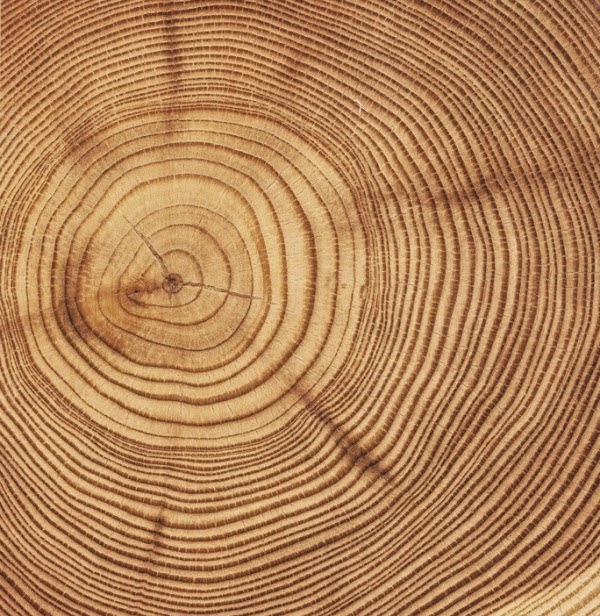
Tree rings consist of a low density ring, which forms early in the growing season, and a high density ring that forms late in the growing season. 

In colder parts of the world, the dense latewood rings tend to be denser during warm years. Temperature records inferred from Arctic tree rings do a good job of tracking temperature up until the 1960s, but subsequent Arctic tree-ring densities did not keep pace with increases in temperature, a discrepancy that is called the divergence problem. 

Climate scientists have been aware of the divergence problem for some time, and it was mentioned in the emails from the Climatic Research Unit at the University of East Anglia, where it became the focus of attention during the 2009 "Climategate" controversy. 

The divergence is not a problem for understanding modern climate change in the Arctic, Stine explained, "because we have thermometers and those thermometers tell us it's warming. 
But it's a problem because if we want to use these tree rings as a proxy for temperatures of the past, we need to make sure that we understand what's happening now." 
Stine sees the new findings as the "bright side" of the divergence problem, one which he hopes will lead to a more informed discussion about climate change. 
"We could learn more about past variations in light intensity at the Earth's surface, and we may be able to deepen our understanding of both trees and climate." 


Each circle represents one of the tree-ring chronologies used in this study. Chronologies  are distinguished according to being from sectors that are cloudy and cool  (dark green), cloudy and warm (light green), clear and cool (dark brown), and clear and  warm (light brown) 
[Credit:  A. R. Stine & P. Huybers, Nature Communications] 


With his colleague Peter Huybers at Harvard University, Stine set out to understand why tree-ring density was declining in the Arctic. One possible explanation, the two thought, might be changes in light intensity that affected the trees' ability to grow. 

Starting in the 1960s, the amount of sunlight reaching the Earth's surface has declined. Scientists debate the cause of this "global dimming," with many scientists attributing it to pollution particles injected into the atmosphere by human activity that deflect incoming sunlight. 
The researchers tested whether global dimming might be responsible for the decline in tree-ring density in the Arctic. This idea had been proposed in the past, but scientists had not been able to test the hypothesis. 
"It's very hard to distinguish a record that's controlled by temperature from one that's controlled by light, because light and temperature tend to vary together. 
Sunnier days are usually warmer," Stine added. To get around this challenge, the researchers took advantage of the fact that there are regional variations in cloud cover and light availability throughout the Arctic, allowing them to compare trees that grew in the brightest and darkest areas but in comparable temperature ranges. They found that divergence was largest in the darkest parts of the Arctic, where changes in light should have the largest effect. 
The researchers used changes in tree-ring density following volcanic eruptions to confirm the findings. 
Major volcanic events such as the 1991 eruption of Mount Pinatubo in the Philippines also have spewed tons of light-scattering sulfur dioxide particles into the atmosphere, decreasing the amount of sunlight reaching the surface. 
Their analysis, published in Nature Communications, for seven different tree species suggests variations in light intensity caused by volcanic eruptions and global dimming both affect tree-ring density, and this impact is greatest in the darkest Arctic regions.
In the brightest areas, the divergence problem essentially disappears, and tree-ring density is most closely linked to temperature instead. 
Stine said the findings could have implications for geoengineering proposals that would pump more aerosol particles into the atmosphere as a way to block sunlight and potentially cool a warming planet. The tree-ring study suggests that Arctic trees might not grow as much -- and thus not soak up as much atmosphere-polluting carbon -- under such a plan. 

Source: San Francisco State University [May 07, 2014]

sabato 3 maggio 2014

Dendro il Clima

Tree rings reveal nightmare droughts in western USA 


If you think the 1930s drought that caused The Dust Bowl was rough, new research looking at tree rings in the Rocky Mountains has news for you: Things can get much worse in the West. 


Scientists extended Utah's climate record back to 1429 using tree rings. They  found Utah's climate has seen extreme droughts, including one that lasted 16 years  [Credit: Brigham Young University] 


In fact the worst drought of this century barely makes the top 10 of a study that extended Utah's climate record back to the year 1429. With sandpaper and microscopes, Brigham Young University professor Matthew Bekker analyzed rings from drought-sensitive tree species. He found several types of scenarios that could make life uncomfortable in what is now the nation's third-fastest-growing state: Long droughts: The year 1703 kicked off 16 years in a row with below average stream flow. Intense droughts: The Weber River flowed at just 13 percent of normal in 1580 and dropped below 20 percent in three other periods. Consecutive worst-case scenarios: The most severe drought in the record began in 1492, and four of the five worst droughts all happened during Christopher Columbus' lifetime. 


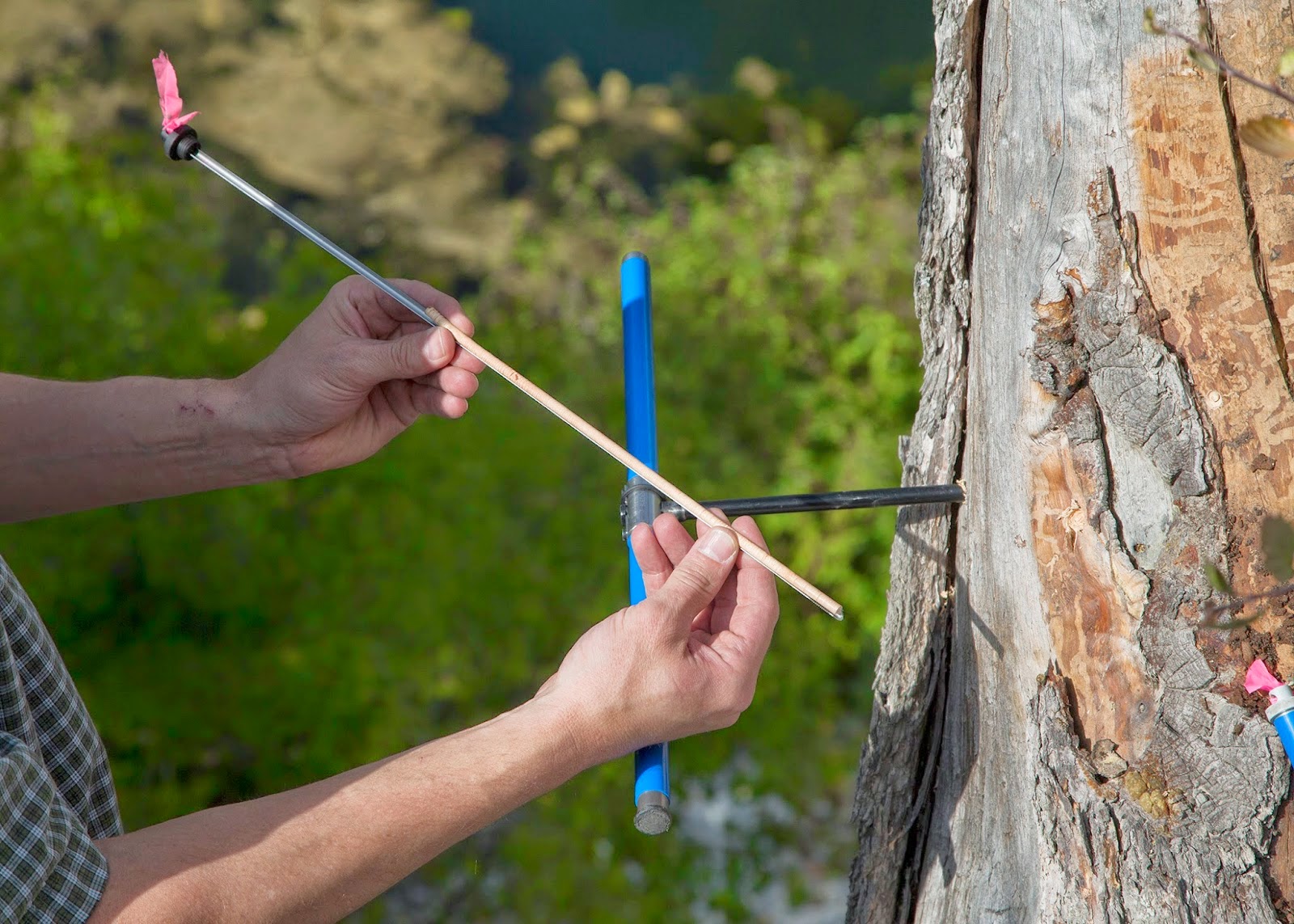
Professor Bekker extracts a core sample from a dead tree in Provo canyon  [Credit: Brigham Young University] 


"We're conservatively estimating the severity of these droughts that hit before the modern record, and we still see some that are kind of scary if they were to happen again," said Bekker, a geography professor at BYU. "We would really have to change the way we do things here." Modern climate and stream flow records only go back about 100 years in this part of the country, so scientists like Bekker turn to Mother Nature's own record-keeping to see the bigger picture. For this study, the BYU geographer took sample cores from Douglas fir and pinyon pine trees. The thickness of annual growth rings for these species is especially sensitive to water supply. 
Using samples from both living and dead trees in the Weber River basin, the researchers built a tree-ring chronology that extends back 585 years into Utah's natural history. Modern stream flow measurements helped them calibrate the correlation between ring thickness and drought severity. As Bekker and his co-authors report in the Journal of the American Water Resources Association, the west's climate usually fluctuates far more than 
it did in the 1900s.


 The five previous centuries each saw more years of extremely dry and extremely wet climate conditions. "We're trying to work with water managers to show the different flavors of droughts this region has had," said Bekker. "These are scenarios you need to build into your models to know how to plan for the future." 
Bekker collaborated with researchers from the U.S. Forest Service, Columbia University and Utah State University. 
The team is currently working on a climate reconstruction based on tree rings that date back more than 1,000 years. 


Source: Brigham Young University [May 01, 2014]

Read more at: http://archaeologynewsnetwork.blogspot.it/2014/05/tree-rings-reveal-nightmare-droughts-in.html?utm_source=feedburner&utm_medium=email&utm_campaign=Feed:+TheArchaeologyNewsNetwork+(The+Archaeology+News+Network)#.U2SW-ih7DfU
Follow us: @ArchaeoNewsNet on Twitter | groups/thearchaeologynewsnetwork/ on Facebook

martedì 8 aprile 2014

Lo "Strato Detergente"


Previously 

unknown 

atmospheric

 phenomenon 

discovered 


An international team of researchers headed by Potsdam scientist Dr. Markus Rex from the Alfred Wegener Institute has discovered a previously unknown atmospheric phenomenon over the South Seas. Over the tropical West Pacific there is a natural, invisible hole extending over several thousand kilometres in a layer that prevents transport of most of the natural and humanmade substances into the stratosphere by virtue of its chemical composition. Like in a giant elevator, many chemical compounds emitted at the ground pass thus unfiltered through this so-called "detergent layer" of the atmosphere. Scientists call it the "OH shield." 
The newly discovered phenomenon over the South Seas boosts ozone depletion in the polar regions and could have a significant influence on the future climate of Earth -- also because of rising air pollution in South East Asia. 


In tropical thunderstorms over the West Pacific air masses and the chemical substances they contain are quickly hurled upward to the edge of the stratosphere. If there are sufficient OH molecules in the atmosphere, the air is extensively cleaned by chemical transformation processes. Where OH concentrations are low, such as those now found in large sections of the tropical West Pacific, the cleaning capacity of the atmosphere is reduced 
[Credit: © Markus Rex, Alfred Wegener Institute Helmholtz Centre for Polar and Marine Research]


 At first Dr. Markus Rex suspected a series of flawed measurements. In October 2009 the atmospheric physicist from the Alfred Wegener Institute, Helmholtz Centre for Polar and Marine Research (AWI) was on board the German research vessel "Sonne" to measure trace substances in the atmosphere in the tropical West Pacific. 
Tried and tested a thousand times over, the ozone probes he sent up into the tropical sky with a research balloon every 400 kilometres reported -- nothing. Or to be more accurate: almost nothing. The ozone concentrations in his measurements remained nearly constantly below the detection limit of approx. 10 ppbv in the entire vertical range from the surface of Earth to an altitude of around 15 kilometres. 
Normally ozone concentrations in this part of the atmosphere are three to ten times higher. 
(One part of ozone per billion by volume (ppbv) means there is one ozone molecule for every billion air molecules.) 
Although low values at an altitude of around 15 kilometres were known from earlier measurements in the peripheral area of the tropical West Pacific, the complete absence of ozone at all heights was surprising. However, after a short period of doubt and various tests of the instruments it dawned on the worldwide recognized ozone specialist that he might be onto a phenomenon yet unknown to science. 
A few research years later and after the involvement of other colleagues came confirmation: Markus Rex and his team on board the "Sonne" had tracked down a giant natural hole over the tropical South Seas, situated in a special layer of the lower atmosphere known as the "OH shield." 
The research results on the newly discovered OH minimum will be published soon in the journal Atmospheric Chemistry and Physics, with the Institute of Environmental Physics of the University of Bremen and other international research institutions as partners. 


Nearly all chemical substances produced by people, animals, plants, algae or microorganisms on the ground or in the oceans react quickly with OH and break down in this process. During this chemical self-cleaning process substances that are not easily water-soluble are transformed into water-soluble products and then washed out by precipitation. Through this mechanism OH molecules remove most substances from the atmosphere. The OH molecule is therefore also called the detergent of the atmosphere. Only extremely long-lived chemical compounds, such as methane or CFCs, also known as "ozone killers", can rise through the OH shield into the stratosphere 
[Credit: Markus Rex, Alfred Wegener Institute] 


"Even though the sky appears to be an extensively uniform space for most people, it is composed of chemically and physically very different layers," Markus Rex explains the complex makeup of the atmosphere. 
The air layers near the ground contain hundreds or even thousands of chemical compounds. This is why winter and spring, mountains and sea, city and forests all have a distinct smell. The great majority of these substances are broken down into water-soluble compounds in the lower kilometres of the atmosphere and are subsequently washed out by rain. 
Since these processes require the presence of a certain chemical substance, the so called hydroxyl (=OH) radical, this part of the atmosphere is called the "OH shield." 

It acts like a huge atmospheric washing machine in which OH is the detergent. 
The OH shield is part of the troposphere, as the lower part of the atmosphere is called. "Only a few, extremely long-lived compounds manage to make their way through the OH shield," says Rex, "then they also get through the tropopause and enter the stratosphere." Tropopause refers to the boundary layer between the troposphere and the next atmospheric layer above it, the stratosphere. 
Particularly substances that enter the stratosphere unfold a global impact. The reason for this is that once they have reached the stratosphere, their degradation products remain up there for many years and spread over the entire globe. 


Location and extent of low ozone concentrations and thus of the OH hole over the West Pacific. Fig. (a) shows the region of origin of the air in the stratosphere, Fig. (b) ozone sonde measurements (dots) and satellite measurements (coloured map) of the total amount of ozone in the tropospheric column of air and Fig. (c) the total amount of OH in the tropospheric column of air calculated with a model 
[Credit: Markus Rex, Alfred Wegener Institute] 


Extremely long-lived chemical compounds find their way to the stratosphere, even where the OH shield is intact. These include methane, nitrous oxide ("laughing gas"), halons, methyl bromide and chlorofluorocarbons (CFCs), which are notorious as "ozone killers" because they play a major role in ozone depletion in the polar regions. After many years of research scientists now understand the complicated process of stratospheric ozone depletion very well. "Nevertheless measured ozone depletion rates were often quite a bit larger than theoretically calculated in our models," Markus Rex points out a long unsolved problem of atmospheric research. "Through the discovery of the OH hole over the tropical West Pacific we have now presumably made a contribution to solving this puzzle." And at the same time discovered a phenomenon that raises a number of new questions for climate policy. Researchers are now tackling these questions in a new research project funded by the EU with around 9 million euros, i.e. "StratoClim," which is coordinated by the Alfred Wegener Institute. Within this project a new monitoring station will be established in the tropical Westpacific, together with the Institute of Environmental Physics at the University of Bremen. 
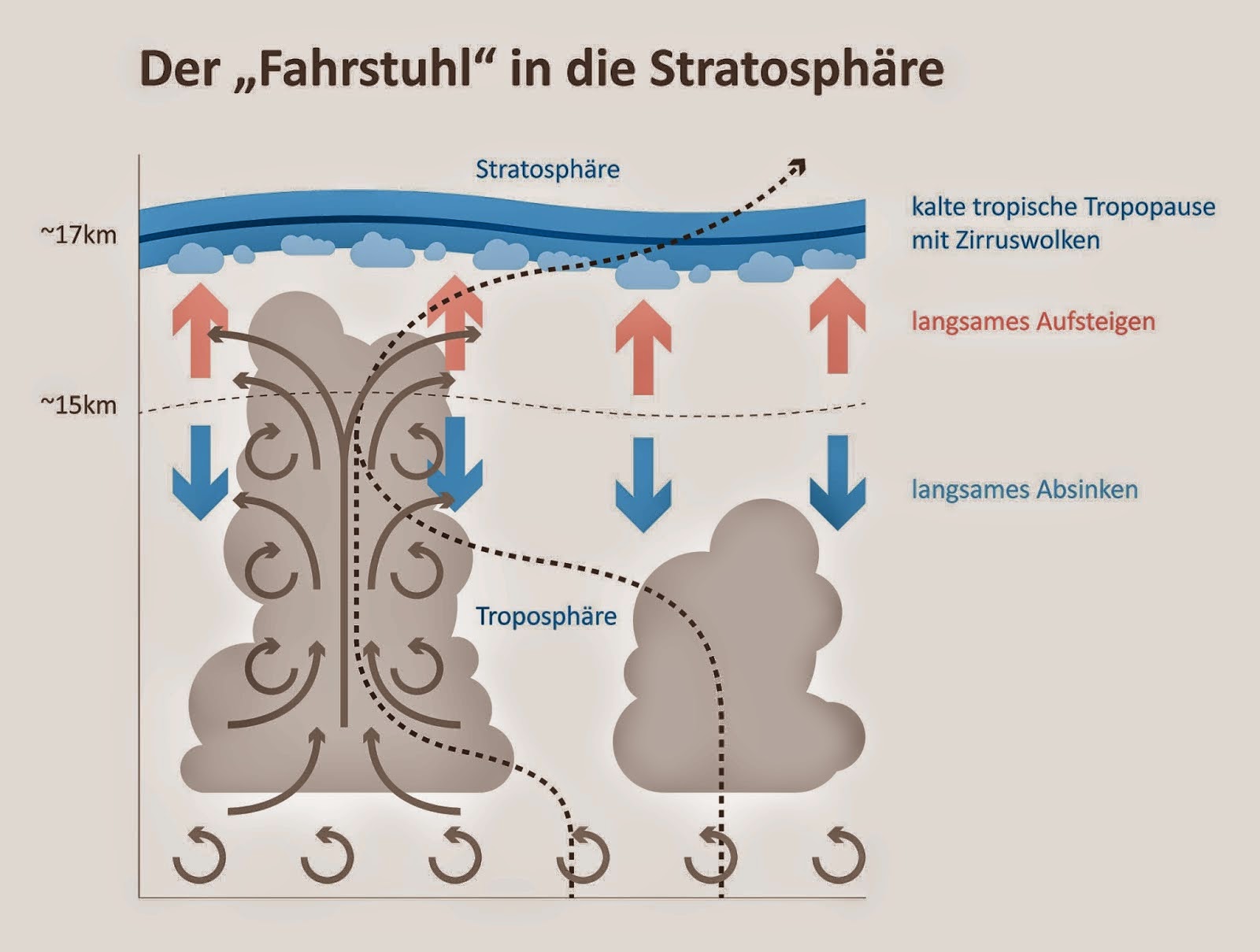


This is how air reaches the stratosphere. Through the rapid upward transport in tropical thunderstorms they reach an area of slow large-scale ascent and rise from there through the tropopause into the stratosphere over the course of weeks. This process is most pronounced during northern hemispheric winter. Model calculations show that, during this season,this process mainly takes place over the tropical West Pacific. Due to the formation of cirrus (= ice) clouds in the extremely cold tropical tropopause, a large portion of the water-soluble chemical substances is removed from the air and cannot reach the stratosphere. OH molecules transform water-insoluble into water-soluble compounds. Hence, if the concentration of OH molecules along the dotted transport pathways shown above is high only few chemical compounds make it into the stratosphere. Conversely, the lower the OH concentration is along the transport pathways, the more chemical compounds enter the stratosphere 
[Credit: Yves Nowak, Alfred Wegener Institute] 


"We have to realise," reminds the Potsdam atmospheric physicist, "that chemical compounds which enter the stratosphere always have a global impact." 
Thanks to the OH hole that the researchers discovered over the tropical Pacific, greater amounts of brominated hydrocarbons can reach the stratosphere than in other parts of the world. 
Although their ascent takes place over the tropical West Pacific, these compounds amplify ozone depletion in the polar regions. 

Since scientists identified this phenomenon and took it into account in the modelling of stratospheric ozone depletion, their models have corresponded excellently with the actually measured data. 
However, it is not only brominated hydrocarbons that enter the stratosphere over the tropical West Pacific. "You can imagine this region as a giant elevator to the stratosphere," states Markus Rex using an apt comparison. Other substances, too, rise here to a yet unknown extent while they are intercepted to a larger extent in the OH shield elsewhere on the globe. 
One example is sulphur dioxide, which has a significant impact on the climate.


The graph shows ozone profiles measured in three different marine regions: the tropical Atlantic, the tropical West Pacific and the West Pacific outside the tropics. 
The red curve clearly shows that ozone is consistently very low up to an altitude of 15 kilometres over the tropical West Pacific. In the other regions the ozone concentrations are in a range typical for the troposphere
 [Credit: Markus Rex, Alfred Wegener Institute] 

Sulphur particles in the stratosphere reflect sunlight and therefore act antagonistically to atmospheric greenhouse gases like CO2, which capture the heat of the sun on Earth. To put it simply, whereas greenhouse gases in the atmosphere heat the globe, sulphur particles in the stratosphere have a cooling effect. "South East Asia is developing rapidly in economic terms," Markus Rex explains a problem given little attention to date. "Contrary to most industrial nations, however, little has been invested in filter technology up to now. That is why sulphur dioxide emissions are increasing substantially in this region at present." If one takes into account that sulphur dioxide may also reach the stratosphere via the OH hole over the tropical West Pacific, it quickly becomes obvious that the atmospheric elevator over the South Seas not only boosts ozone depletion, but may influence the climate of the entire Earth. In fact, the aerosol layer in the stratosphere, which is also composed of sulphur particles, seems to have become thicker in recent years. Researchers do not know 
yet whether there is a connection here.


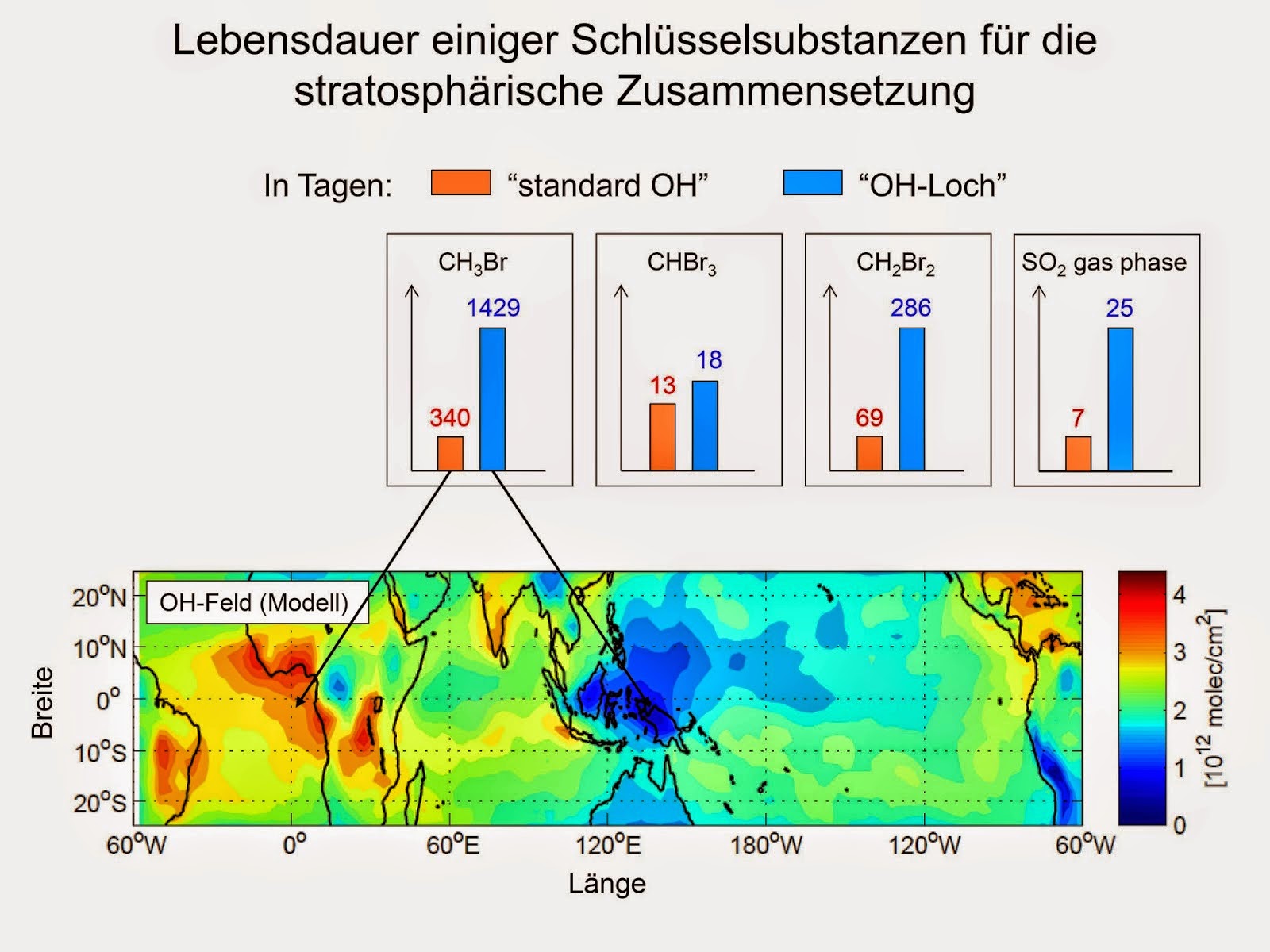
The illustration shows the average lifetime of sulphur dioxide and some brominated hydrocarbons for normal conditions over the tropical Atlantic and for conditions of reduced OH-concentrations over the tropical West Pacific 
[Credit: Markus Rex, Alfred Wegener Institute] 


But wouldn't it be a stroke of luck if air pollutants from South East Asia were able to mitigate climate warming? "By no means," Markus Rex vigorously shakes his head. "The OH hole over the South Seas is above all further evidence of how complex climate processes are. 

And we are still a long way off from being in a position to assess the consequences of increased sulphur input into the stratosphere. Therefore, we should make every effort to understand the processes in the atmosphere as best we can and avoid any form of conscious or unconscious manipulation that would have an unknown outcome." 
Background: Why is there an OH hole over the West Pacific? 
The air in the tropical West Pacific is extremely clean.
 Air masses in this area were transported across the expanse of the huge Pacific with the trade winds and for a long time no longer had contact with forests or other land ecosystems that produce innumerable short-lived hydrocarbons and release them into the air. 
Under these clean air conditions OH is formed from ozone through chemical transformation to a great degree. If there is hardly any ozone in the lower atmosphere (= troposphere), as is the case in the West Pacific, only little OH can be formed. The result is an OH hole.
 Ozone, in turn, forms in the lower atmosphere only if there are sufficient nitrogen oxides there. Large amounts of nitrogen oxide compounds are produced in particular by intensive lightning over land.

However, the air masses in the tropical West Pacific were not exposed to any continental tropical storms for a very long time during their transport across the giant ocean. And the lightning activity in storms over the ocean is relatively small. At the same time the lifetime of atmospheric ozone is short due to the exceptionally warm and moist conditions in the tropical West Pacific. In this South Sea region the surface temperatures of the ocean are higher than anywhere else on our planet, which makes the air not only quite warm, but also quite moist.
 The ozone is thus quickly lost, especially directly above the water. And due to the lack of nitrogen oxide compounds little ozone is subsequently formed. Rapid vertical mixing in the convection areas that exist everywhere over the warm ocean and in which the warm air rises takes care of the rest. 
Finally, there is no more ozone in the entire column of air in the troposphere. And without ozone (see above) the formation of OH is suppressed. What impact does the OH hole over the West Pacific have? 
The OH molecule is also called the detergent of the atmosphere. Nearly all of the thousands of different chemical substances produced by people, animals, plants, fungi, algae or microorganisms on the ground or in the oceans react quickly with OH and break down in this process. Therefore, virtually none of these substances rises into the stratosphere. In the area of the OH hole, however, a larger portion of this varied chemical mix can enter the stratosphere. And local emissions may unfold a global impact, especially if they make it to the stratosphere. There they spread globally and can influence the composition of the air for many years -- with far-reaching consequences for ozone chemistry, aerosol formation and climate. 
Why wasn't the OH hole discovered earlier?

 The tropical West Pacific is one of the most remote regions on our planet. 

That is why extensive measurements of the air composition have yet to take place in this area. There is also a considerable gap in the otherwise dense network of global ozone measurement stations here. 
Even in the past measurements from the peripheral sections of the now investigated region showed minimal ozone values in the area of the upper troposphere, but not the consistently low values that have now been found across the entire depth of the troposphere. 
The newly discovered phenomenon reveals itself in its full scope only through the measurements that were conducted to such an extensive degree for the first time and was thus not able to be grasped at all previously. 


Source: Alfred Wegener Institute, Helmholtz Centre for Polar and Marine Research [April 03, 2014]

Read more at: http://archaeologynewsnetwork.blogspot.it/2014/04/previously-unknown-atmospheric.html?utm_source=feedburner&utm_medium=feed&utm_campaign=Feed:+TheArchaeologyNewsNetwork+(The+Archaeology+News+Network)#.U0OrDyh7DfU
Follow us: @ArchaeoNewsNet on Twitter | groups/thearchaeologynewsnetwork/ on Facebook