Visualizzazione post con etichetta ambiente. Mostra tutti i post

domenica 12 luglio 2015

Clima ed Evoluzione

Si sa quanto siano stretti i rapporti tra clima ed evoluzione 

dell'Uomo e della Vita in genere. Gli studi (interdisciplinari) 

producono sempre nuove prove scientifiche di questo fatto. 

Ecco un interessante articolo sugli effetti del vulcanismo.


Volcanic eruptions that changed human history 


Ancient Environment, ArchaeoHeritage, Archaeology, Breakingnews, Earth Science, Geology, Palaeontology 


It is well known that large volcanic eruptions contribute to climate variability. 
However, quantifying these contributions has proven challenging due to inconsistencies in both historic atmospheric data observed in ice cores and corresponding temperature variations seen in climate proxies such as tree rings. 


Strong and widespread cooling occurred in the immediate aftermath of large volcanic  eruptions as indicated by ice cores from Greenland [Credit: Michael Sigl] 


Published today in the journal Nature, a new study led by scientists from the Desert Research Institute (DRI) and collaborating international institutions, resolves these inconsistencies with a new reconstruction of the timing and associated radiative forcing of nearly 300 individual volcanic eruptions extending as far back as the early Roman period. "Using new records we are able to show that large volcanic eruptions in the tropics and high latitudes were the dominant drivers of climate variability, responsible for numerous and widespread summer cooling extremes over the past 2,500 years," said the study's lead author Michael Sigl, Ph.D., an assistant research professor at DRI and postdoctoral fellow with the Paul Scherrer Institute in Switzerland.
 "These cooler temperatures were caused by large amounts of volcanic sulfate particles injected into the upper atmosphere," Sigl added, "shielding the Earth's surface from incoming solar radiation." 
The study shows that 15 of the 16 coldest summers recorded between 500 BC and 1,000 AD followed large volcanic eruptions -- with four of the coldest occurring shortly after the largest volcanic events found in record. 
This new reconstruction is derived from more than 20 individual ice cores extracted from ice sheets in Greenland and Antarctica and analyzed for volcanic sulfate primarily using DRI's state-of-the-art, ultra-trace chemical ice-core analytical system. These ice-core records provide a year-by-year history of atmospheric sulfate levels through time. Additional measurements including other chemical parameters were made at collaborating institutions. "We used a new method for producing the timescale," explained Mai Winstrup, Ph.D., a postdoctoral researcher at the University of Washington, Seattle. "Previously, this has been done by hand, but we used a statistical algorithm instead. Together with the state-of-the-art ice core chemistry measurements, this resulted in a more accurate dating of the ice cores." "Using a multidisciplinary approach was key to the success of this project," added Sigl. 


Narrow and distorted tree-rings from long living bristlecone-pines (Snake Mountains,  Nevada, USA), indicating extreme cooling after a large volcanic eruption in 44 BCE,  the year of Julius Cesar's death [Credit: Matthew Salzer]


 In total, a diverse research group of 24 scientists from 18 universities and research institutes in the United States, United Kingdom, Switzerland, Germany, Denmark, and Sweden contributed to this work -- including specialists from the solar, space, climate, and geological sciences, as well as historians. The authors note that identification of new evidence found in both ice cores and corresponding tree rings allowed constraints and verification of their new age scale. "With the discovery of a distinctive signature in the ice-core records from an extra-terrestrial cosmic ray event, we had a critical time marker that we used to significantly improve the dating accuracy of the ice-core chronologies," explained Kees Welten, Ph.D., an associate research chemist from the University of California, Berkeley. A signature from this same event had been identified earlier in various tree-ring chronologies dating to 774-775 Common Era (CE). "Ice-core timescales had been misdated previously by five to ten years during the first millennium leading to inconsistencies in the proposed timing of volcanic eruptions relative to written documentary and tree-ring evidence recording the climatic responses to the same eruptions," explained Francis Ludlow, Ph.D., a postdoctoral fellow from the Yale Climate & Energy Institute. Throughout human history, sustained volcanic cooling effects on climate have triggered crop failures and famines. These events may have also contributed to pandemics and societal decline in agriculture-based communities. Together with Conor Kostick, Ph.D. from the University of Nottingham, Ludlow translated and interpreted ancient and medieval documentary records from China, Babylon (Iraq), and Europe that described unusual atmospheric observations as early as 254 years before Common Era (BCE).
 These phenomena included diminished sunlight, discoloration of the solar disk, the presence of solar coronae, and deeply red twilight skies. 
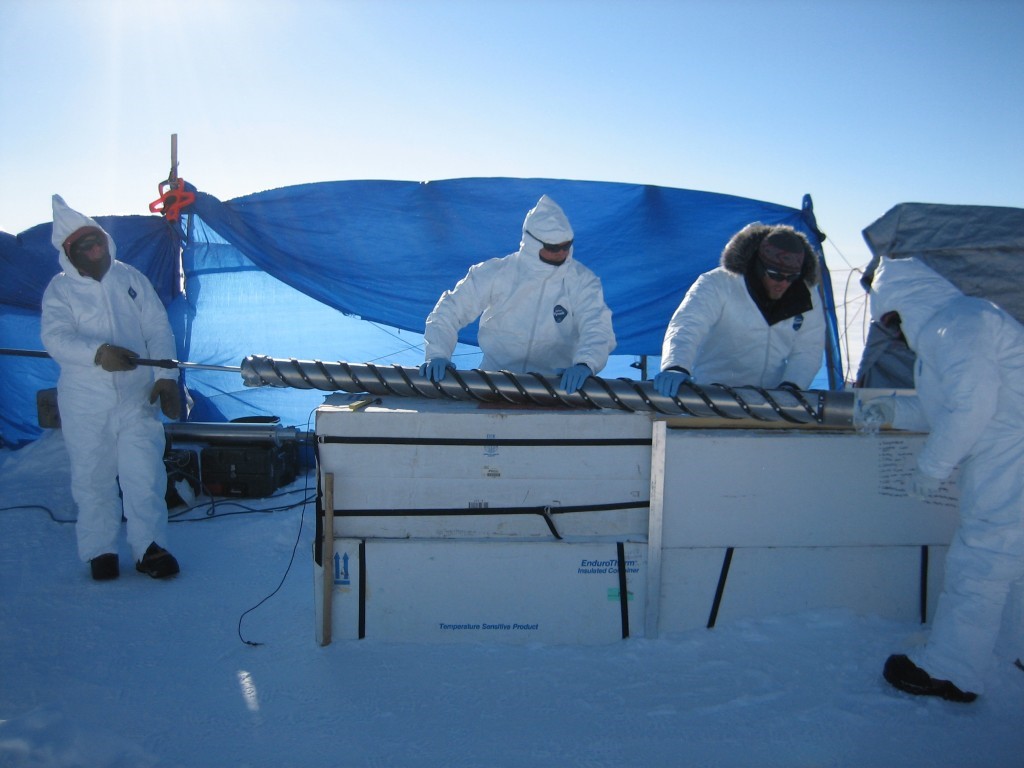


A freshly drilled ice-core from TUNU, Greenland containing a history of volcanic  eruptions is pushed out of the core barell [Credit: Olivia Maselli] 


Tropical volcanoes and large eruptions in the Northern Hemisphere high latitudes (such as Iceland and North America) -- in 536, 626, and 939 CE, for example -- often caused severe and widespread summer cooling in the Northern Hemisphere by injecting sulfate and ash into the high atmosphere. 
These particles also dimmed the atmosphere over Europe to such an extent that the effect was noted and recorded in independent archives by numerous historical eyewitnesses. Climatic impact was strongest and most persistent after clusters of two or more large eruptions. 
The authors note that their findings also resolve a long-standing debate regarding the causes of one of the most severe climate crises in recent human history, starting with an 18-month "mystery cloud" or dust veil observed in the Mediterranean region beginning in March, 536, the product of a large eruption in the high-latitudes of the Northern Hemisphere. 
The initial cooling was intensified when a second volcano located somewhere in the tropics erupted only four years later. In the aftermath, exceptionally cold summers were observed throughout the Northern Hemisphere. 
This pattern persisted for almost fifteen years, with subsequent crop failures and famines -- likely contributing to the outbreak of the Justinian plague that spread throughout the Eastern Roman Empire from 541 to 543 CE, and which ultimately decimated the human population across Eurasia. "This new reconstruction of volcanic forcing will lead to improved climate model simulations through better quantification of the sensitivity of the climate system to volcanic influences during the past 2,500 years," noted Joe McConnell, Ph.D., a DRI research professor who developed the continuous-flow analysis system used to analyze the ice cores. "As a result," McConnell added, "climate variability observed during more recent times can be put into a multi-millennial perspective -- including time periods such as the Roman Warm Period and the times of significant cultural change such as Great Migration Period of the 6th century in Europe." 
This reconciliation of ice-core records and other records of past environmental change will help define the role that large climatic perturbations may have had in the rise and fall of civilizations throughout human history. "With new high-resolution records emerging from ice cores in Greenland and Antarctica, it will be possible to extend this reconstruction of volcanic forcing probably all the way back into the last Ice Age," said Sigl. 


Source: Desert Research Institute [July 08, 2015]

domenica 2 marzo 2014

FOTO SARDE

Gruppo d'intervento Giuridico - ONLUS
Olbia - Cantiere a Rio Bados

Pecora che bruca (l'erba rossa è quella chimicamnete 'diserbata')

Pineta costiera a Narbolia (con gru di cantiere)

Auto abbandonate

Ambiente naturale de 'Sa Zente Arrubia'

Discarica abusiva a Sestu

Cantiere di Badesi


Cantiere di Teulada 


martedì 31 dicembre 2013

Pro e contro del resuscitare animali estinti

The pros and cons of resurrecting

extinct animals


 Scientists from across the world have “scanned the horizon” in order to identify potentially significant medium and long-term threats to conservation efforts. Thylacine, or Tasmanian tiger Credit: E.J. Keller Baker/WikiCommons] Resurrection of several extinct species, the increasingly accelerated loss of wild rhinoceroses and a disastrous financial response to unburnable carbon are just some future global conservation issues flagged up in this year’s Horizon Scan, recently published in Trends in Ecology and Evolution. Professor William Sutherland and Dr Mark Spalding are amongst the 18 scientists who took part in this year’s Horizon Scan, seeking to identify potential future conservation issues in order to reduce the “probability of sudden confrontation with major social or environmental changes”. One such plausible issue is the resurrection or re-construction of extinct species, such as the woolly mammoth, passenger pigeon or the thylacine (a carnivorous marsupial). However, though there may be many benefits to the restoration of these animals, such a high-profile project could lead to attention and resources being diverted from attempts to thwart current threats to non-extinct species’ survival. Professor Sutherland said ‘There has been discussion of this idea for some time but it is now looking more practical and the idea is being taken seriously. A key issues is whether this is really a conservation priority’. Though the last woolly mammoth died around 4000 years ago, methods such as back-breeding, cloning and genetic engineering may lead to their resurrection. Not only could these extinct animals, and others such as the thylacine and the passenger pigeon, be re-constructed and returned to their native environments, they could potentially be used to “provide tools for outreach and education”. However, though this would be a conservational triumph, it could also hamper efforts to protect animals that are currently facing extinction, as both attention and resources would be diverted from preserving existing species and their habitats. Furthermore, there has not been any investigation into the “viability, ethics and safety of releasing resurrected species”, nor the effect their presence may have on indigenous flora and fauna. Another potential conservational issue identified by the Horizon Scan further highlights the problems facing species today. The loss of wild rhinoceroses and elephants is set to reaccelerate within the next few years, partially stimulated by a growing desire for ivory and horn. In 2013, it is estimated that over 600 rhinoceroses were poached for their horn in South Africa alone, out of a total global population of less than 26,000. Though an increased human population and proximity to growing infrastructure is partially responsible, organised crime syndicates and intensive hunting carry the weight of the blame. In the Asian countries that use it, rhinoceros horn is more expensive than gold. Demand for the precious horn is ever increasing, resulting in elevated levels of poaching. If attention and resources are diverted from the protection of these majestic animals, we may have yet more candidates for resurrection in the future. Altogether, this group of scientists identified the top 15 potential conservation issues (out of an initial group of 81 issues). In addition to the above topics, extensive land loss in southeast Asia from subsidence of peatlands, carbon solar cells as an alternative source of renewable energy, and an emerging fungal disease amongst snakes, have also been voted as plausible threats that need to be stopped before they can be realised. 

Source: University of Cambridge [December 24, 2013]
Read more at: http://archaeologynewsnetwork.blogspot.it/2013/12/the-pros-and-cons-of-resurrecting.html?utm_source=feedburner&utm_medium=email&utm_campaign=Feed:+TheArchaeologyNewsNetwork+(The+Archaeology+News+Network)
Read more at: http://archaeologynewsnetwork.blogspot.com/

mercoledì 18 settembre 2013

SE TUTTI IL GHIACCIO SI SCIOGLIESSE.

If all the Earth's ice melted

Maps of the planet's continents as they will probably appear as the planet warms and the sea rises are presented on the website of the National Geographic.

If all the Earth's ice melted
Map of Europe after all the ice-sheets on the planet have melted [Credit: National Geographic]
"The maps show the world as it is today, but with only one difference: all the ice has melted and the sea level has risen by 66.9 meters, creating new shorelines on all continents and inland seas."

"There are more than five million cubic miles of ice on Earth, and some scientists point out that it would take more than 5,000 years for it to melt. If we continue to add carbon dioxide to the atmosphere, it is very likely to create a world without ice, with an average temperature of 26.6 degrees Celsius, instead of 14.4 degrees, which it is today", says the magazine.

National Geographic explains how the planet will appear after the ice has melted:

North America: The entire coastal zone of the Atlantic will disappear along with Florida and the Gulf Coast. In California, the hills of San Francisco will be a cluster of islands and the Central Valley a giant bay.

South America: The Amazon Basin to the north and the south of Paraguay will become inland coves of the Atlantic, flooding Buenos Aires, the coasts of Uruguay and most of Paraguay. Mountainous areas will survive along the Caribbean and Central America.

Africa: Compared to other continents, Africa will lose less land to the extreme rise in sea level, but the surge in the Earth's temperature may render it uninhabitable. In Egypt, Alexandria and Cairo will flood from the rising Mediterranean.

Europe: London will become a mere memory and Venice will be swallowed by the Adriatic. Thousands of years from now, in this catastrophic scenario, the Netherlands will be delivered to the sea and most of Denmark as well. Meanwhile, the Mediterranean's expanding waters will have swelled the Black and Caspian Seas.

Asia: Large areas of coastal China, Bangladesh and  India will be inundated. The flooding of the Mekong Delta would leave Cambodia's Cardamon Mountains stranded as an island.

Australia: The island continent will acquire a new inland sea, and much of the narrow coastal strip, where 4 in 5 Australians presently live, will be lost.

Source: National Geographic [September 12, 2013]

venerdì 23 agosto 2013

la Vita si ferma a -20°C.

Lowest temperature for life discovered


Scientists have pinpointed the lowest temperature at which simple life can live and grow  The study, published in PLoS One, reveals that below -20 °C, single-celled organisms dehydrate, sending them into a vitrified – glass-like – state during which they are unable to complete their life cycle.

Lowest temperature for life discovered
Algae and bacteria in Scanning Electron Microscope [Credit: WikiCommons]
The researchers propose that, since the organisms cannot reproduce below this temperature, -20 °C is the lowest temperature limit for life on Earth.

Scientists placed single-celled organisms in a watery medium, and lowered the temperature. As the temperature fell, the medium started to turn into ice and as the ice crystals grew, the water inside the organisms seeped out to form more ice. This left the cells first dehydrated, and then vitrified. Once a cell has vitrified, scientists no longer consider it living as it cannot reproduce, but cells can be brought back to life when temperatures rise again. This vitrification phase is similar to the state plant seeds enter when they dry out.

'The interesting thing about vitrification is that in general a cell will survive, where it wouldn't survive freezing, if you freeze internally you die. But if you can do a controlled vitrification you can survive,' says Professor Andrew Clarke of NERC's British Antarctic Survey , lead author of the study. 'Once a cell is vitrified it can continue to survive right down to incredibly low temperatures. It just can't do much until it warms up.'

More complex organisms are able to survive at lower temperatures because they are able to control the medium the cells sit in to some extent.

Bacteria, unicellular algae and unicellular fungi – of which there are a huge amount in the world-are free-living because they don't rely on other organisms ,' Clarke explains.

'Everything else, like trees and animals and insects, has the ability to control the fluid that surrounds their internal cells. In our case it's blood and lymph. In a complicated organism the cells sit in an environment that the organism can control. Free-living organisms don't have this; if ice forms in the environment they are subject to all the stresses that implies.'

If a free-living cell cools too quickly it would be unable to dehydrate and vitrify; instead it would freeze and wouldn't survive.

This goes some way towards explaining why preserving food using deep freezing works. Most fridge freezers operate at a temperature of nearly -20 °C . This study shows that this temperature works because moulds and bacteria are unable to multiply and spoil food.

'We were really pleased that we had a result which had a wider relevance, as it provided a mechanism for why domestic freezers are as successful as they are,' Clarke says.

The scientists believe that the temperature limit they have discovered is universal, and below -20°C simple forms of unicellular life can grow on Earth. During the study they looked at a wide range of single-celled organisms that use a variety of different energy sources, from light to minerals, to metabolise. Every single type vitrified below this temperature.

'When you have a single-celled organism and cool it until ice forms in the external medium, in every case we looked at the cells dehydrated and then vitrified between -10°C and -25 °C. There were no exceptions,' explains Clarke. 

Author: Harriet Jarlett  | Source: PlanetEarth Online [August 21, 2013]

sabato 17 agosto 2013

Con buona pace dei Popoli del Mare

LA  SICCITA'  CAUSO'  IL  COLLASSO  DELL' ETA'  DEL  BRONZO.

Drought drove collapse of Late Bronze Age civilizations


commento personale: è più che evidente come il Consenso

Scientifico Internazionale si sia ormai definitivamente

orientato verso l'inesistenza accertata dei cosiddetti 'popoli 

del mare' (nel senso inteso da Maspero 300 anni fa) e della 

inconsistenza della loro  gloriosa epopea guerresca: questo, 

di conseguenza, fa inesorabilmente cadere tutto il 

farneticante castello di carte costruito da alcuni scrittori 

autodidatti sardi intorno ad una presunta presenza, tra 

essi, dei fantomatici "shardana", con tutto ciò che ne 

consegue logicamente: una Storia Sarda più vera restituita 

finalmente ai Sardi...

LA PALEOCLIMATOLOGIA DIMOSTRA CHE FU LA SICCITA' A PRODURRE IL COLLASSO DELLA FINE DELL'ETA' DEL BRONZO, VERSO IL 1300 A.C. NELLE FINO AD ALLORA FIORENTI CIVILTA' DEL MEDITERRANEO ORIENTALE: LA RICERCA, DI DAVID KANIEWSKI (DELL'UNIVERSITA' DI TOLOSA IN FRANCIA, INSIEME CON COLLEGHI DA ALTREI ISTITUTI), E' PUBBLICATA SUL NUMERO DEL 14 DI AGOSTO DELLA RIVISTA SCIENTIFICA PLOS ONE, CON ACCESSO LIBERO.

 Climate change may have driven the collapse of once-flourishing Eastern Mediterranean civilizations towards the end of the 13th century BC, according to research published August 14 in the open access journal PLOS ONE by David Kaniewski from the University of Paul Sabatier, Toulouse, France and colleagues from other institutions.

Drought drove collapse of Late Bronze Age civilizations
LA REGIONE SULLA QUALE SONO STATI CONDOTTI GLI STUDI: IL LAGO SALATO, CON HALA SULTAN TEKKE NELLO SFONDO, (CIPRO).
This is the region where the study was performed (Salt Lake and the Hala Sultan Tekke in the background) [Credit: Geological Survey of Belgium/ David Kaniewski]


LE ANTICHE CIVILTA' DEL MEDITERRANEO ORIENTALE SI TROVAVANO IN VARIE SEDI CONFINANTI DELLE REGIONI COSTIERE DELL'EUROPA MERIDIONALE E DELL'ASIA OCCIDENTALE,  OLTRE CHE DI ALCUNE ISOLE (GRECIA E SIRIA SONO L'OGGETTO DEL CAMPIONAMENTO DEL PRESENTE STUDIO). LE GRANDI POTENZE NOTE DI ALLORA ERANO SETTE: ALCUNE DI ESSE ERANO IN SITUAZIONE DI PRECARIO EQUILIBRIO PER LA LORO GRANDE DIPENDENZA DAI GRANDI PAESI AGRICOLI PRODUTTORI. TUTTE SOFFRIRONO UNA GRAVISSIMA CRISI, CHE CONDUSSE AL LORO COLLASSO, SUL QUALE E' STATA ROMANZATA L'EPOPEA (IN MASSIMA PARTE IMMAGINARIA) DEI COSIDDETTI  "POPOLI DEL MARE".

Ancient civilizations flourished in regions of the Eastern Mediterranean such as Greece, Syria and neighboring areas, but suffered severe crises that led to their collapse during the late Bronze Age. 

SONO STATI STUDIATI GRANI DI POLLINE OTTENUTI DAI SEDIMENTI DI UN ANTICO LAGO DELLA REGIONE, PER POTERE OTTENERE DATI CERTI SULLE MODIFICAZIONI AMBIENTALI DELL'EPOCA E RICAVARNE LA PROVA DEI CAMBIAMENTI CHE PRODUSSERO LA CRISI.

Here, researchers studied pollen grains derived from sediments of an ancient lake in the region to uncover a history of environmental changes that likely drove this crisis. 

LE MODIFICHE NEL CONTENUTO DEGLI ISOTOPI DI CARBONIO NEL MEDITERRANEO ORIENTALE E LE SPECIE VEGETALI LOCALI INDICANO CHE IL LAGO SALATO UN TEMPO ERA UN FIORENTE PORTO MARINO, CHE SI E' GRADUALMENTE INTERRATO FINO A RISULTARNE UN LAGO SALATO ISOLATO DAL MARE.

Shifts in carbon isotopes in the Eastern Mediterranean and in local plant species suggest that this lake was once a flourishing harbor that gradually dried into a land-locked salt lake. 

Drought drove collapse of Late Bronze Age civilizations
PIANTA DI CIPRO, CON VISTA DEL LAGO SALATO DELLA BAIA DI LARNAKA (HALA SULTAN TEKKE)
Map of Cyprus with an overview of the Larnaca Salt Lake (Hala Sultan Tekke) in the Larnaca Bay [Credit: doi:10.1371/journal.pone.0071004.g001]
DI CONSEGUENZA, LA MANCANZA DI RACCOLTO PORTO' ALLA CARESTIA IN MOLTI PAESI, MOTIVANDO RIPETUTE INVASIONI DI EMIGRANTI CHE INVASERO LE REGIONI LIMITROFE ED INFINE OVUNQUE SI PRODUSSE  IL COLLASSO POLITICO, AMMINISTRATIVO ED ECONOMICO  DI TUTTE LE 'POTENZE' DEL MEDITERRANEO ORIENTALE, VERSO LA FINE DELL'ETA' DEL BRONZO.

As a result, crop failures led to famines, repeated invasions by migrants from neighboring regions and eventually, the political and economic collapse of the Eastern Mediterranean civilizations at the end of the late Bronze Age.

METTENDO INSIEME QUESTI DATI SCIENTIFICI E QUELLI ARCHEOLOGICI OTTENUTI DALLE TAVOLETTE IN CUNEIFORME E LA CORRISPONDENZA TRA I RE DI ALLORA, I RICERCATORI SUGGERISCONO  CHE LA CRISI DEL BRONZO FINALE FU UN EVENTO COMPLESSO E MULTIFATTORIALE, COMPRENDENTE  SICCITA', CARESTIA, LOTTE POLITICHE, GRAVI DISAGI ECONOMICI E SOCIALI, INVASIONI DI EMIGRANTI ED ALTRO ANCORA: NON PUO' ESSERE SPIEGATO CON UN SEMPLICE EVENTO SINGOLO.

Combining this data with archaeological evidence from cuneiform tablets and correspondence between kings, the researchers suggest that the late Bronze Age crisis was a complex, single event comprised of climate change-induced drought, famines, sea-borne invasions and political struggles, rather than a series of unrelated events. 

IN CONCLUSIONE, SI SOTTOLINEA LA SENSIBILITA'  AL CLIMA ED AI FATTORI AMBIENTALI DI QUESTE ANTICHE SOCIETA' BASATE SULL'AGRICOLTURA, DEMISTIFICANDO LA CRISI CHE CONDUSSE ALLA LORO FINE.


They conclude that this event underlines the sensitivity of these agriculture-based societies to climate, and demystifies the crisis that led to their end.

Source: Public Library of Science [August 15, 2013]

lunedì 5 agosto 2013

Paradisola

Caro Pasuco, sono tornato*!

* Non ne sono troppo contento, come potrai immaginare: ho abbandonato infatti con rammarico l'ultimo paradiso italiano.

Che - per inciso - sarà presto del tutto rovinato dagli uomini e che - per ulteriore inciso - gli abitanti stessi non considerano neppure far parte dell'Italia (salvo averlo rovinato ben bene anche loro per primi, quotidianamente, per moltissimi anni).

Resta il fatto che, fatta eccezione forse per la Dorsale Appenninica (se dobbiamo credere alle asserzioni di Reinhold Messner, il quale c'è stato e peraltro - anche lui! - non si considera un italiano, salvo quando fa un'interessata pubblicità dell'acqua minerale italiana con la sua rugosa pronunzia tedesca di Brixen, Sud Tirolo, che in Italiano sarebbe Bressanone), l'unica zona italiana in cui si trova ancora un po' di "wilderness" è ancora e solo lei: la Sardegna.

- Bellissima, la Sardegna, Pasuco, ti dicevo! Quando ci verrai, un giorno - se non sarà troppo tardi - ti farò io da guida volentieri, perché ormai la conosco molto meglio di molti sardi... 

- Profumatissima di cisto, ginepro, lentisco, santolina sarda, elicriso... 
Questo è il motivo per cui le fotografie - per quanto belle siano - non le possono rendere il merito che essa, giustamente, esige.

- Certamente, certi posti molto "turistici" sono - in questa stagione - più profumati di lozioni abbronzanti, di latti 'doposole', di galeotti profumi di balera, di spray antizanzare e di birra tedesca, come in un insensato 'Octoberfest' fuori posto. 

- Ed il mare, quel mare che sa assumere tutte le sfumature esistenti dal color turchese al verde marino, al blu, all'impossibile ed indescrivibile, qualche volta appare striato di quelle creme che si lavano via dai corpi dei bagnanti, a creare una patina oleosa ed offensiva, che uccide la vita marina ...

- Tutte le pinete costiere sono in pericolo ed ormai agonizzanti, come mi ha spiegato un esponente direttivo dell'Ente forestale°.

° per l'insostenibile pressione antropica dei turisti dissennati ed ignari, che non sono né informati né tanto meno tenuti a bada dai Comuni, interessati e miopi ed ignorantissimi essi stessi. A nessuno importa: l'unica pineta che ancora si salva da questa orribile devastazione è la pineta dietro a 'BiddeRosa' (Orosei), ancora ben custodita dalla Forestale e sottoposta ad ingressi giornalieri limitati.

Caro Pasuco, sono tornato, infine: e - ti giuro - non sono per niente contento - anzi: sono tristissimo - per tanti motivi che non ti posso neppure elencare tutti insieme. 
E che si possono riassumere in un fatto ineludibile: l'ecosistema di un'isola, per quanto grande essa sia, è sempre molto fragile: ma questo vale per l'Australia, figurarsi quante volte di più vale per la Sardegna...

Ora capisci, amico mio, perché il fatto che debba riprendere il lavoro sia davvero l'ultimo dei miei crucci. 

Ma la Sardegna, malgrado la trascuratezza delle autorità, al di sopra ed oltre l'insensibilità degli abitanti, nonostante l'insulsaggine distruttiva dei turisti cavallette e l'atteggiamento di rapina dei briganti traghettatori, resta ancora, per quanti anni ancora non so, pienamente degna della brillante definizione di 


Paradisola...

domenica 19 maggio 2013

Foca monaca


Perché NON in Sardegna?


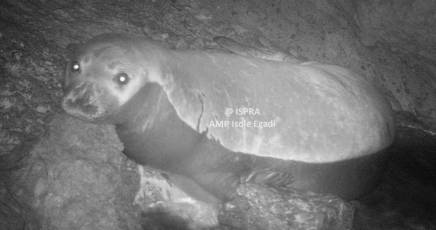
La Foca Monaca fotografata alle Egadi

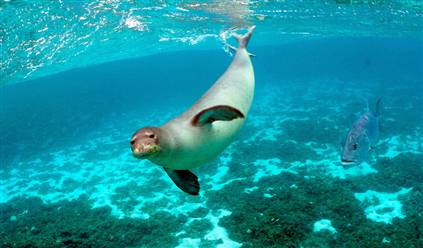
La foca monaca è tornata nelle acque italiane e frequenta in
 particolare quelle dell'area marina protetta delle isole Egadi, specie dall'autunno 
alla primavera. La conferma arriva da uno studio dell'Istituto superiore per la 
protezione e la ricerca ambientale, condotto negli ultimi due anni in collaborazione
 con il gestore del parco marino, di cui sono stati presentati al ministero 
dell'Ambiente alcuni dettagli e mostrate delle foto di un esemplare a cui piace 
quella porzione di mare.
Orlando: “Consolidare rete delle aree marine protette” - "Questa giornata -
osserva il ministro Andrea Orlando - che saluta il ritorno in Italia della specie
marina simbolo del Mediterraneo mette in risalto l'importanza della tutela della
biodiversità marina. Sono estremamente soddisfatto per i risultati raggiunti e la
professionalità nel trattare una specie così pericolosamente a rischio di estinzione".
Inoltre, per Orlando è "un grande risultato per le Egadi, la riserva marina più
grande d'Europa. Lavoreremo per consolidare la rete delle aree marine protette
italiane".
Esemplare avvistato potrebbe essere una femmina di 5 anni - Per la
ricercatrice dell'Ispra Giulia Mo, a capo del team che ha condotto il monitoraggio,
è "difficile sapere se ci sono altri esemplari; dobbiamo continuare il monitoraggio.
Per ora abbiamo dei piccoli tasselli che stiamo mettendo insieme. Dalle prime
fotografie (autunno-inverno 2011 e primavera 2012) sembra una femmina e dal
tipo di cicatrici sembra avere 5 anni". Gli scatti sono fatti da un sistema di 'foto-
trappole' disposte in punti strategici che si attivano al passaggio di animali e
che in questo caso hanno immortalato la foca monaca.
foto tratta da: mareamico.it
“Modello" di conservazione ha funzionato - Il ministro parla anche
della vittoria del "modello" di conservazione che ha funzionato, soprattutto
in relazione alla sensibilità dimostrata dalla popolazione: "Una scommessa
il cui esito non era scontato; far convivere tradizioni in forme nuove e coinvolgere
la popolazione, insieme con lo sviluppo di attività di volontariato". Un modo di
fare "valorizzazione" che "non soltanto non costituisce un vincolo allo sviluppo
ma che è esso stesso sviluppo". Il presidente dell'area marina protetta delle isole
Egadi conferma infatti che "la foca monaca non è più percepita come una minaccia
dalla popolazione. Ci auguriamo che il ministero dell'Ambiente voglia prestare
sempre più attenzione alle aree marine protette".
Legambiente: “Si tratta di un evento eccezionale” - Il ritorno della foca
monaca nei mari italiani è "un evento unico in Italia ed eccezionale nel Mediterraneo".
Così Legambiente esprime la propria soddisfazione per il ritorno di "una delle
specie a maggior rischio di estinzione nel Mediterraneo". "Siamo davvero contenti
di apprendere questa grande notizia - dichiara il responsabile mare di Legambiente, Sebastiano Venneri - la presenza della foca monaca alle Egadi è un evento unico
in Italia e assolutamente eccezionale per tutto il Mediterraneo. Una presenza che
testimonia l’ottimo lavoro svolto dall’area marina protetta in questi ultimi anni e
dimostra come, con una corretta e attenta gestione del territorio, sia possibile far
convivere la qualità ambientale ed elementi di grande naturalità con il turismo,
la nautica da diporto e un’attività di pesca sostenibile importante qual è quella
condotta nel mare delle Egadi".
17 maggio 2013
Redazione Tiscali