Visualizzazione post con etichetta Exhibitions. Mostra tutti i post

domenica 5 luglio 2015

Disco del Sole

Gold sun disc 

from the time of  Stonehenge 

on display for the first time

Archaeology, Breakingnews, Exhibitions, More Stuff, Travel, 


An early Bronze Age sun-disc from Monkton Farleigh in Wiltshire has gone on display for the first time. 
This is one of only 6 finds of sun-discs discovered and is one of the earliest metal objects 
found in Britain. 
It was made in about 2,400 BC, soon after the sarsen stones were put up at Stonehenge, and is thought to represent the sun. 


Image of sun disc [Credit: Wiltshire Museum] 


The sun-disc was found in a burial mound at Monkton Farleigh, just over 20 miles from Stonehenge. 
It was found in 1947 in excavations by Guy Underwood along with a pottery beaker, flint arrowheads and fragments of the skeleton of an adult male. 
It was kept safe by the landowner since its discovery and has only now been given to the Museum. 
It has now been cleaned by the Wiltshire Council Conservation Service and has been placed on display in time for this year’s mid-summer solstice. 
The sun-disk is a thin embossed sheet of gold with a cross at the centre, surrounded by a circle. 
Between the lines of both the cross and the circle are fine dots which glint in sunlight. 
The disc is pierced by two holes that may have been used to sew the disc to a piece of clothing or a head-dress, and may have been used in pairs. 
Until recently it has been thought that early Bronze Age gold may have come from Ireland, but a new scientific technique developed at Southampton University is hinting that the gold may have come from Cornwall. 
Museum Director David Dawson said “We have the best Bronze Age collections in Britain and we are delighted to be able to display this incredibly rare sun-disk through the generosity of the donors. It was kept safe since its discovery by Dr Denis Whitehead and the first time that it had been seen by archaeologists was when he brought it to show me at the launch of our new Prehistory Galleries in 2013. 
It has now been presented to the Museum in remembrance of Denis S Whitehead of Inwoods, Farleigh Wick.” 


Source: Wiltshire Museum [June 22, 2015]

giovedì 15 gennaio 2015

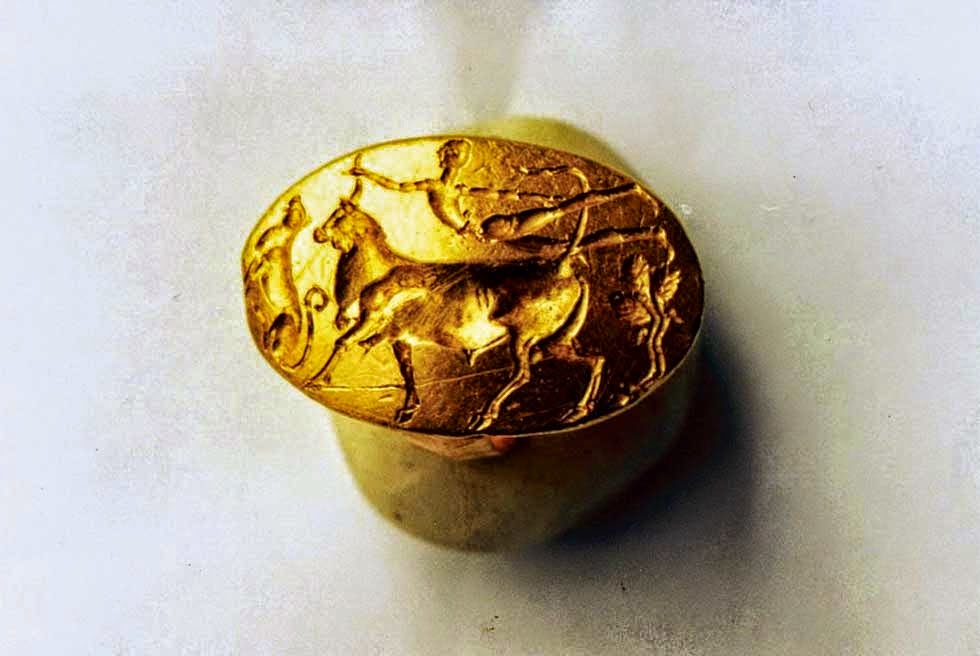
L'Anello di Teseo

Il famoso "Anello di Teseo", un timbro d'oro montato ad

anello che fu trovato nle 1950 alla Plaka (il distretto in

prossimità del Partenone, che adesso ospita un mercato

delle pulci) e la cui datazione risale al periodo Miceneo è ora

in mostra - dallo scorso lunedì - presso il Museo

Archeologico di Atene.

Nell'anello è rappresentata una scena di "salto del toro", in 

cui compaiono anche marginalmente la figura di un leone e 

di un albero. Inizialmente dichiarato un falso, il reperto del 

XV secolo a.C. fu poi riesaminato da una commissione di 

esperti del Ministero della Cultura e riabilitato come reperto 

autentico.

Sono trascorsi 65 anni dal ritrovamento: questo dimostra che 

gli archeologi greci sono molto più abili di quelli sardi, che 

sono riusciti a tenere nascoste al grande pubblico le statue di 

Monti 'e Prama per molto meno tempo.


Theseus Ring goes on display for the first time 

 The ‘Theseus Ring,’ a gold signet ring unearthed in the Plaka district of Athens in the 1950s and dating back to the Mycenaean period, went on display on Monday for the first time at the Greek capital’s National Archaeological Museum. The ring, which depicts a bull-leaping scene, was initially dismissed as fake before its authenticity was established by a team of Culture Ministry experts. The scene depicted on the 15th century BC artifact also includes a lion and a tree.


 Source: Kathimerini [January 12, 2015]

venerdì 12 dicembre 2014

AL DI LA' - nell'Antica Grecia

120 reperti, da 21 musei internazionali, volti a descrivere 
nascita e sviluppo nella Grecia Antica 
di uno dei temi che da sempre affascinano 
e rapiscono il pensiero dell'uomo:
il fato dell'anima immortale 
dopo la fine fisica del corpo mortale.
Al Museo dell'Arte Cicladica
ad Atene.


'BEYOND. Death and Afterlife in Ancient Greece' 

at The Museum of Cycladic Art in Athens


   The Museum of Cycladic Art in Athens, in collaboration with the Onassis Foundation (USA) and the Hellenic Ministry of Culture & Sports, presents a fascinating exhibition titled “Beyond. Death and Afterlife in Ancient Greece” which is scheduled to run from December 11 until February 8, 2015. 

 Through 120 objects from 21 Greek and international museums, the exhibition explores one of the most important issues that puzzled and continues to concern humans: the fate of the immortal soul after the death of the mortal body.

 The descriptions in the Homeric epics of the underworld as they were depicted on ancient works of different periods is the starting point of this exhibition. 

As epilogue, the Platonic concepts –which mark the shift of perceptions on the divine element– both as development and in contrast to the Homeric beliefs. 

The show will be divided into 5 thematic sections: 

- The moment of death,

       - Burial Customs, 

            - Homeric Hades, 

                 - Bacchic-Orphic Hades and 

                      - Platonic Hades.


Source: Museum of Cycladic Art 

[December 10, 2014]


martedì 25 novembre 2014

Un Ferma-Porte

E' stata usata per anni come originale ferma porte in un ufficio ed ha rischiato persino di finire in una discarica, perché il proprietario non sapeva che cosa fosse quella cosa che era saltata fuori con l'aratro da un campo di East Rudham. 

E' fatta di bronzo (ricetta classica: nove parti rame, una stagno), ha una ragguardevole età: 3.500 anni ed è adesso stata inclusa in una ristretta e preziosa elite: è una delle cinque daghe cerimoniali dell'epoca del Bronzo Medio rinvenute in Europa.
Fu rinvenuta piegata perché - s'ipotizza - non fu mai intesa per l'uso e fu offerta deformata ed inutilizzabile agli dei.

Adesso si trova al Norwich Castle museum ed il proprietario ne ha ricavato la bella cifra di 41.000 sterline: potrà comperarsi un elegante ferma-porte tradizionale...

Large ceremonial Bronze Age dagger unveiled 


A spectacular new Norfolk treasure has been unveiled - after years of being used as a doorstop. 
The 3,500-year-old Rudham Dirk, a ceremonial Middle Bronze Age dagger, was first ploughed up near East Rudham more than a decade ago. But the landowner didn’t realise 
what it was and was using it to prop open his office door.


Dr Tim Pestell with the Bronze Age Rudham Dirk (large dagger) which was ceremonially bent when  it was made. It's the only other British example (which was also found in Norfolk)  is in the British Museum
 [Credit: Steve Adams] 


And the bronze treasure even came close to being thrown in a skip, but luckily archaeologists identified it in time.

Now the dirk has been bought for Norfolk for close to £41,000 and is now on display in Norwich Castle Museum. 
Dr John Davies, Chief Curator of Norfolk Museums Service, said: “This is one of the real landmark discoveries.” The dirk - a kind of dagger - was never meant to be used as a weapon and was deliberately bent when it was made as an offering to the gods. 

Only five others like it have ever been found in Europe - including one at Oxborough in 1988, which is now in the British Museum. But thanks to a £38,970 grant from the National Heritage Memorial Fund, following a £2,000 donation from the Norfolk and Norwich Archaeological Society, the Bronze Age treasure will now stay in the county. 


The Oxborough Dirk 1,500 BC-1,300 BC Middle Bronze Age; copper alloy.
  Length: 79 cm 
[Credit: British Museum] 


Dr Tim Pestell, who is Curator of Archaeology with the NMS, has been negotiating with the (unnamed) landowner for almost a year. 
He said: “As soon as my colleagues told me about it we started to plan how we could acquire it, so it could stay in Norfolk and be on display here.” Dr Andrew Rogers, whose team first identified the dirk, said he never expected the Oxborough discovery would be repeated. 
“It’s absolutely incredible. Gosh - to have a find like this twice in a lifetime - this is unbelievable,” he said. 
The 1.9kg (4lb) dirk is made from bronze, which is nine-tenths copper and one-tenth tin. 
The nearest source for the copper is Wales, while the tin may have come from Cornwall. Straightened out, it would be 68cm long, slightly shorter than the Oxborough example. It may even have been made in the same workshop, maybe even by the same craftsperson. Sophie Cabot, president of the Norfolk and Norwich Archaeological Society, added: “We’re really excited - it would have been a great shame if we’d have lost it.” 

Author: Trevor Heaton | Source: EDP24 

[November 23, 2014]

Read more at: http://archaeologynewsnetwork.blogspot.it/2014/11/large-ceremonial-bronze-age-dagger.html?utm_source=feedburner&utm_medium=feed&utm_campaign=Feed:+TheArchaeologyNewsNetwork+(The+Archaeology+News+Network)
Follow us: @ArchaeoNewsNet on Twitter | groups/thearchaeologynewsnetwork/ on Facebook

mercoledì 4 giugno 2014

Quanti anni?

Howard Carter scoprì la tomba KV62 nel 1922 (KV sta per Kings Valley, Valle dei Re). 
...Sono trascorsi 92 anni...

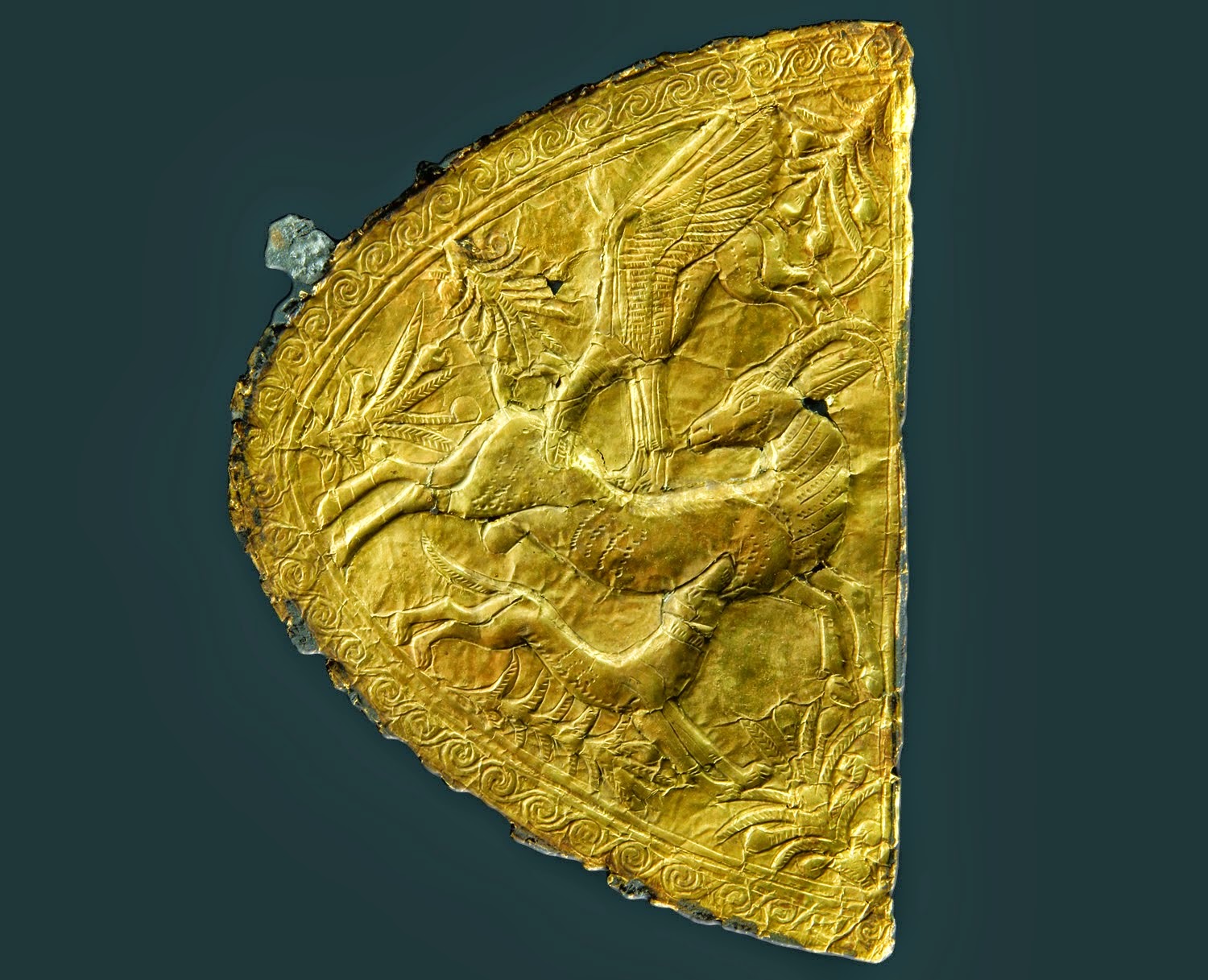
I finimenti dei cavalli del carro, le decorazioni stesse del carro da guerra ed i foderi delle armi del giovane Faraone sono di grandissimo interesse, perché rappresentano il risultato 
della fusione di motivi Levantini ed Egizi nell'arte quotidiana del XIV secolo a.C.
Tali oggetti d'arte non sono mai stati visti prima dal pubblico e pochissimi sono gli archeologi che li hanno potuto avvicinare.
Una cooperazione Egizio-Tedesca collaborerà al restauro dei pezzi archeologici e fra circa tre anni sarà possibile esporli in un museo del Cairo.
Sono tutti d'accordo, nel mondo, che questa è una bella notizia!

(Per fortuna non si tratta delle statue di Monte 'e Prama, altrimenti, sai che cagnara da parte della setta shardanista!)...


Restored gold objects from the tomb of Tutankhamun 

to be 

displayed for first time.


Even the tomb of Tutankhamun holds virtually unknown treasures. A group of decorated gold leaf-on-leather objects is currently under restoration by an Egyptian-German team in the Egyptian Museum, Cairo, to be displayed for the first time. 


Gold-leaf decoration showing a hunting-scene (a dog and a griffin attacking an ibex)  using motifs from levantine art [Credit:: Christian Eckmann] 


The objects which formed part of Tutankhamun's war chariots, the trappings of their horses and the sheaths of weapons are since their time of discovery in 1922 in a bad condition and were never studied adequately. 
However their decoration is of unusual beauty and decisive historical significance. 
The combination of Egyptian and Levantine motifs bears witness to the political and cultural interconnections between Egypt and the city-states of the Levant in the 14th century BCE. 


The restoration lab in the Egyptian Museum Cairo 
[Credit: Christian Eckmann] 


A team of restoration specialists and archaeologists from the Egyptian Museum Cairo, the Römisch-Germanisches Zentralmuseum Mainz (the leading German Institution for scientific restoration), the Institute of Near Eastern Archaeology of the University of Tübingen (which excavated and studied similar objects at the site of ancient Qatna in Syria) and the German Archaeological Institute Cairo embarked now on a project to carry out a full archaeological and technological analysis of this group of objects and to restore them so that their value and importance can be appreciated for the first time. 


H.E. the Minister of State for Antiquities, Prof. Dr. Mohamed Ibrahim, the representative  of H.E. the ambassodor of Germany in Egypt, Chargé d'Affaires Kai Boeckmann  and Christian Eckmann, restoration expert from the Römisch Germanisches Zentralmuseum  Mainz discussing the work of the project 
[Credit: Christian Eckmann] 


Thanks to special funding by the Federal Republic of Germany and investing a sum exceeding 1 million Egyptian Pounds, a specialized restoration lab could be equipped at the Egyptian Museum Cairo. 
To support professional capacity building in the context of this project, scholarships are extended to Egyptian restorers to receive high-level specialized training at the Römisch-Germanisches Zentralmuseum Mainz.
 The project was inaugurated on the 6th of April 2014 in the presence of H.E. the Minister of State for Antiquities, Prof. Dr. Mohamed Ibrahim, the representative of H.E. the German Ambassador to Egypt, Chargé d'Affaires Kai Boeckmann and the representatives of the research institutions involved. 
It is planned that the project, which is supported also by funds of the German Research Council (DFG), will be concluded after three years with a first public exhibition of the objects in the Egyptian Museum. 

Source: Deutsches Archäologisches Institute [June 01, 2014]

mercoledì 12 marzo 2014

Le maschere più antiche


Presentano buchi sui bordi, probabilmente per essere indossate, forse anche per attaccarci una 'capigliatura', o forse solo per appenderle. Mettono un po' paura, con le grandi occhiaie e le smorfie irreali o feroci. Sono scavate nella pietra calcarea, perché sono maschere dell'età della pietra. Sono con ogni probabilità le maschere più antiche a noi note: sono una dozzina, tutte provenienti dalla medesima zona collinare d'Israele. Si pensa che rappresentino gli spiriti degli antenati e siano state usati in culti e cerimonie che li riguardassero. Saranno esposte dall'uncici Marzo all'undici settembre all'Israel Museum di Gerusalemme.

Face to Face: 

The Oldest Masks in the World 

at The Israel Museum 


The Israel Museum brings together for the first time a rare group of 9,000-year-old stone masks, the oldest known to date, in a groundbreaking exhibition opening in March. Culminating nearly a decade of research, Face to Face: The Oldest Masks in the World showcases twelve extraordinary Neolithic masks, all originating in the same region in the ancient Land of Israel. 
On view from March 11 through September 13, 2014, the exhibition marks the first time that this group will be displayed together, in their birthplace, and the first time that the majority of them will be on public view. 
Originating from the Judean Hills and nearby Judean Desert, the twelve masks on view each share striking stylistic features. Large eye holes and gaping mouths create the expression of a human skull. Perforations on the periphery may have been used for wearing them, for the attachment of hair, which would have given the masks a more human appearance, or for suspending the masks from pillars or other constructed forms. 
Based on similarities with other cultic skulls of ancestors found in villages of the same period, the masks are believed to have represented the spirits of dead ancestors, used in religious and social ceremonies and in rites of healing and magic. By recreating human images for cultic purposes, the early agricultural societies of Neolithic times may have been expressing their increasing mastery of the natural world and reflecting their growing understanding of the nature of existence. 


Neolithic masks were carved out of limestone some 9,000 years ago by Stone Age people [Credit: Israel Antiquities Authority. Exhibited at The Israel Museum, Jerusalem] 


"It is extraordinary to be able to present side by side this rare group of ancient stone masks, all originating from the same region in the ancient Land of Israel," said James S. Snyder, Anne and Jerome Fisher Director of the Israel Museum. "That we have been able to assemble so many – first for intensive comparative research and then for display – is a tribute to the collections that were so cooperative in making these treasures available to us. And, given their origins in the region and the context provided by the adjacent setting of our Archaeology Wing, their display in our Museum in Jerusalem carries special meaning, underscoring their place in the unfolding history of religion and art." The current presentation is the result of more than a decade of research. For many years, the Israel Museum has held in its collections two Neolithic stone masks–one from a cave at Nahal Hemar in the Judean Desert and the other from Horvat Duma in the nearby Judean Hills. A chance discovery of photographs of similar masks led Dr. Debby Hershman, the Museum’s Curator of Prehistoric Cultures, to begin to research the subject. An Israel Museum Curator of prehistoric cultures and the Face to Face Exhibition shows diagrams of one of the rare 9,000-year-old Neolithic stone masks, all originating from the Judean Hills and Judean Desert, which are to go on public display for the first time at the Israeli Museum in Jerusalem on March 5, 2014. 


These masks are believed to have represented the spirits of dead ancestors [Credit: AFP/Ahmad Gharabli] 


Hershman enlisted the assistance of Professor Yuval Goren, an expert in comparative microarchaeology at Tel Aviv University, to explore the masks' geographical origins, as well as of the computerized archaeology laboratory at the Hebrew University of Jerusalem to conduct 3-D analysis that shed light on their comparative features and functions. The current display reflects the fruits of this in-depth research, bringing together twelve striking and enigmatic masks near the place of their origin and for the first time. Face to Face is curated by Dr. Debby Hershman, Ilse Katz Leibholz Curator of Prehistoric Cultures. The exhibition and its accompanying publication were made possible through the generosity of Judy and Michael Steinhardt, New York, and with additional support from the donors to the Museum’s 2014 Exhibition Fund: Claudia Davidoff, Cambridge, MA, in memory of Ruth and Leon Davidoff; Hanno D. Mott, New York; the Nash Family Foundation, New York; and Yad Hanadiv, the Rothschild Foundation in Israel. 


Source: The Israel Museum [March 09, 2014]
Read more at: http://archaeologynewsnetwork.blogspot.it/2014/03/face-to-face-oldest-masks-in-world-at.html?utm_source=feedburner&utm_medium=feed&utm_campaign=Feed:+TheArchaeologyNewsNetwork+(The+Archaeology+News+Network)#.UyCz_Yt0vB_
Follow us: @ArchaeoNewsNet on Twitter | groups/thearchaeologynewsnetwork/ on Facebook

giovedì 27 febbraio 2014

La nave Argo in mostra


Il museo della città di Volos ospita una mostra al fine di valorizzare la nave Argo, la mitica nave che viaggiò da Iolco al Mar Nero per il Vello d'Oro, spinta da 50 rematori e dalla vela. Oltre al concorso internazionale, Volos ospiterà una replica della nave, che al momento è ormeggiata nel suo porto.
La nave potrà essere un Mito, ma riflette una probabile realtà storica: i commerci greci con le coste orientali del Mar Nero erano realmente molto proficui. Inoltre, il mito del Vello d'Oro potrebbe essersi originato dal metodo usato per intrappolare - dall'acqua dei fiumi, le pagliuzze d'oro che la corrente portava dalle vene aurifere a monte: il grasso naturale del vello di montone le tratteneva e permetteva di recuperarle. Naturalmente, un vello tutto d'oro era il sogno di buona fortuna di ogni cercatore...


Greek museum hosts replica of Argo ship 


A museum in the port city of Volos in eastern Greece will host the replica of Argo, the legendary ship propelled by 50 oars-men and sail on which according to Greek mythology, Jason and the Argonauts sailed from Iolcos to the Black Sea to retrieve the Golden Fleece. 


Replica of the Argo [Credit: ANSA] 


The city of Volos is hosting a competition for projects on the ”Creation of a museum to value the ship of Argo.” The application deadline for those wishing to take part in the competition expired at the beginning of the month.  The 68 projects sent from architects in Greece and Italy as well as other countries, will be evaluated next spring and then construction work will begin. Currently, the replica of the ship – inaugurated in 2007 and entirely built with traditional methods and materials used at the time like oak, beech, pine, ash and fir wood (for the mast and oars) – is still at the port of Volos, in the gulf of Pagassitikos, for students and tourists who want to go on board and discover the story of its mythical trips. ”But Argo, which is owned by Volos, doesn’t just aim to be an attraction for tourists,” said Deputy Mayor Fotis Lambrinidis, who is in charge of technical services at the municipality of Volos. ”This ship represents for us an element of culture, a real symbol of our city. The objective of the competition we called as a first concrete step for the creation of a museum to valorise Argo, is to gather proposals for the creation of a thematic museum to turn the contemporary Argo into a monument, presenting its history through myth and historical elements connected to it,” concluded Lambrinidis. 

Source: ANSA [February 25, 2014]

domenica 16 febbraio 2014

La più antica corona di Rame

Sarà in mostra a Manhattan la più antica corona esistente - per ora - al mondo (6.000 anni fa). E' di rame dipinto di nero, ha la forma di un anello ed è ornata con avvoltoi e porte, che sporgono dal profilo superiore della stessa. Secondo gli archeologi, potrebbe essere una rappresentazione di una delle strutture ("Torri del silenzio" - ndt) in cui i corpi dei defunti erano esposti alla decomposizione naturale, prima della sepoltura.


Copper Age crown, 

the world's oldest, 

to go on display in Manhattan


 The world’s oldest crown will be taking on Manhattan when it goes on display at a new exhibit on the city's Upper East Side.

 This Crown from the Copper Age is believed to be the oldest in existence. 


The artifact will be on display at The Institute for the Study of the Ancient World in Manhattan until June [Credit: Ardon Bar Hama, Collection of Israel Antiquities Authority©/The Israel Museum] 

The crown is a relic of the Copper Age, dating back some 6,000 years, and will be on display with 150 other artifacts from the era as part of the “Masters of Fire: Copper Age Art from Israel” exhibit opening this week at Institute for the Study of the Ancient World at New York University. “To the modern eye, it is stunning to see how these groups of people, already mastering so many new social systems and technologies, still had the ability to create objects of enduring artistic interest,” said Jennifer Y. Chi, ISAW Exhibitions Director and Chief Curator in a statement. 
The Copper Age was when people discovered how to make implements and ritual objects out of copper and organize and glean products like milk and wool. The show is considered to be the most comprehensive collection of artifacts from the era to be seen outside of Israel, according to local news site DNA info New York. 
The black-colored crown is shaped like a thick ring and adorned with vultures and doors protruding from the top. It is believed to have played a part in burial ceremonies and its adornments are believed a model of a structure where bodies were allowed to decompose before burial. Many of the objects are part of the Nahal Mishmar Hoard, which is a collection of over 400 objects that were found in a remote cave near the Dead Sea in 1961. 
The pieces include two clay statues of the Lady of Gilat and The Ram of Gilat and a full array of Copper Age figurines made from stone, ivory, bone, and clay as well as a scepter decorated with horned animals, a copper container designed to look like a woven basket, and clay goblets and bowls. “The fascinating thing about this period is that a burst of innovation defined the technologies of the ancient world for thousands of years,” Daniel M. Master, Professor of Archaeology at Wheaton College and a member of the curatorial team, said in a statement. “People experimented with new ways to use not just copper, but also leather, ceramics, and textiles—sometimes successfully, sometimes not.”

Source: FoxNews [February 13, 2014]

Read more at: http://archaeologynewsnetwork.blogspot.it/2014/02/copper-age-crown-worlds-oldest-to-go-on.html?utm_source=feedburner&utm_medium=feed&utm_campaign=Feed:+TheArchaeologyNewsNetwork+(The+Archaeology+News+Network)#.UwCoUIu4ZZ8
Follow us: @ArchaeoNewsNet on Twitter | groups/thearchaeologynewsnetwork/ on Facebook

martedì 4 febbraio 2014

"PlayBoy" di Cartagine.

Scoperto per caso nel 1994, mentre stava trapiantando un albero, proprio dal curatore del Museo di Tunisi, Arish ('il molto amato') - come risulta essere il suo nome dalle iscrizioni puniche - è stato 'ricostruito' con moderne tecniche di medicina forense.
Il giovane Cartaginese aveva dai 19 ai 24 anni, era alto 1,70 cm, aveva una fronte ampia, orbite alte ed era dolicocefalo (cioé aveva un cranio allungato). Un bel ragazzo.
La ricostruzione sarà in mostra a febbraio nel Libano, cioé proprio nella probabile terra d'origine del giovane cartaginese: ma i suoi resti ossei - causa complicazioni burocratiche circa il trasporto internazionale di resti umani - dovranno restare in Tunisia.


Phoenician man of Carthage 

returns to land of ancestors 

through AUB museum exhibit 


The AUB Archaeological Museum opened a special exhibition on January 29, 2014, showcasing a reconstruction of a Phoenician man, whose 2500-year-old skeleton was discovered in Tunis, in 1994.


Reconstructed prototype of a young Phoenician man of Byrsa (Carthage), based on a 2500-year-old skeleton discovered in Tunis in 1994. Prototype is on loan from the National Museum of Carthage [Credit:Reuters/Jamal Saidi] 


The reconstruction uses criminal investigation techniques and dermoplasty, a procedure that relies on skin grafts to recreate molds, to produce an impressive, life-like prototype of a Phoenician man, which was accomplished by Elisabeth Daynes, a French dermoplastic sculptor and specialist. Estimated to be between 19 and 24 years old at time of death, the young man of Carthage was about 170 centimeters tall, and bore physical features that have come to be associated with Phoenicians – a broad forehead, high orbits and long skull. 
The reconstruction is considered to be 95 percent accurate, since the color of eyes, hair, and skin could not be verified through criminal investigation techniques. He was named Arish, or “the beloved one,” according to Punic inscriptions. The skeleton used to remodel the 2,500-year-old man from Byrsa, rebaptised Ariche -- meaning the desired man --, is seen during an exhibition at the American University of Beirut on January 30, 2014. Ariche has regained an almost living human appearance very close in physiognomy to a Carthaginian of the 6th century B.C. after a dermoplastic reconstruction undertaken in Paris by Elisabeth Daynes, a sculptor specialising in hyper-realistic reconstructions. 


Repatriated to Tunisia on September 24, 2010, Ariche is now on show in Lebanon, the land of the Phoenicians who founded Carthage [Credit: AFP/Joseph Eid] 


As is often the case with archaeological finds, his skeleton was discovered by mistake, when the curator of the Tunis National Museum, Abedelmagid Ennable, was trying to plant a tree back in 1994, and while digging, he uncovered a tomb, where Arish was buried. 

According to legend, Elissa the daughter of the king of Tyre, founded Carthage around 814 B.C. With time Tyre’s colony became an important economic and commercial power in the Mediterranean. “When I found out about Arish during an international museum meeting in Paris, I was thrilled and eager to invite him to the AUB museum and the land of his ancestors,” said Leila Badre, museum director. “This is the first time we import an exhibition.” 
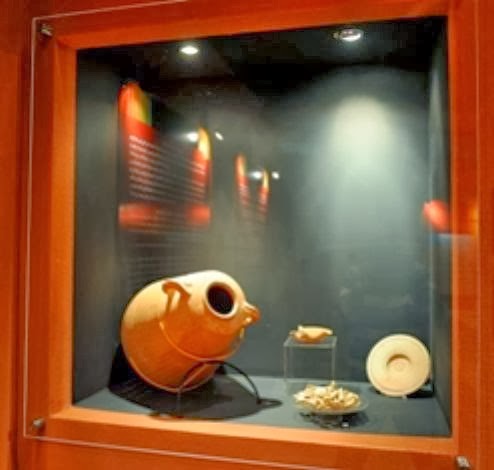

Arish, along with some items discovered in the tomb (including a jar), will be on display at the AUB Museum, in an exhibition entitled “The Young Phoenician Man of Carthage” [Credit: AUB Archaeological Museum] 


While the recreated man was brought to AUB, it was not possible to ship his skeleton, due to the difficulty of transporting human bones across countries. Instead, the museum decided to show one of the skeletons in its own collection. Arish, along with some items discovered in the tomb, will be on display at the AUB Museum, in an exhibition entitled “The Young Phoenician Man of Carthage,” organized by the Society of the Friends of the AUB Museum in collaboration with the National Museum of Carthage. The exhibition will run from January 29 to February 26, 2014. Opening hours are Monday to Friday 9:00 am to 5:00 pm. Exceptionally, the museum will also open on weekends between 11:00 am and 5:00 pm. For more information, please call 01-340 549. 

Source: The AUB Archaeological Museum [January 29, 2014]

Read more at: http://archaeologynewsnetwork.blogspot.it/2014/02/phoenician-man-of-carthage-returns-to.html?utm_source=feedburner&utm_medium=feed&utm_campaign=Feed:+TheArchaeologyNewsNetwork+(The+Archaeology+News+Network)#.UvEM7It0svo
Follow us: @ArchaeoNewsNet on Twitter | groups/thearchaeologynewsnetwork/ on Facebook