Visualizzazione post con etichetta Environment. Mostra tutti i post

domenica 28 settembre 2014

Ebola: previsioni.

I modelli utilizzati per prevedere l'evoluzione dell'infezione sono modelli adattivi, il che significa che aggiornano le proprie previsioni a seconda delle 
informazioni che gli giungono.

Inizialmente, si pensava che dopo nove mesi la situazione sarebbe stata sotto controllo, con 20.000 casi d'infezione.

Oggi, non è più così: le previsioni attuali considerano possibili 20,000 nuovi casi in un mese.
Soltanto in Liberia sono considerati possibili centinaia di migliaia di nuovi casi per fine gennaio.

Visto che una terapia medica è ancora inesistente e comunque meno efficace delle misure di supporto e di prevenzione è soprattutto sull'organizzazione di queste ultime che si deve porre attenzione.
Al momento, si considerano possibili 1.4 milioni di casi infetti totali per la fine di Gennaio 2015.


Ebola could infect more than 1.4 million people by end of January 2015 

The Ebola epidemic could claim hundreds of thousands of lives and infect more than 1.4 million people by the end of January, according to a statistical forecast released this week by the U.S. Centers for Disease Control and Prevention. 


The Ebola virus, shown in this scan from the Centers for Disease Control and Prevention,  could affect more than a million people in West Africa if left unchecked  [CREDIT:CDC/Virginia Tech] 


The CDC forecast supports the drastically higher projections released earlier by a group of scientists, including epidemiologists with the Virginia Bioinformatics Institute, who modeled the Ebola spread as part of a National Institutes of Health-sponsored project called Midas, short for Models of Infectious Disease Agent Study. 

The effort is also supported by the federal Defense Threat Reduction Agency. 
Before the scientists released results, the outbreak in West Africa was expected to be under control in nine months with only about 20,000 total cases.

But modeling showed 20,000 people could be infected in just a single month. 
The predictions could change dramatically if public health efforts become effective, but based on the virus's current uncontrolled spread, numbers of people infected could skyrocket. 
"If the disease keeps spreading as it has been we estimate there could be hundreds of thousands of cases by the end of the year in Liberia alone," said Bryan Lewis, a computational epidemiologist with the Network Dynamics and Simulation Science Laboratory at the Virginia Bioinformatics Institute. 
Lewis and his fellow researchers use a combination of models to predict outcomes of the epidemic. 


The Network Dynamics and Simulation Science Laboratory at the Virginia Bioinformatics  Institute modeled the rate of infections and how interventions would affect the rate  [CREDIT:CDC/Virginia Tech] 


The agent-based models are adaptive, evolving as more information is fed into them to provide an accurate forecast. 
Pharmaceutical intervention, which is still on the horizon, is proving less effective in the models than supportive care and personal protection equipment for health care workers.

 "The work with Ebola is not an isolated event," said Christopher Barrett, the executive director of the institute. "This research is part of a decades-long effort largely funded by the Defense Threat Reduction Agency to build a global synthetic population that will allow us to ask questions about our world and ourselves that we have never been able to ask before, and to use those answers to prevent or quickly intervene during a crisis." 

Barrett and other institute leaders updated U.S. Sen. Tim Kaine and Virginia Tech President Timothy Sands about the Network Dynamics and Simulation Science Lab's role in analyzing the Ebola outbreak at the Virginia Tech Research Center in Arlington on Tuesday morning. 
That afternoon in Blacksburg they briefed staff members from U.S. Sen. Mark Warner's office. A university-level Research Institute of Virginia Tech, the Virginia Bioinformatics Institute was established in 2000 with an emphasis on informatics of complex interacting systems scaling the microbiome to the entire globe. It helps solve challenges posed to human health, security, and sustainability. Headquartered at the Blacksburg campus, the institute occupies 154,600 square feet in research facilities, including state-of-the-art core laboratory and high-performance computing facilities, as well as research offices in the Virginia Tech Research Center in Arlington, Virginia. 


Source: Virginia Tech [September 26, 2014]

Read more at: http://archaeologynewsnetwork.blogspot.it/2014/09/computational-model-suggests-ebola.html?utm_source=feedburner&utm_medium=feed&utm_campaign=Feed:+TheArchaeologyNewsNetwork+(The+Archaeology+News+Network)#.VCgF4Sh7DfU
Follow us: @ArchaeoNewsNet on Twitter | groups/thearchaeologynewsnetwork/ on Facebook

mercoledì 30 luglio 2014

Non è il Pianeta delle scimmie.


Great apes face extinction: conservationist Jane Goodall


   The world's great apes face extinction within decades, renowned chimpanzee expert Jane Goodall warned Tuesday in a call to arms to ensure man's closest relatives are not wiped out. 


A chimpanzee at the zoo in Abidjan, Ivory Coast, 2014  [Credit: AFP/Sia Kambou]


 "If we don't take action the great apes will disappear, because of both habitat destruction as well as trafficking," Goodall told AFP in an interview in Nairobi. 
In the past half century, chimpanzee numbers have slumped from two million to just 300,000, spread over 21 countries, said Goodall, a British scientist who spent more than 
five decades studying chimpanzees in Tanzania's Gombe National Park.

 "If we don't change something, they certainly will disappear, or be left in tiny pockets where they will struggle from in-breeding," said 80-year-old Goodall, the first scientist to observe that apes as well as humans use tools. 

Experts predict that at the current rate, human development will have impacted 90 percent of the apes' habitat in Africa and 99 percent in Asia by 2030, according to a UN-backed report last month. 
Infrastructure development and extraction of natural resources -- including timber, minerals, oil and gas -- have devastated the prime habitat of apes and pushed chimpanzees, gorillas, bonobos, orangutans and gibbons closer to extinction. 

'We're schizophrenic' For Goodall, the destruction is part of mankind's wider attack on nature. "If we don't do anything to protect the environment, which we've already partially destroyed, I wouldn't want to be a child being born in 50 years time," Goodall added. "We're schizophrenic: we've got this amazing intelligence, but we seem to have lost the power of working in harmony with nature." 


British primatologist and anthropologist Jane Goodall gestures as she gives a talk on  her new book "Seeds of Hope" in Nairobi, Kenya in July 2014  
[Credit: AFP/Tony Karumba] 


As well as a tragic loss, Goodall said the death of man's closet relatives would act as a stark warning sign of climate change and global warming. "If we lose them (apes), it is probably because we have also lost the forests, and that would have a totally devastating impact on climate change," she said. 
"Climate change is so evident everywhere. There are leaders who say they don't believe in climate change, but I can't believe they really believe that, maybe they are just stupid." All species of apes are listed as endangered by the International Union for the Conservation of Nature (IUCN), some critically so. 
'Your life makes a difference' 
"People are losing the connection to the natural world," said Goodall. "You'd think that the most intellectual creature on the planet would know better than to destroy its only home, but we are destroying the planet very, very quickly." 


A Bornean orangutan (Pongo pygmaeus) in a close-up portrait in the rainforest  of Borneo.Orang Utans are critically endangered, mostly because their  habitat has decreased rapidly due to logging 
[Credit: Getty] 


But Goodall, who has set up volunteer conservation groups across the continent, urges people not to despair but to take action. "Climate change threatens every little part of the planet, and we can't stop that, but if we get together we can help to slow the effects," she said. 
Goodall recounted how in war-ravaged eastern Democratic Republic of Congo, children inspired by her conservation group negotiated with a local militia force, persuading the intially puzzled commander to give them access to replant trees on a hillside. 
"Within 30 minutes, all four soldiers with them had laid aside their guns and were helping the children to plant the trees," she said. "It is symbolic of what can happen if we can work together." 

"My last message to everybody, really, is to understand that your life matters, your life makes a difference," she said. "So many people give up and they feel hopeless.. and so do nothing. But if you take action locally, you can do something." 

Source: AFP [July 29, 2014]

Read more at: http://archaeologynewsnetwork.blogspot.it/2014/07/great-apes-face-extinction.html?utm_source=feedburner&utm_medium=feed&utm_campaign=Feed:+TheArchaeologyNewsNetwork+(The+Archaeology+News+Network)#.U9kRYih7DfW
Follow us: @ArchaeoNewsNet on Twitter | groups/thearchaeologynewsnetwork/ on Facebook

martedì 3 giugno 2014

Le 5 Minacce più gravi alla Specie Umana.

The five biggest threats to human existence 


  In the daily hubbub of current “crises” facing humanity, we forget about the many generations we hope are yet to come. Not those who will live 200 years from now, but 1,000 or 10,000 years from now. I use the word “hope” because we face risks, called existential risks, that threaten to wipe out humanity. These risks are not just for big disasters, but for the disasters that could end history.


Other ways humanity could end are more subtle  [Credit: United States Department of Energy, CC BY] 

Not everyone has ignored the long future though. 
Mystics like Nostradamus have regularly tried to calculate the end of the world. HG Wells tried to develop a science of forecasting and famously depicted the far future of humanity in his book "The Time Machine"!. 
Other writers built other long-term futures to warn, amuse or speculate. But had these pioneers or futurologists not thought about humanity’s future, it would not have changed the outcome. There wasn’t much that human beings in their place could have done to save us from an existential crisis or even cause one. We are in a more privileged position today. Human activity has been steadily shaping the future of our planet. And even though we are far from controlling natural disasters, we are developing technologies that may help mitigate, or at least, deal with them. 

Future imperfect

 Yet, these risks remain understudied. There is a sense of powerlessness and fatalism about them. People have been talking apocalypses for millennia, but few have tried to prevent them. Humans are also bad at doing anything about problems that have not occurred yet (partially because of the availability heuristic – the tendency to overestimate the probability of events we know examples of, and underestimate events we cannot readily recall). If humanity becomes extinct, at the very least the loss is equivalent to the loss of all living individuals and the frustration of their goals. But the loss would probably be far greater than that. Human extinction means the loss of meaning generated by past generations, the lives of all future generations (and there could be an astronomical number of future lives) and all the value they might have been able to create. If consciousness or intelligence are lost, it might mean that value itself becomes absent from the universe. This is a huge moral reason to work hard to prevent existential threats from becoming reality. And we must not fail even once in this pursuit. With that in mind, I have selected what I consider the five biggest threats to humanity’s existence. But there are caveats that must be kept in mind, for this list is not final. Over the past century we have discovered or created new existential risks – supervolcanoes were discovered in the early 1970s, and before the Manhattan project nuclear war was impossible – so we should expect others to appear. Also, some risks that look serious today might disappear as we learn more. The probabilities also change over time – sometimes because we are concerned about the risks and fix them. Finally, just because something is possible and potentially hazardous, doesn’t mean it is worth worrying about. There are some risks we cannot do anything at all about, such as gamma ray bursts that result from the explosions of galaxies. But if we learn we can do something, the priorities change. For instance, with sanitation, vaccines and antibiotics, pestilence went from an act of God to bad public health. 

1. Nuclear war. 

While only two nuclear weapons have been used in war so far – at Hiroshima and Nagasaki in World War II – and nuclear stockpiles are down from their the peak they reached in the Cold War, it is a mistake to think that nuclear war is impossible. In fact, it might not be improbable. The Cuban Missile crisis was very close to turning nuclear. If we assume one such event every 69 years and a one in three chance that it might go all the way to being nuclear war, the chance of such a catastrophe increases to about one in 200 per year. Worse still, the Cuban Missile crisis was only the most well-known case. The history of Soviet-US nuclear deterrence is full of close calls and dangerous mistakes. The actual probability has changed depending on international tensions, but it seems implausible that the chances would be much lower than one in 1000 per year. A full-scale nuclear war between major powers would kill hundreds of millions of people directly or through the near aftermath – an unimaginable disaster. But that is not enough to make it an existential risk. Similarly the hazards of fallout are often exaggerated – potentially deadly locally, but globally a relatively limited problem. Cobalt bombs were proposed as a hypothetical doomsday weapon that would kill everybody with fallout, but are in practice hard and expensive to build. And they are physically just barely possible. The real threat is nuclear winter – that is, soot lofted into the stratosphere causing a multi-year cooling and drying of the world. Modern climate simulations show that it could preclude agriculture across much of the world for years. If this scenario occurs billions would starve, leaving only scattered survivors that might be picked off by other threats such as disease. The main uncertainty is how the soot would behave: depending on the kind of soot the outcomes may be very different, and we currently have no good ways of estimating this. 

2. Bioengineered pandemic. 

Natural pandemics have killed more people than wars. However, natural pandemics are unlikely to be existential threats: there are usually some people resistant to the pathogen, and the offspring of survivors would be more resistant. Evolution also does not favor parasites that wipe out their hosts, which is why syphilis went from a virulent killer to a chronic disease as it spread in Europe. Unfortunately we can now make diseases nastier. One of the more famous examples is how the introduction of an extra gene in mousepox – the mouse version of smallpox – made it far more lethal and able to infect vaccinated individuals. Recent work on bird flu has demonstrated that the contagiousness of a disease can be deliberately boosted. Right now the risk of somebody deliberately releasing something devastating is low. But as biotechnology gets better and cheaper, more groups will be able to make diseases worse. Most work on bioweapons have been done by governments looking for something controllable, because wiping out humanity is not militarily useful. But there are always some people who might want to do things because they can. Others have higher purposes. For instance, the Aum Shinrikyo cult tried to hasten the apocalypse using bioweapons beside their more successful nerve gas attack. Some people think the Earth would be better off without humans, and so on. The number of fatalities from bioweapon and epidemic outbreaks attacks looks like it has a power-law distribution – most attacks have few victims, but a few kill many. Given current numbers the risk of a global pandemic from bioterrorism seems very small. But this is just bioterrorism: governments have killed far more people than terrorists with bioweapons (up to 400,000 may have died from the WWII Japanese biowar program). And as technology gets more powerful in the future nastier pathogens become easier to design. 

3. Superintelligence. 

Intelligence is very powerful. A tiny increment in problem-solving ability and group coordination is why we left the other apes in the dust. Now their continued existence depends on human decisions, not what they do. Being smart is a real advantage for people and organisations, so there is much effort in figuring out ways of improving our individual and collective intelligence: from cognition-enhancing drugs to artificial-intelligence software. The problem is that intelligent entities are good at achieving their goals, but if the goals are badly set they can use their power to cleverly achieve disastrous ends. There is no reason to think that intelligence itself will make something behave nice and morally. In fact, it is possible to prove that certain types of superintelligent systems would not obey moral rules even if they were true. Even more worrying is that in trying to explain things to an artificial intelligence we run into profound practical and philosophical problems. Human values are diffuse, complex things that we are not good at expressing, and even if we could do that we might not understand all the implications of what we wish for. Software-based intelligence may very quickly go from below human to frighteningly powerful. The reason is that it may scale in different ways from biological intelligence: it can run faster on faster computers, parts can be distributed on more computers, different versions tested and updated on the fly, new algorithms incorporated that give a jump in performance. It has been proposed that an “intelligence explosion” is possible when software becomes good enough at making better software. Should such a jump occur there would be a large difference in potential power between the smart system (or the people telling it what to do) and the rest of the world. This has clear potential for disaster if the goals are badly set. The unusual thing about superintelligence is that we do not know if rapid and powerful intelligence explosions are possible: maybe our current civilisation as a whole is improving itself at the fastest possible rate. But there are good reasons to think that some technologies may speed things up far faster than current societies can handle. Similarly we do not have a good grip on just how dangerous different forms of superintelligence would be, or what mitigation strategies would actually work. It is very hard to reason about future technology we do not yet have, or intelligences greater than ourselves. Of the risks on this list, this is the one most likely to either be massive or just a mirage. This is a surprisingly under-researched area. Even in the 50s and 60s when people were extremely confident that superintelligence could be achieved “within a generation”, they did not look much into safety issues. Maybe they did not take their predictions seriously, but more likely is that they just saw it as a remote future problem.

 4. Nanotechnology. 

Nanotechnology is the control over matter with atomic or molecular precision. That is in itself not dangerous – instead, it would be very good news for most applications. The problem is that, like biotechnology, increasing power also increases the potential for abuses that are hard to defend against. The big problem is not the infamous “grey goo” of self-replicating nanomachines eating everything. That would require clever design for this very purpose. It is tough to make a machine replicate: biology is much better at it, by default. Maybe some maniac would eventually succeed, but there are plenty of more low-hanging fruits on the destructive technology tree. The most obvious risk is that atomically precise manufacturing looks ideal for rapid, cheap manufacturing of things like weapons. In a world where any government could “print” large amounts of autonomous or semi-autonomous weapons (including facilities to make even more) arms races could become very fast – and hence unstable, since doing a first strike before the enemy gets a too large advantage might be tempting. Weapons can also be small, precision things: a “smart poison” that acts like a nerve gas but seeks out victims, or ubiquitous “gnatbot” surveillance systems for keeping populations obedient seems entirely possible. Also, there might be ways of getting nuclear proliferation and climate engineering into the hands of anybody who wants it. We cannot judge the likelihood of existential risk from future nanotechnology, but it looks like it could be potentially disruptive just because it can give us whatever we wish for. 

5. Unknown unknowns. 

The most unsettling possibility is that there is something out there that is very deadly, and we have no clue about it. The silence in the sky might be evidence for this. Is the absence of aliens due to that life or intelligence is extremely rare, or that intelligent life tends to get wiped out? If there is a future Great Filter, it must have been noticed by other civilisations too, and even that didn’t help. Whatever the threat is, it would have to be something that is nearly unavoidable even when you know it is there, no matter who and what you are. We do not know about any such threats (none of the others on this list work like this), but they might exist. Note that just because something is unknown it doesn’t mean we cannot reason about it. In a remarkable paper Max Tegmark and Nick Bostrom show that a certain set of risks must be less than one chance in a billion per year, based on the relative age of Earth. You might wonder why climate change or meteor impacts have been left off this list. Climate change, no matter how scary, is unlikely to make the entire planet uninhabitable (but it could compound other threats if our defences to it break down). Meteors could certainly wipe us out, but we would have to be very unlucky. The average mammalian species survives for about a million years. Hence, the background natural extinction rate is roughly one in a million per year. This is much lower than the nuclear-war risk, which after 70 years is still the biggest threat to our continued existence. The availability heuristic makes us overestimate risks that are often in the media, and discount unprecedented risks. If we want to be around in a million years we need to correct that. 

Author: Anders Sandberg  

Source: The Conversation [May 29, 2014]

Read more at: http://archaeologynewsnetwork.blogspot.it/2014/05/the-five-biggest-threats-to-human.html?utm_source=feedburner&utm_medium=feed&utm_campaign=Feed:+TheArchaeologyNewsNetwork+(The+Archaeology+News+Network)#.U43Y7XJ_uSo
Follow us: @ArchaeoNewsNet on Twitter | groups/thearchaeologynewsnetwork/ on Facebook

sabato 3 maggio 2014

Dendro il Clima

Tree rings reveal nightmare droughts in western USA 


If you think the 1930s drought that caused The Dust Bowl was rough, new research looking at tree rings in the Rocky Mountains has news for you: Things can get much worse in the West. 


Scientists extended Utah's climate record back to 1429 using tree rings. They  found Utah's climate has seen extreme droughts, including one that lasted 16 years  [Credit: Brigham Young University] 


In fact the worst drought of this century barely makes the top 10 of a study that extended Utah's climate record back to the year 1429. With sandpaper and microscopes, Brigham Young University professor Matthew Bekker analyzed rings from drought-sensitive tree species. He found several types of scenarios that could make life uncomfortable in what is now the nation's third-fastest-growing state: Long droughts: The year 1703 kicked off 16 years in a row with below average stream flow. Intense droughts: The Weber River flowed at just 13 percent of normal in 1580 and dropped below 20 percent in three other periods. Consecutive worst-case scenarios: The most severe drought in the record began in 1492, and four of the five worst droughts all happened during Christopher Columbus' lifetime. 


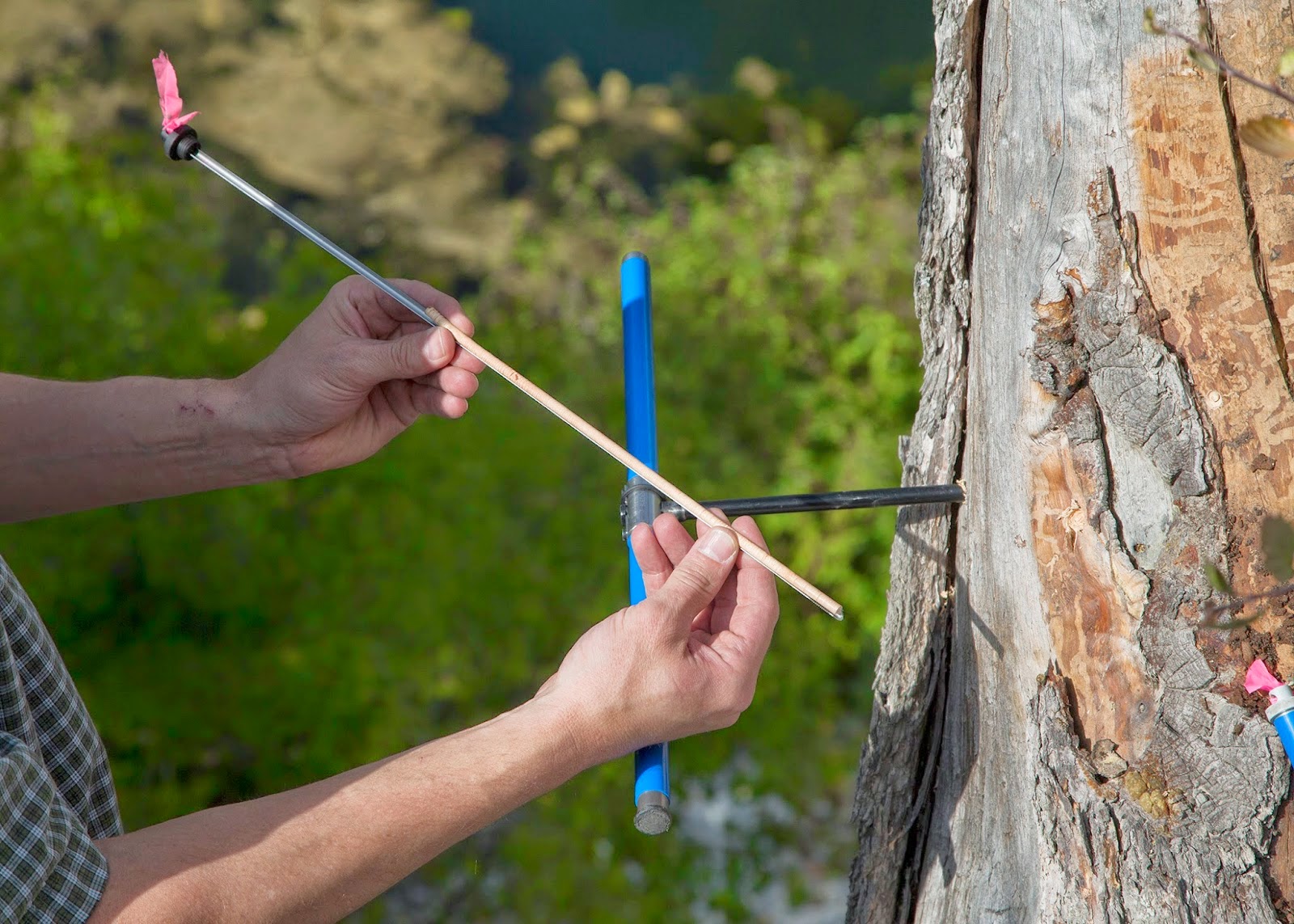
Professor Bekker extracts a core sample from a dead tree in Provo canyon  [Credit: Brigham Young University] 


"We're conservatively estimating the severity of these droughts that hit before the modern record, and we still see some that are kind of scary if they were to happen again," said Bekker, a geography professor at BYU. "We would really have to change the way we do things here." Modern climate and stream flow records only go back about 100 years in this part of the country, so scientists like Bekker turn to Mother Nature's own record-keeping to see the bigger picture. For this study, the BYU geographer took sample cores from Douglas fir and pinyon pine trees. The thickness of annual growth rings for these species is especially sensitive to water supply. 
Using samples from both living and dead trees in the Weber River basin, the researchers built a tree-ring chronology that extends back 585 years into Utah's natural history. Modern stream flow measurements helped them calibrate the correlation between ring thickness and drought severity. As Bekker and his co-authors report in the Journal of the American Water Resources Association, the west's climate usually fluctuates far more than 
it did in the 1900s.


 The five previous centuries each saw more years of extremely dry and extremely wet climate conditions. "We're trying to work with water managers to show the different flavors of droughts this region has had," said Bekker. "These are scenarios you need to build into your models to know how to plan for the future." 
Bekker collaborated with researchers from the U.S. Forest Service, Columbia University and Utah State University. 
The team is currently working on a climate reconstruction based on tree rings that date back more than 1,000 years. 


Source: Brigham Young University [May 01, 2014]

Read more at: http://archaeologynewsnetwork.blogspot.it/2014/05/tree-rings-reveal-nightmare-droughts-in.html?utm_source=feedburner&utm_medium=email&utm_campaign=Feed:+TheArchaeologyNewsNetwork+(The+Archaeology+News+Network)#.U2SW-ih7DfU
Follow us: @ArchaeoNewsNet on Twitter | groups/thearchaeologynewsnetwork/ on Facebook

martedì 8 aprile 2014

Lo "Strato Detergente"


Previously 

unknown 

atmospheric

 phenomenon 

discovered 


An international team of researchers headed by Potsdam scientist Dr. Markus Rex from the Alfred Wegener Institute has discovered a previously unknown atmospheric phenomenon over the South Seas. Over the tropical West Pacific there is a natural, invisible hole extending over several thousand kilometres in a layer that prevents transport of most of the natural and humanmade substances into the stratosphere by virtue of its chemical composition. Like in a giant elevator, many chemical compounds emitted at the ground pass thus unfiltered through this so-called "detergent layer" of the atmosphere. Scientists call it the "OH shield." 
The newly discovered phenomenon over the South Seas boosts ozone depletion in the polar regions and could have a significant influence on the future climate of Earth -- also because of rising air pollution in South East Asia. 


In tropical thunderstorms over the West Pacific air masses and the chemical substances they contain are quickly hurled upward to the edge of the stratosphere. If there are sufficient OH molecules in the atmosphere, the air is extensively cleaned by chemical transformation processes. Where OH concentrations are low, such as those now found in large sections of the tropical West Pacific, the cleaning capacity of the atmosphere is reduced 
[Credit: © Markus Rex, Alfred Wegener Institute Helmholtz Centre for Polar and Marine Research]


 At first Dr. Markus Rex suspected a series of flawed measurements. In October 2009 the atmospheric physicist from the Alfred Wegener Institute, Helmholtz Centre for Polar and Marine Research (AWI) was on board the German research vessel "Sonne" to measure trace substances in the atmosphere in the tropical West Pacific. 
Tried and tested a thousand times over, the ozone probes he sent up into the tropical sky with a research balloon every 400 kilometres reported -- nothing. Or to be more accurate: almost nothing. The ozone concentrations in his measurements remained nearly constantly below the detection limit of approx. 10 ppbv in the entire vertical range from the surface of Earth to an altitude of around 15 kilometres. 
Normally ozone concentrations in this part of the atmosphere are three to ten times higher. 
(One part of ozone per billion by volume (ppbv) means there is one ozone molecule for every billion air molecules.) 
Although low values at an altitude of around 15 kilometres were known from earlier measurements in the peripheral area of the tropical West Pacific, the complete absence of ozone at all heights was surprising. However, after a short period of doubt and various tests of the instruments it dawned on the worldwide recognized ozone specialist that he might be onto a phenomenon yet unknown to science. 
A few research years later and after the involvement of other colleagues came confirmation: Markus Rex and his team on board the "Sonne" had tracked down a giant natural hole over the tropical South Seas, situated in a special layer of the lower atmosphere known as the "OH shield." 
The research results on the newly discovered OH minimum will be published soon in the journal Atmospheric Chemistry and Physics, with the Institute of Environmental Physics of the University of Bremen and other international research institutions as partners. 


Nearly all chemical substances produced by people, animals, plants, algae or microorganisms on the ground or in the oceans react quickly with OH and break down in this process. During this chemical self-cleaning process substances that are not easily water-soluble are transformed into water-soluble products and then washed out by precipitation. Through this mechanism OH molecules remove most substances from the atmosphere. The OH molecule is therefore also called the detergent of the atmosphere. Only extremely long-lived chemical compounds, such as methane or CFCs, also known as "ozone killers", can rise through the OH shield into the stratosphere 
[Credit: Markus Rex, Alfred Wegener Institute] 


"Even though the sky appears to be an extensively uniform space for most people, it is composed of chemically and physically very different layers," Markus Rex explains the complex makeup of the atmosphere. 
The air layers near the ground contain hundreds or even thousands of chemical compounds. This is why winter and spring, mountains and sea, city and forests all have a distinct smell. The great majority of these substances are broken down into water-soluble compounds in the lower kilometres of the atmosphere and are subsequently washed out by rain. 
Since these processes require the presence of a certain chemical substance, the so called hydroxyl (=OH) radical, this part of the atmosphere is called the "OH shield." 

It acts like a huge atmospheric washing machine in which OH is the detergent. 
The OH shield is part of the troposphere, as the lower part of the atmosphere is called. "Only a few, extremely long-lived compounds manage to make their way through the OH shield," says Rex, "then they also get through the tropopause and enter the stratosphere." Tropopause refers to the boundary layer between the troposphere and the next atmospheric layer above it, the stratosphere. 
Particularly substances that enter the stratosphere unfold a global impact. The reason for this is that once they have reached the stratosphere, their degradation products remain up there for many years and spread over the entire globe. 


Location and extent of low ozone concentrations and thus of the OH hole over the West Pacific. Fig. (a) shows the region of origin of the air in the stratosphere, Fig. (b) ozone sonde measurements (dots) and satellite measurements (coloured map) of the total amount of ozone in the tropospheric column of air and Fig. (c) the total amount of OH in the tropospheric column of air calculated with a model 
[Credit: Markus Rex, Alfred Wegener Institute] 


Extremely long-lived chemical compounds find their way to the stratosphere, even where the OH shield is intact. These include methane, nitrous oxide ("laughing gas"), halons, methyl bromide and chlorofluorocarbons (CFCs), which are notorious as "ozone killers" because they play a major role in ozone depletion in the polar regions. After many years of research scientists now understand the complicated process of stratospheric ozone depletion very well. "Nevertheless measured ozone depletion rates were often quite a bit larger than theoretically calculated in our models," Markus Rex points out a long unsolved problem of atmospheric research. "Through the discovery of the OH hole over the tropical West Pacific we have now presumably made a contribution to solving this puzzle." And at the same time discovered a phenomenon that raises a number of new questions for climate policy. Researchers are now tackling these questions in a new research project funded by the EU with around 9 million euros, i.e. "StratoClim," which is coordinated by the Alfred Wegener Institute. Within this project a new monitoring station will be established in the tropical Westpacific, together with the Institute of Environmental Physics at the University of Bremen. 
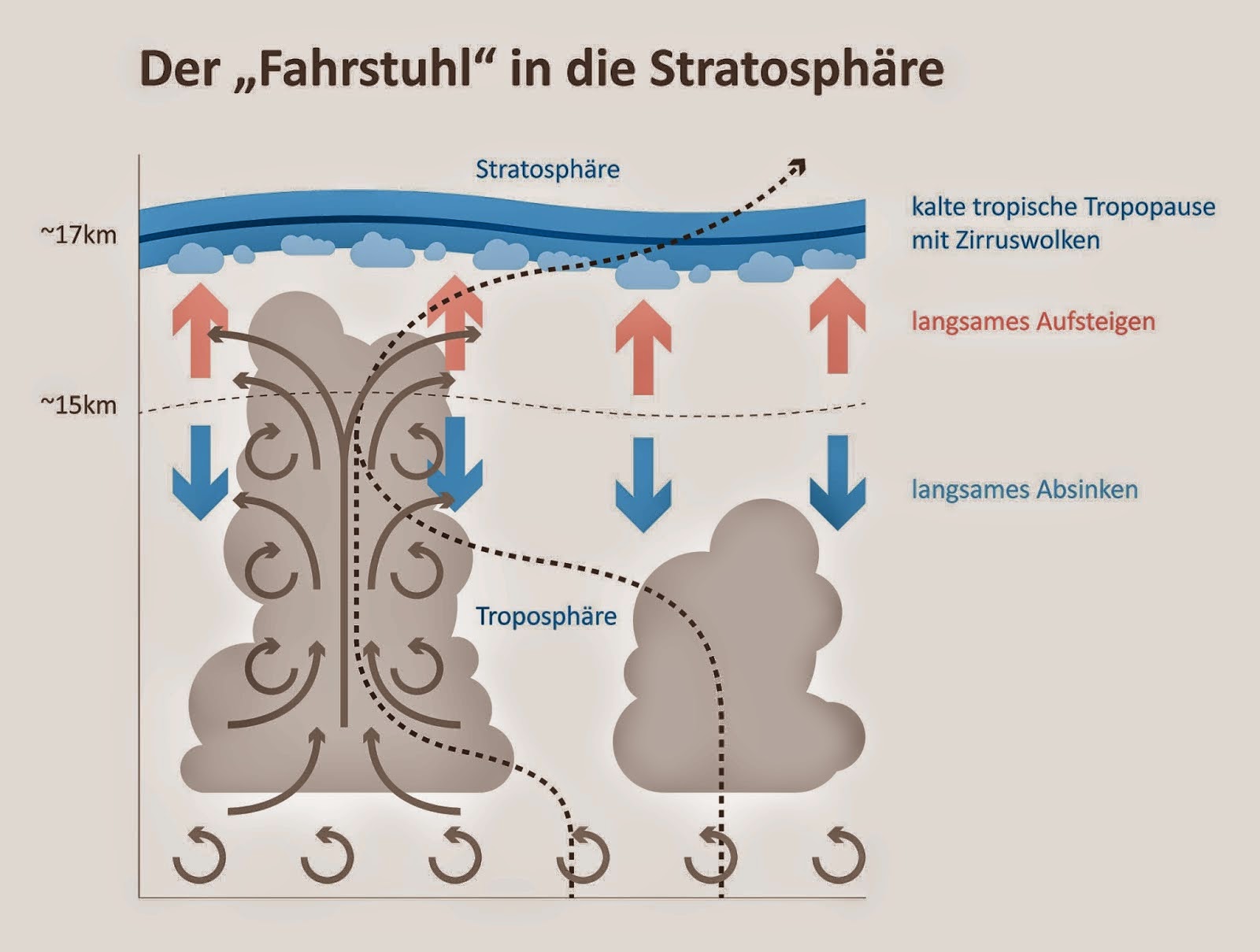


This is how air reaches the stratosphere. Through the rapid upward transport in tropical thunderstorms they reach an area of slow large-scale ascent and rise from there through the tropopause into the stratosphere over the course of weeks. This process is most pronounced during northern hemispheric winter. Model calculations show that, during this season,this process mainly takes place over the tropical West Pacific. Due to the formation of cirrus (= ice) clouds in the extremely cold tropical tropopause, a large portion of the water-soluble chemical substances is removed from the air and cannot reach the stratosphere. OH molecules transform water-insoluble into water-soluble compounds. Hence, if the concentration of OH molecules along the dotted transport pathways shown above is high only few chemical compounds make it into the stratosphere. Conversely, the lower the OH concentration is along the transport pathways, the more chemical compounds enter the stratosphere 
[Credit: Yves Nowak, Alfred Wegener Institute] 


"We have to realise," reminds the Potsdam atmospheric physicist, "that chemical compounds which enter the stratosphere always have a global impact." 
Thanks to the OH hole that the researchers discovered over the tropical Pacific, greater amounts of brominated hydrocarbons can reach the stratosphere than in other parts of the world. 
Although their ascent takes place over the tropical West Pacific, these compounds amplify ozone depletion in the polar regions. 

Since scientists identified this phenomenon and took it into account in the modelling of stratospheric ozone depletion, their models have corresponded excellently with the actually measured data. 
However, it is not only brominated hydrocarbons that enter the stratosphere over the tropical West Pacific. "You can imagine this region as a giant elevator to the stratosphere," states Markus Rex using an apt comparison. Other substances, too, rise here to a yet unknown extent while they are intercepted to a larger extent in the OH shield elsewhere on the globe. 
One example is sulphur dioxide, which has a significant impact on the climate.


The graph shows ozone profiles measured in three different marine regions: the tropical Atlantic, the tropical West Pacific and the West Pacific outside the tropics. 
The red curve clearly shows that ozone is consistently very low up to an altitude of 15 kilometres over the tropical West Pacific. In the other regions the ozone concentrations are in a range typical for the troposphere
 [Credit: Markus Rex, Alfred Wegener Institute] 

Sulphur particles in the stratosphere reflect sunlight and therefore act antagonistically to atmospheric greenhouse gases like CO2, which capture the heat of the sun on Earth. To put it simply, whereas greenhouse gases in the atmosphere heat the globe, sulphur particles in the stratosphere have a cooling effect. "South East Asia is developing rapidly in economic terms," Markus Rex explains a problem given little attention to date. "Contrary to most industrial nations, however, little has been invested in filter technology up to now. That is why sulphur dioxide emissions are increasing substantially in this region at present." If one takes into account that sulphur dioxide may also reach the stratosphere via the OH hole over the tropical West Pacific, it quickly becomes obvious that the atmospheric elevator over the South Seas not only boosts ozone depletion, but may influence the climate of the entire Earth. In fact, the aerosol layer in the stratosphere, which is also composed of sulphur particles, seems to have become thicker in recent years. Researchers do not know 
yet whether there is a connection here.


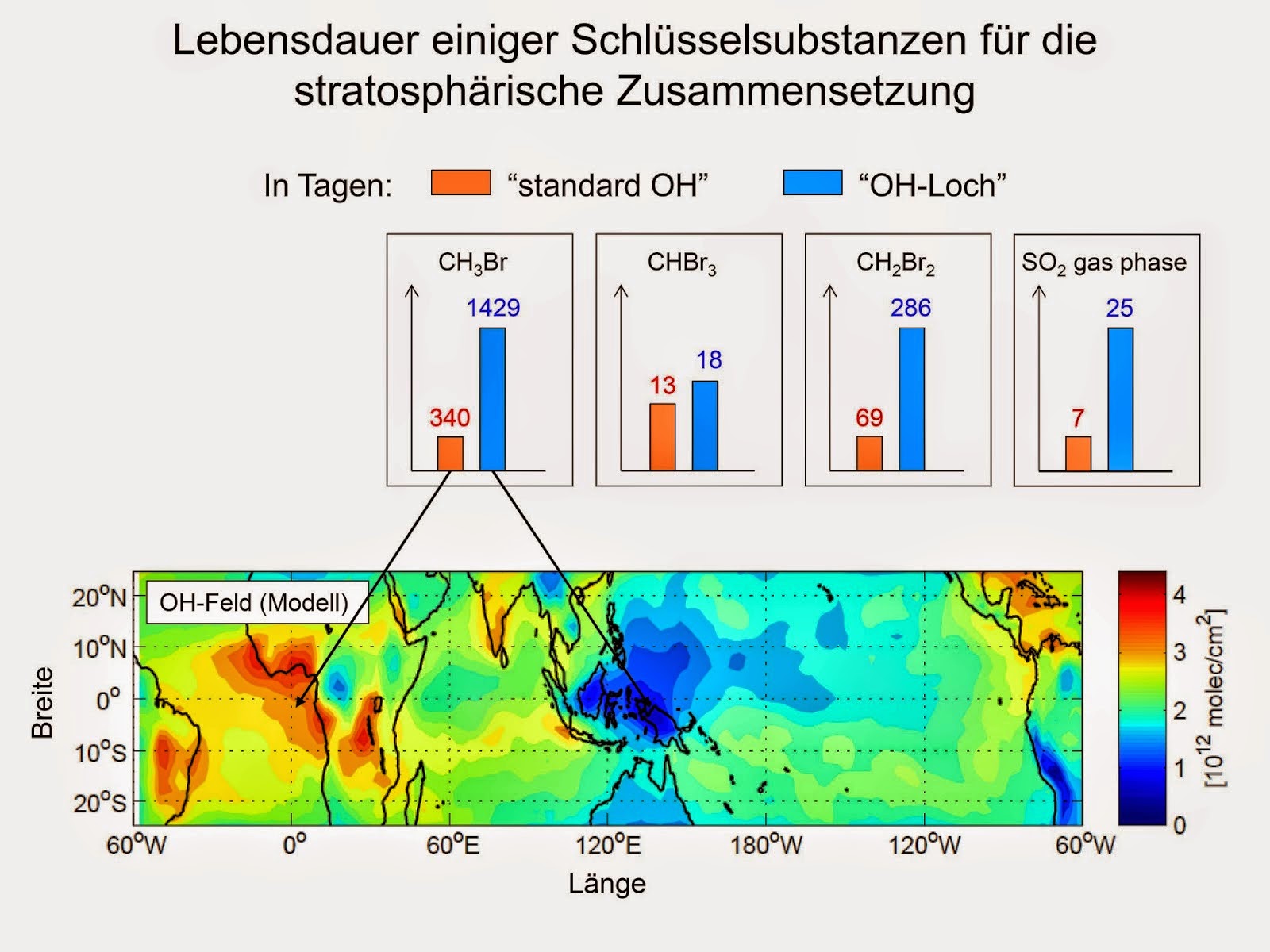
The illustration shows the average lifetime of sulphur dioxide and some brominated hydrocarbons for normal conditions over the tropical Atlantic and for conditions of reduced OH-concentrations over the tropical West Pacific 
[Credit: Markus Rex, Alfred Wegener Institute] 


But wouldn't it be a stroke of luck if air pollutants from South East Asia were able to mitigate climate warming? "By no means," Markus Rex vigorously shakes his head. "The OH hole over the South Seas is above all further evidence of how complex climate processes are. 

And we are still a long way off from being in a position to assess the consequences of increased sulphur input into the stratosphere. Therefore, we should make every effort to understand the processes in the atmosphere as best we can and avoid any form of conscious or unconscious manipulation that would have an unknown outcome." 
Background: Why is there an OH hole over the West Pacific? 
The air in the tropical West Pacific is extremely clean.
 Air masses in this area were transported across the expanse of the huge Pacific with the trade winds and for a long time no longer had contact with forests or other land ecosystems that produce innumerable short-lived hydrocarbons and release them into the air. 
Under these clean air conditions OH is formed from ozone through chemical transformation to a great degree. If there is hardly any ozone in the lower atmosphere (= troposphere), as is the case in the West Pacific, only little OH can be formed. The result is an OH hole.
 Ozone, in turn, forms in the lower atmosphere only if there are sufficient nitrogen oxides there. Large amounts of nitrogen oxide compounds are produced in particular by intensive lightning over land.

However, the air masses in the tropical West Pacific were not exposed to any continental tropical storms for a very long time during their transport across the giant ocean. And the lightning activity in storms over the ocean is relatively small. At the same time the lifetime of atmospheric ozone is short due to the exceptionally warm and moist conditions in the tropical West Pacific. In this South Sea region the surface temperatures of the ocean are higher than anywhere else on our planet, which makes the air not only quite warm, but also quite moist.
 The ozone is thus quickly lost, especially directly above the water. And due to the lack of nitrogen oxide compounds little ozone is subsequently formed. Rapid vertical mixing in the convection areas that exist everywhere over the warm ocean and in which the warm air rises takes care of the rest. 
Finally, there is no more ozone in the entire column of air in the troposphere. And without ozone (see above) the formation of OH is suppressed. What impact does the OH hole over the West Pacific have? 
The OH molecule is also called the detergent of the atmosphere. Nearly all of the thousands of different chemical substances produced by people, animals, plants, fungi, algae or microorganisms on the ground or in the oceans react quickly with OH and break down in this process. Therefore, virtually none of these substances rises into the stratosphere. In the area of the OH hole, however, a larger portion of this varied chemical mix can enter the stratosphere. And local emissions may unfold a global impact, especially if they make it to the stratosphere. There they spread globally and can influence the composition of the air for many years -- with far-reaching consequences for ozone chemistry, aerosol formation and climate. 
Why wasn't the OH hole discovered earlier?

 The tropical West Pacific is one of the most remote regions on our planet. 

That is why extensive measurements of the air composition have yet to take place in this area. There is also a considerable gap in the otherwise dense network of global ozone measurement stations here. 
Even in the past measurements from the peripheral sections of the now investigated region showed minimal ozone values in the area of the upper troposphere, but not the consistently low values that have now been found across the entire depth of the troposphere. 
The newly discovered phenomenon reveals itself in its full scope only through the measurements that were conducted to such an extensive degree for the first time and was thus not able to be grasped at all previously. 


Source: Alfred Wegener Institute, Helmholtz Centre for Polar and Marine Research [April 03, 2014]

Read more at: http://archaeologynewsnetwork.blogspot.it/2014/04/previously-unknown-atmospheric.html?utm_source=feedburner&utm_medium=feed&utm_campaign=Feed:+TheArchaeologyNewsNetwork+(The+Archaeology+News+Network)#.U0OrDyh7DfU
Follow us: @ArchaeoNewsNet on Twitter | groups/thearchaeologynewsnetwork/ on Facebook