Visualizzazione post con etichetta otzi. Mostra tutti i post

sabato 25 luglio 2015

Antìfrasi

Lo dichiaro in parole piane, perché c'è sempre qualcuno che può fraintendere certe parole difficili e concetti espressi in modo elegantemente complicato: questo articolo di Marcello Madau sostiene esattamente il contrario di ciò che sembra. E' sarcastico e prende le distanze da una tesi (ormai vecchia, ma popolarissima nell'ambiente malsano del Fantarcheosardismo) tra numerosissime ipotesi ridicolmente farneticanti, che un certo ambiente sardo riesce meravigliosamente a produrre a getto continuo. Per "riscrivere la Storia Sarda", naturalmente... 

La cultura di Ötzieri
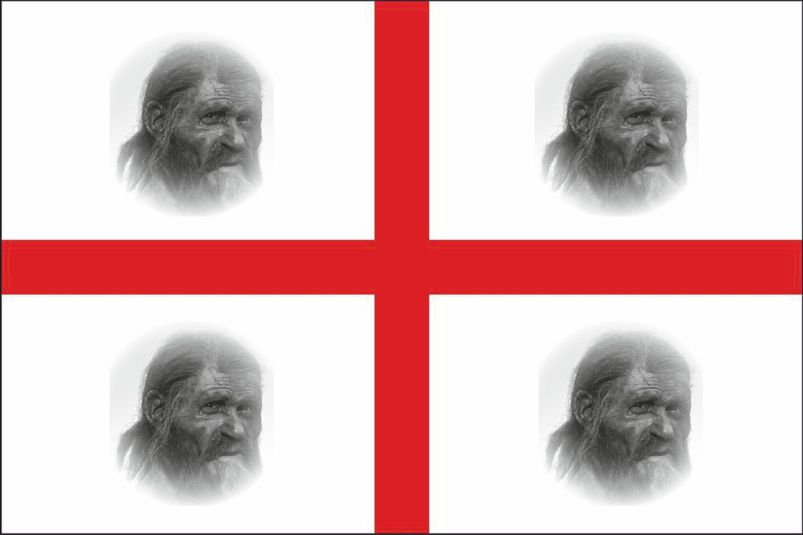

1024px-Bandiera_ufficiale_RAS_otzi_blog


Una nuova luce riscrive la storia della Sardegna, all’estremo confine dei limiti italiani, dove l’Italia è già Austria, e l’Austria italiana; ce la dona l’uomo dagli occhi marrone, eroico nei ghiacci a lui inconsueti eppure dominati, fiero nonostante il corpo pieno di zecche. Risplende la luce di un montanaro sardo il cui nome nasconde, alla semplicità dei simboli che si fanno lingua uno dei più antichi regni sherdanu, il Monte Acuto.

E’ nell’area sardo-corsa che si trovano le tracce del suo DNA, legate ad un antenato comune, con segni genetici affini, del Vicino Oriente
. Così la scienza.
La storia dei dominatori sta già scrivendo, con la sottile violenza del metodo scientifico, che le tracce orientali rimaste nelle isole gemelle e presenti in Ötzi siano quanto ci rimane di un fenomeno storico più vasto, di una migrazione di semi, tecniche agricole e uomini orientali dai tempi lontani (ora a noi vicini) del neolitico. Non ci faremo togliere anche Ötzi. Neppure l’Oriente, le ziqqurat da noi fondate in Mesopotamia partendo da Monte d’Akkoddi.
Le tracce antropologiche, la cronologia, la linguistica sono concordi, in una schiacciante prova indiziaria.
I tremila anni prima di Cristo corrispondono al nostro Neolitico recente, in quella fase finale che già conosceva e usava il rame. E Ötzi portava un pugnale di rame. Il nostro Neolitico recente è chiamato Cultura di O(t)zieri. Neanche lo storico più attento può negare questo calco!
Similaun è con evidenza un riadattamento linguistico locale: vi si annida un nome sardo composito, che ci porta sino al magico triplice flauto di canna: simi-lau.
I nomi delle persone, come Cotzia e Motzo, gli esseri del mondo marino, le Ortziadas. Di Ötzieri abbiamo già detto. E non vi è bisogno di insistere su questa folgorante corrispondenza linguistica, dove il confronto si fa scienza e la scienza diventa emozione. Assieme, orgoglio popolare e sogno che nessuno ci potrà più togliere.
Ötzi morì in una montagna lontana, ma conosceva questo elemento, come prova il nome del piccolo regno di cui è capitale Ötzieri, il Monte Acuto.
La sua vita è per noi un insegnamento storico, anche nelle intolleranze alimentari e nelle orrende infezioni: che non resistesse al lattosio ci fa cogliere le sue origini profonde, che risalgono agli antichi sardi cacciatori e raccoglitori, della cui avita vicenda, fatta di selce e cervi e grandi foreste, portava il testimone. Che non sopravvisse al morso delle zecche ci svela, nel sacrifico personale, il mito. Il corpo eroico lottò oltre l’inverosimile, ma nessuno, in quella terra lontana, conosceva la terapia della ballerina variopinta.
Perciò la sua sofferenza diventò la nostra liberazione, il ricordo diventò mito e rito, e nessuno dovette più temere l’attacco dell’arza, memoria di quella dolorosa tragedia.
Ora posso dirlo. Avevo ingiustamente ironizzato, nell’Appendice di una mia nota, su quanto scritto in diversi articoli del portale della liberazione nuragica: sulle affermazioni coraggiose che i Sherdanu fossero attestati già dal Neolitico, che alla fine di questo periodo nascesse la prima organizzazione statale della Sardegna (della quale forse proprio Ötzi fu l’eroico condottiero). Sul legame fra Sherdanu e Neolitico, fra Neolitico e nuraghi. Ora capisco la relazione fra l’eroe eponimo della cultura di Ötzieri e le meravigliose torri,  perché definire il nuraghe Santu Antine “la più importante costruzione megalitica del neolitico Mediterraneo”.

Non ci ruberete la storia.

Ötzi il logudorese, eroe eponimo del Neolitico recente della Sardegna, finì in quelle montagne sfidando la tragica alluvione atlantidea; lasciando la sua nave, costruita secondo gli ordini di chi sappiamo, nei ghiacci eterni delle Dolomiti. Fu l’arca sarda nella montagna, come quella di Noè sul Monte Ararat (che riprende la storia di Ötzi e del divino tsunami: un giorno la scienza si accorgerà di quanto la storia dell’uomo alla sua origine sia sarda) .
Quelle antiche parole divine si troveranno nelle iscrizioni neglette dalla scienza, nel segreto yawhista dei nuraghi.
La scienza cerca di nasconderci tutto questo, ma non ci riuscirà.
La storia è con noi. Dovremo ancora soffrire, ma terremo accesa la fiammella con le nostre interrogazioni parlamentari. Con una rogatoria internazionale chiederemo a Hollande di far smettere i fratelli corsi.
Un giorno nazionalizzeremo il museo di Bolzano, dove riposta l’eroe che non muore. E vi si arriverà percorrendo un viale di nuraghi, come nella 131.

giovedì 29 gennaio 2015

OTZI, ancora.

Nuovi tatuaggi antichi.


Sono stati rinvenuti 'nuovi' tatuaggi su Otzi (l'Uomo 'di 

ghiaccio' di Similaun che fu rinvenuto nel ghiacciaio della 

Val Venosta).   La notizia è interessante, anche se - 

apparentemente - sembrerebbe impresa davvero dappoco il 

rinvenimento di un tatuaggio. La realtà dei fatti è diversa: la 

cute di Otzi (ben lontana dall'essere cute 'normale', ormai) si 

è molto scurita nel tempo e questo rende necessario l'uso di 

una tecnica fotografica non invasiva particolare, che 

permette di identificare tatuaggi anche solo presenti nello 

strato profondo dell'epidermide... E ciò è proprio quello che 

hanno fatto i ricercatori del EURAC, scoprendo una nuova 

serie di piccole linee nella zona costale anteriore inferiore 

destra di Otzi...


Illustrazione dei nuovi tatuaggi di Otzi (da Samadelli 2009:52).  La colorazione scura dei segni - si ritiene - fu ottenuta con ripetute epplicazioni nel tempo, in ciascuna sede, del pigmento (probabilmente, polvere di carbone di legno) 
[Credit: © Lars Krutak]

Già gli scopritori del corpo di Otzi avevano notato, fin dal 

giorno della scoperta, il 19 settembre 1991, la presenza dei 

suoi tatuaggi. Da allora, sono stati effettuati numerosi studi 

su entità, modalità e classificazione dei segni tatuati.

Ma ora, utilizzando una nuova metodica che egli stesso ha 

messo a punto, Marco Samadelli (scienziato dell'EURAC - 

Istituto per Le Mummie e per l'Uomo di Ghiaccio) ha potuto 

effettuare una completa mappatura di tutti i tatuaggi di Otzi, 

che sono - si deve ricordare - tra i più antichi tatuaggi mai 

rinvenuti nel mondo...


Visione d'insieme dei tatuaggi.
 [Credit: © Marco Samadelli

Samadelli ha fotografato il corpo della mummia da angoli differenti, adottando una procedura multi-spettro, che copre l'intera gamma delle lunghezze d'onde luminose, dall'infrarosso all'ultravioletto. Ciò ha permesso a quei tatuaggi che oggi non sono più visibili ad occhio nudo di apparire, con grande nitidezza.
I 61 segni marchiati sul corpo di Otzi consistono in linee, della lunghezza variabile da 0.7 a 4 centimetri, più spesso disposte in gruppi di due, tre o quattro linee parallele; sono inoltre presenti due croci. 


La Tabella mostra posizione e forma dei gruppi di tatuaggi. Variano in dimensioni da  1 mm (0.03 inches) e 3 mm (0.1 inches) ed in spessore da 7 mm (0.2 inches) a 40 mm (1.5 inches). La maggior parte consiste di  linee parllele tra loro: ma in due sedi è stata tracciata una croce (cavilgia e ginocchio sinistro) 
[Credit: Samadelli M, SLaschitz Gr/ Eurac-Archaeological Museum Bolzano] 


I nuovi segni scoperti nella parte anteriore-inferiore della 

gabbia toracica di Otzi sono rilevanti perché la maggior parte 

degli altri segni è localizzata nella parte inferiore del dorso, 

negli arti inferiori (tra ginocchia e piede). A proposito delle 

varie differenti sedi, è opinione di alcuni ricercatori che i 

segni fossero parte di un procedimento magico-terapeutico, 

una specie di 'agopuntura' antelitteram per alleviare il dolore 

delle giunture. I segni appena scoperti sulla gabbi toracica 

hanno riaperto il dibattito circa il ruolo del tatuaggio in tempi 

preistorici. Le posizioni si distinguono, comprensibilmente, 

tra sostenitori di una funzione terapeutica, un'altra magico- 

simbolica ed infine una religiosa. 


I tatuaggi di Otzi (sopra) si trovano prevalentemente in zone sottoposte a logoramento da trauma o da usura, indirizzando il giudizio degli archeologi verso la pratica dell'agopuntura, un'antichissima pratica contro il fastidio articolare. Le radiografie eseguite in corrispondenza delle zone tatuate hanno rivelato la presenza di aree degenerative che potevano creare dolore.
 [Credit: Samadelli M, SLaschitz Gr/Eurac-Archaeological Museum Bolzano] 


Le fotografie dell'articolo sono state scattate nella cella 

refigerata  destinata alla mummia e sita nel Museo di 

Archeologia del Sud Tirolo. Ciascuna immagine è stata 

scattata sette volte, ogni volta utilizzando una differente 

lunghezza d'onda. Questo ha permesso di raggiungere ogni 

volta uno strato cutaneo di profondità differente, in 

ognuno dei quali poteva essere presente una certa quantità 

di polvere di carbone usata come pigmento per il tatuaggio. 

Le onde ultraviolette si sono dimostrate utili per gli strati 

cutanei superficiali, mentre le infrarosse più adatte agli 

strati profondi.

I risultati completi sono stati pubblicati sul "Journal of 

Cultural Heritage"

Fonte: 
European Academy of Bozen/Bolzano 
[January 27, 2015]


New tattoos discovered on iceman 

Oetzi 


 With the aid of a non-invasive photographic technique, researchers at the EURAC-Institute for Mummies and the Iceman have been able to show up all the tattoos on the man who was found preserved in a glacier, and in the process have stumbled upon a previously unknown tattoo on his ribcage. This tattoo is very difficult to make out with the naked eye because his skin has darkened so much over time. The latest sophisticated photographic technology has now enabled tattoos in deeper skin layers to be identified as well. 


Illustration of Ötzi’s new tattoos (after Samadelli 2009:52).  The dark coloration  of the body markings is probably related to multiple applications  at the same loci over time 
[Credit: © Lars Krutak] 


Oetzi's discoverers had already noticed his tattoos on the very day they found him, 19th September 1991. Various studies since then have investigated and itemised these skin marks. But now, using a technique which he developed himself, Marco Samadelli, a scientist at the EURAC-Institute for Mummies and the Iceman, has carried out a complete mapping of all the tattoos on the man from the glacier. They are amongst the oldest documented tattoos in the world.


Overview tattoos of the Iceman
 [Credit: © Marco Samadelli]


Samadelli photographed the mummy's body from different angles using a multi-spectral procedure which covered the whole range of wavelengths from infrared to ultraviolet. This allowed tattoos deep in the skin layers and which are no longer recognisable to the human eye to be shown up with great precision. The 61 discovered skin markings on Oetzi's body consist of lines from 0.7 to 4 centimetres in length, mostly arranged in groups of two, three or four parallel lines, and also include two crosses. 


This table shows the location and shape of the tattoo groups. They range from  1mm (0.03 inches) and 3mm (0.1 inches) thick and 7mm (0.2 inches) and  40mm (1.5 inches) long. The majority consist of lines running parallel to  each other, but in two locations, including the right knee and left ankle,  these lines form a cross
[Credit: Samadelli M, SLaschitz Gr/ Eurac-Archaeological Museum Bolzano]


The newly discovered tattoos on the lower right-hand side of the ribcage are striking, because the other markings are mostly found on his lower back and the legs between the knee and the foot. On account of the various locations of the tattoos, some researchers suspected that the marks were part of some therapeutic medical treatment, a kind of acupuncture to relieve pain in the joints. The newly discovered tattoos on the ribcage have now reopened the debate about the role of tattoos in prehistoric times. This investigation has given researchers a new piece to add to the jigsaw puzzle when trying to tease out whether prehistoric tattoos had a therapeutic, symbolic or religious significance. 

 
The ice man's tattoos (pictured) are largely seen on parts of the body that endured  wear-and-tear, causing archaeologists to liken the practice to acupuncture - an  ancient treatment for joint distress. Radiological images of the tattooed areas  also show degenerative areas under the tattoos that could have caused pain 
 [Credit: Samadelli M, SLaschitz Gr/Eurac-Archaeological Museum Bolzano]


The multi-spectral photographs were shot in the mummy's specially refrigerated 'cell' in the South Tyrol Museum of Archaeology. "Each shot was taken seven times, using a different wavelength each time. This enabled us to cover the different depths at which the carbon powder used for the tattoos had been deposited. The ultraviolet waves were adequate for the upper skin layers, whilst we resorted to infrared light for the lower layers," explains Marco Samadelli. 
The findings are published in the Journal of Cultural Heritage. 

Source: 
European Academy of Bozen/Bolzano 
[January 27, 2015]

domenica 20 luglio 2014

Il genoma non umano dell'Uomo di Ghiaccio.

Il genoma dell'Uomo di Similaun (che in realtà fu trovato nella Val Venosta Italiana e per il quale sarebbe più corretto il nome di Venosto, invece che quello di Otzi
), fu decodificato a partire da un campione di osso dell'anca. 
Ciò fu possibile, in quanto la mummia si era conservata in ambiente ghiacciato - privo d'ossigeno e non esposto a fattori atmosferici -  e questo fatto aveva bloccato o ridotto enormemente i danni di degenerazione cui va rapidamente incontro il DNA anche in tempi brevi: figurarsi nel corso di 5.300 anni. Il campione consisteva in 0.1 grammo di materiale.

Una squadra di scienziati dell'EURAC di Bolzano insieme a colleghi dell'Università di Vienna è riuscita recentemente ad analizzare e decodificare quella parte di DNA non umano presente nel campione: hanno stabilito trattarsi di Treponema Denticola, un patogeno opportunista, presente nelle patologie parodontali.


Esempio di Parodontopatia (Fonte: Wiki) notare gli ampi spazi tra gengive retratte e denti.

Pertanto - soltanto valutandone questo DNA - gli scienziati hanno potuto stabilire che Venosto (Otzi) soffriva di una parodontite (comunemente nota come piorrea), confermando quella diagnosi che era già stata fatta con una scansione CT l'anno scorso.
I risultati dello studio sono stati pubblicati sulla rivista scientifica PLOS ONE.


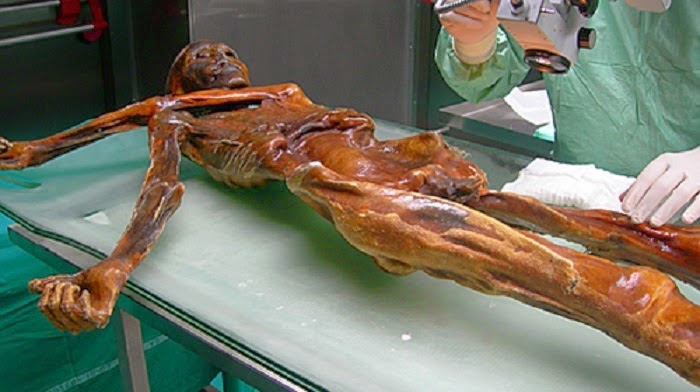
 I resti mummificati, vecchi di 5.300 anni, dell'Uomo di Ghiaccio  
[Fonte: Franco Rollo/AFP/Getty Image] 


Quasi tutto ciò che conosciamo su Venosto (Otzi): la sua intolleranza al lattosio, il suo aspetto da vivo etc, deriva dal piccolo prelievo per l'esame del suo DNA.
Adesso, abbiamo anche l'esame di un DNA non suo, non umano.
Si è giunti ad identificarlo procedendo ad un esame di tutto lo spettro del DNA presente, per potere stabilire di fronte a che cosa ci si trovasse: quali organismi fossero presenti nel campione e quale potesse essere la loro funzione.
Questo DNA non umano che è stato rinvenuto deriva in gran parte da organismi batterici che di norma vivono su oppure dentro il nostro corpo.
Solo l'interazione tra certi batteri, oppure un disequilibrio all'interno della comunità di batteri può causare certe malattie. Per questo motivo è importante comprendere bene la composizione batterica presente in modo da ricostruirne correttamente la popolazione. 


A team of scientists from EURAC in Bolzano/Bozen together with colleagues from  the University of Vienna successfully analysed the non-human DNA in the sample  
[Credit: Frank Maixner (EURAC)]


 Inaspettatamente, la squadra multidisciplinare di scienziati (bioinformatici, genetisti, microbiologi) ha identificato nel DNA presente un batterio in particolare, noto come Treponema Denticola, (una spirocheta che è parente del Treponema Pallidum, responsabile della sifilide). Si tratta di un opportunista patogeno, responsabile della parodontite.

Ancora più sorprendente è il fatto che un minuscolo campione d'osso possa ancora - dopo 5300 anni - fornire l'informazione fisiopatologica precisa di una trasmissione per via 
ematogena  di un patogeno partito dalla bocca ed arrivato via sangue fino all'osso dell'anca.

I batteri sono antichi, non recenti: non hanno colonizzato il corpo di recente, bensì lo avevano già fatto al momento della morte.
Gli scienziati hanno anche identificato forme Clostridio-simili  che sono attualmente allo stato dormiente.
In condizioni di anaerobiosi e in ambiente sigillato, però, questi microorganismi sono capaci di riprendere la propria crescita e ricominciare a degradare i tessuti.
A parte l'ispirazione per un nuovo filone di fantascienza, queste notizie saranno preziose per creare e mantenere le condizioni più adatte ad una corretta preservazione della Mummia di similaun.
Per esempio, l'atmosfera fondamentalmente azotata che s'impiega per conservare oggetti di grande valore culturale dovrà essere accoppiata ad un regolare controllo microbiologico in questo caso.

Source: European Academy of Bozen/Bolzano [July 15, 2014]

Read more at: http://archaeologynewsnetwork.blogspot.it/2014/07/otzis-non-human-dna.html?utm_source=feedburner&utm_medium=feed&utm_campaign=Feed:+TheArchaeologyNewsNetwork+(The+Archaeology+News+Network)#.U8uSeSh7DfW
Follow us: @ArchaeoNewsNet on Twitter | groups/thearchaeologynewsnetwork/ on Facebook

venerdì 9 maggio 2014

PIETRA SOPRA

 Il controverso - ma attivissimo ed attento -  blog di antropologia "Dienekes" riporta un articolo scientifico (dalla rivista PLoS Genetics) che (se ce ne fosse ancora bisogno) mette definitivamente una pietra tombale sul caso della molto desiderata ma solo presunta 'sardità' dell'Uomo di Ghiaccio di Similaun. E' una facile questione di prospettive: per chi non volesse perdersi nelle parole, basta guardare le cartine per comprendere che Otzi (e gli altri Nord Europei con similitudini nel genoma con i Sardi), non sono eredi, bensì antenati dei Sardi.


Ancient DNA from the Balkans (Iron Age Thrace)

A new paper in PLoS Genetics presents new data from two Iron Age Thracian individuals and puts the Sardinian-ness of Oetzi in new context. The authors write:
The results of the analyses including additional ancient genomes provide mounting evidence that the Iceman's genetic affinity with Sardinians reflects an ancestry component that was widespread in Europe during the Neolithic. Despite their different geographic origins, both the Swedish farmer gok4 and the Thracian P192-1 closely resemble the Iceman in their relationship with Sardinians, making it unlikely that all three individuals were recent migrants from Sardinia. Furthermore, P192-1 is an Iron Age individual from well after the arrival of the first farmers in Southeastern Europe (more than 2,000 years after the Iceman and gok4), perhaps indicating genetic continuity with the early farmers in this region. The only non-HG individual not following this pattern is K8 from Bulgaria. Interestingly, this individual was excavated from an aristocratic inhumation burial containing rich grave goods, indicating a high social standing, as opposed to the other individual, who was found in a pit [15]. However, the DNA damage pattern of this individual does not appear to be typical of ancient samples (Table S4 in [15]), indicating a potentially higher level of modern DNA contamination. On the other hand, the Swedish and the Iberian hunter-gatherers show congruent patterns of relatedness to the modern populations of Northern Europe, which is consistent with the previous results using those samples.
Also of interest, given previous suggestions that the Iceman had more Neandertal ancestry than modern Europeans:
However, all D-tests involving another non-African population do not significantly deviate from zero, suggesting that the Iceman genome contains levels of archaic ancestry that are comparable to that of other non-African populations.
A model of European history is seen on the left. Some details are probably incorrect (e.g., Sardinian Neolithic probably followed the Cardial/Mediterranean route rather the one shown in C). There are no good ancient DNA from Cardial Neolithic farmers, so the fact that Sardinians are similar to the Iron Age Bulgarian, the Stuttgart LBK German, and the Swedish TRB farmers may mean that the Mediterranean/Cardial farmers were related to the ones that went into Europe following the inland route from the Balkans.

In any case, the fact that there are now data from Bulgaria is great, because it means that southern Europe is not hopeless for ancient DNA preservation and hopefully more is on its way.

PLoS Genet 10(5): e1004353. doi:10.1371/journal.pgen.1004353

Population Genomic Analysis of Ancient and Modern Genomes Yields New Insights into the Genetic Ancestry of the Tyrolean Iceman and the Genetic Structure of Europe 

Martin Sikora et al.

Genome sequencing of the 5,300-year-old mummy of the Tyrolean Iceman, found in 1991 on a glacier near the border of Italy and Austria, has yielded new insights into his origin and relationship to modern European populations. A key finding of that study was an apparent recent common ancestry with individuals from Sardinia, based largely on the Y chromosome haplogroup and common autosomal SNP variation. Here, we compiled and analyzed genomic datasets from both modern and ancient Europeans, including genome sequence data from over 400 Sardinians and two ancient Thracians from Bulgaria, to investigate this result in greater detail and determine its implications for the genetic structure of Neolithic Europe. Using whole-genome sequencing data, we confirm that the Iceman is, indeed, most closely related to Sardinians. Furthermore, we show that this relationship extends to other individuals from cultural contexts associated with the spread of agriculture during the Neolithic transition, in contrast to individuals from a hunter-gatherer context. We hypothesize that this genetic affinity of ancient samples from different parts of Europe with Sardinians represents a common genetic component that was geographically widespread across Europe during the Neolithic, likely related to migrations and population expansions associated with the spread of agriculture.

Link

domenica 2 febbraio 2014

La SELCE di OTZI


Dalla rivista: Past Horizons


Otzi's Flint: a one sided relationship


di Alexander Binsteiner

Dipl.Geol.Univ. Alexander Binsteiner examined in his thesis the chert deposit of Baierdorf at Ried castle in Altmühltal. After that, he was a field director of excavations at the flint mine of Arnhofen near Abensberg. From 1993-96 he was chief geologist of the Ötzi Project at the University of Innsbruck. Today he divides his time as a freelance geoarchaeologist between Austria, Bavaria and the Czech Republic.


More than 20 years have passed since the well preserved mummy of Ötzi was discovered on the Ötztal Alps near the Similaun mountain and Hauslabjochon at the border between Austria and Italy. One of the first studies carried out after the discovery, was to determine the origin of flint tools that “The Iceman” (who lived around 3,300 BCE) was carrying with him when he died, as they promised valuable information to understanding his environment and connections.
Flintmine locations and artefact findspots by source. 1 Arbon; 2 Hornstaad; 3 Allensbach; 4 Federseemoor; 5 Pestenacker;  6 Roseninsel im Starnberger See; 7 Landshut; 8 Eichendorf; 9 Straubing; 10 Fürstenzell; 11 Ansfelden; 12 Engerwitzdorf;13 Laussa; 14 See am Mondsee; 15 Seewalchen;  16 Salzburg; 17 Ainring; 18 Chiemgau; 19 Wasserburg am Inn; (c) Alexander Binsteiner
Flintmine locations and artefact findspots by source. 1 Arbon; 2 Hornstaad; 3 Allensbach; 4 Federseemoor; 5 Pestenacker; 6 Roseninsel im Starnberger See; 7 Landshut; 8 Eichendorf; 9 Straubing; 10 Fürstenzell; 11 Ansfelden; 12 Engerwitzdorf;13 Laussa; 14 See am Mondsee; 15 Seewalchen; 16 Salzburg; 17 Ainring; 18 Chiemgau; 19 Wasserburg am Inn; (c) Alexander Binsteiner

An Italian connection

The trail led quickly to Monti Lessini, in the province of Verona, Italy. In the limestone strata of the mountain, flint deposits have been mined and then processed from prehistoric times to present day. It has even  been shown that Neanderthals knew this area as a rich source of flint.
From the 18th to the mid 19th century flint mining at Lessini underwent a revival, as the deposits were required in large quantities for the gunflints that sparked the guns of European armies.
During the lifetime of Ötzi (European Neolithic/Chalcolithic), Lessini flint was extracted in a number of quarries for the production of an array of tools and weapons, such as long narrow blades, sickle blade inserts, stalked arrowheads and flint daggers.(1)
1 Gray flint dagger from Allensbach am Bodensee (16.0 cm). 2 Dagger of yellow-brown flint near the Altheimer earthwork in the district of Landshut, Lower Bavaria (length 6.2 cm). 3 Finely retouched blade of Lessini flint (7.2 cm). © A. Binsteiner
1 Grey Lessinian flint dagger from Allensbach (16.0 cm). 2 Yellow-brown flint dagger of the Altheim culture in Landshut, Lower Bavaria (length 6.2 cm). 3 Finely retouched blade of Lessini flint from the Arnhofen Flintmine (7.2 cm). © A. Binsteiner

Recording the material

Discovery of the Lessini Neolithic flint mines in the mountains north of Verona produced tons of processed flint waste and equipment of various time periods,(2) and led to the cross referencing of characteristic typologies from known inventories of the Northern Alpine zone.
An initial microscopic examination immediately confirmed that artefacts from Northern Italian Stone Age cultures had been transported across the main Alpine ridge to the north. At this point in the assessment nothing further was considered concerning the implications for the movement of artefacts and materials.(3)

Bavarian archaeological sites

Numerous sites with Lessin flint artefacts were identified in both Upper and Lower Bavaria and often appeared in conjunction with flint tools originating from the more local Baierdorf and Arnhofen chert mines.
Blade and borer from Mondsee using Alpine Chert. © A. Binsteiner
Blade and borer from Mondsee using Arnhofen chert. © A. Binsteiner
In the area around the town of Landshut for example, there are several locations with this tool assemblage including the settlement site at Ergolding–Fischergasse(4) and Lessini type flint daggers are found at Altheim.(5) Several more of these daggers were located at Roseninsel in the Starnberger lake, near Straubing, in Eichendorf, Dingolfing-Landau and in Fuerstenzell.(6)
In fact, dozens of sites exhibited the same combination of  Lessini artefacts alongside Baierdorf Arnhofen chert tools.(7)

Cultural contexts

The assemblages of flint tools from several flint mine sources in a prehistoric settlement strongly suggests a connection between people from different cultural backgrounds within a region.
The Jurassic cherts from the mines of Baierdorf and Arnhofen were distributed through all phases of the Neolithic in Upper and Lower Bavaria. However, their occurrence is limited geographically to settlements north of the Alps with no known examples of this easily identifiable material found to the south.
However, the appearance of Lessini flints in the pile-dwelling settlements along the northern edge of the Alps shows a direction of movement of people heading south to north during the time that Ötzi lived in the fourth millennium BC.

Varying interpretations

The reasons for this are conjectural at the moment. Were Italian traders exchanging high quality flint including such items as daggers and finely retouched blades in the north? Or do these items perhaps represent the gift giving of copper prospectors in search of new deposits in the Alps, (already being exploited at Mitterberg im Pongau)? If so, they may have come across the lake dwellers of the Mondsee culture during their search.
Sickle blades from the Mondsee Culture. 1 Laussa, Bez. Steyr-Land; Länge: 13,3 cm; 2 Hart, Gem. Langenstein, Bez. Perg; Länge: 11,55 cm. 3 See am Mondsee, Bez. Vöcklabruck; Länge: 9,7 cm. © A. Binsteiner
This interpretation of the existing information could of course be wrong and it may represent Chalcolithic peoples from Northern Italy trying to take the resources by force; these items finding their way into the possession of the lake dwellers during conflict.

Understanding complex societies

The study is opening up new methodologies for understanding the complex societies that are emerging during this period. One clear conclusion is that the contemporaries of Ötzi living in the settlements of South Tyrol and Trentino knew about the cultures beyond the Alps, either directly having undertaken arduous journeys over the mountains themselves, or if not, through stories of the mountaineers who actually had.

A test of physical resilience

Those that did cross the Alps between north and south were not ordinary people. It was a test of physical resilience to cross these high mountains and it is obvious that Ötzi was such a person, and would have been familiar with those who traded valuable Lessini flints in return for a commodity that must have been worth the obvious risks.
Source: © 2014 Alexander Binsteiner
  • 1. L. Salzani, Preistoria in Valpolicella. Centro di documentazione per la storia delle Valpolicella. Verona 1981.
  • 2 A. Binsteiner, Ausgewählte Silexlagerstätten und deren Abbau in den Provinzen Trient und Verona. Arch. Korrbl. 24, 1994, 255-263.
  • 3  K. Spindler, Der Mann im Eis. München 2000, 326-327.
  • 4  B. S. Ottaway, Ergolding-Fischergasse – Eine Feuchtbodensiedlung der Altheimer Kultur in Niederbayern. Materialh. Bayer. Vorgesch. 68, Kallmünz 1995, 130-132.
  • 5  Dazu: A. Binsteiner, Materialinterferenzen im Verbreitungsgebiet bayerischer Jurahornsteine in Mittel- und Osteuropa. Arch. Korrbl. 34, 2004, 171; zuletzt: Ders., Drehscheibe Linz – Steinzeithandel an der Donau. Linzer Arch Forsch 37, Linz 2006, 56, Abb. 22.
  • 6  Dazu Anm. 5. Linzer Arch Forsch 37, Linz 2006, 57, Abb. 23.
  • 7  D. Underwood, The research potential of chert industries from the later neolithic wetland settlements of the alpine foreland: a case study from Pestenacker Germany. In: M.A. Bustillo/A. Ramos-Millan (Hrsg.), VI. Internat. Flint Symposium Abstracts (Madrid, Bilbao, Granada 1991) 277-280. – Ders., Silexmaterial aus der jungneolithischen Feuchtbodensiedlung Pestenacker, Oberbayern und Umgebung. Dissertation, Frankfurt a. Main 2004.