Visualizzazione post con etichetta Palaeontology. Mostra tutti i post

mercoledì 14 ottobre 2015

Clonabile il Mammut lanoso?

Arctic expedition finds 

woolly mammoth remains 

ripe for cloning 

Breakingnews, Early Mammals, Fossils, Genetics, Palaeontology, Russia 


Russian scientists undertaking an exploratory expedition on the Lyakhovsky Islands have discovered woolly mammoth remains including skin and tusk, which they believe suitable for obtaining the DNA necessary to clone the animal. 


The mammoth expedition led by scientists from Russia's North-Eastern Federal  University in Yakutsk, and funded by the Russian Geographical Society  
[Credit: ©: gazetayakutia.ru] 


An international expedition to the Lyakhovsky Islands led by scientists from Russia's North-Eastern Federal University in Yakutsk has discovered six specimens of woolly 
mammoth fossils suitable for extracting DNA.

"The Lyakhovsky Islands are considered the mammoth continent," explained Semyon Grigorev, leader of the expedition to the islands and director of the Mammoth Museum at Russia's North-Eastern Federal University in Yakutsk. "The largest concentration of remains in the world is here, so that's why we chose this area to carry out our studies," Grigorev told a press conference on Wednesday.
 "To start with, together with archeologists we carried out a dig at the most northern site where ancient man lived, not far from the village of Kazachye where we found an enormous amount of mammoth bones, and also ancient tools," said Grigorev of the expedition, which took place over two stages from August 11 to September 29. 


The discovery is seen as highly significant by Russian and South Korean experts  working to bring the mammoths back to life through cloning 
[Credit: NVK]


"Then, after waiting a long time for the right weather conditions, we continued to the main target of our expedition, Great Lyakhovsky Island, where we found a great amount of unique remains," which includes ancient mammoth skin and teeth. 
"Take, for example, the tusk of a pygmy mammoth that we found. We calculate that the animal was no more than two meters tall, so now we have to work out what this was – a micropopulation, or the peculiarity of this single individual." 
"Skin is the most interesting for us, for our project 'The Mammoth Rebirth' because our Korean colleagues consider skin to be the best material for an attempt at cloning via the extraction of viable cells."
 The 'Northern Ecumene' expedition of 16 researchers from six different countries was made possible thanks to a grant of two million rubles provided by the Russian Geographical Society. 
"We consider the expedition a success; after all, out of what seems to be these kinds of small expeditions, great scientific discoveries can be made," said Grigorev, whose team is now joining forces with Korean researchers to analyze the mammoth remains for cells viable for cloning. 

Source: Sputnik News [October 09, 2015]

domenica 2 agosto 2015

CLIMA (mutazioni del) E CIVILTA' (livello di)


Abrupt climate change 

may have 

rocked the cradle of civilization 


Ancient Environment, ArchaeoHeritage, Archaeology, Breakingnews, Climate Change, Earth Science, Egypt, Iran, Iraq, Palaeontology 

New research reveals that some of the earliest civilizations in the Middle East and the Fertile Crescent may have been affected by abrupt climate change. These findings show that while socio-economic factors were traditionally considered to shape ancient human societies in this region, the influence of abrupt climate change should not be underestimated. 


The monumental ziggurat at the ancient city of Ur located in the  Thi Qar province, southern Iraq 
[Credit: The National] 


A team of international scientists led by researchers from the University of Miami (UM) Rosenstiel School of Marine and Atmospheric Science found that during the first half of the last interglacial period known as the Holocene epoch, which began about 12,000 years ago and continues today, the Middle East most likely experienced wetter conditions in comparison with the last 6,000 years, when the conditions were drier and dustier. "Evidence for wet early Holocene was previously found in the Eastern Mediterranean Sea region, North and East African lakes and cave deposits from Southwest Asia, and attributed to higher solar insolation during this period," said Ali Pourmand, assistant professor of marine geosciences at the UM Rosenstiel School, who supervised the project. "Our study, however, is the first of its kind from the interior of West Asia and unique in its resolution and multi-proxy approach." 


The Fertile Crescent 
[Credit: Encyclopædia Britannica] 


The Fertile Crescent, a region in west Asia that extends from Iran and the Arabian Peninsula to the eastern Mediterranean Sea and northern Egypt is one of the most climatically dynamic regions in the world and is widely considered the birthplace of early human civilizations. "The high-resolution nature of this record afforded us the rare opportunity to examine the influence of abrupt climate change on early human societies. We see that transitions in several major civilizations across this region, as evidenced by the available historical and archaeological records, coincided with episodes of high atmospheric dust; higher fluxes of dust are attributed to drier conditions across the region over the last 5,000 years," said Arash Sharifi, Ph.D. candidate at the department of marine geosciences and the lead author of the study. Climate variability during the past 5000 years as told by the concentration of titanium (Ti) in sediment core from Neor Lake, NW Iran. The vertical orange bands denote periods of dry and dusty condition, which correlate with historical records of drought and famine in Iranian Plateau, Mesopotamia and Eastern Mediterranean (brown and black horizontal bars respectively). 


Transition between ruling dynasties (gray arrows) in Iran and North Mesopotamia coincides with the episodes of dry and dusty condition in the region (peaks in Ti intensities) 
[Credit: Arash Sharifi]


The researchers investigated climate variability and changes in paleoenvironmental conditions during the last 13,000 years based on a high-resolution (sub-decadal to centennial) peat record from Neor Lake in Northwest Iran. Abrupt climate changes occur in the span of years to decades. 
The findings appear in the Quaternary Science Reviews.


Source: University of Miami Rosenstiel School of Marine & Atmospheric Science [July 27, 2015]

domenica 12 luglio 2015

Clima ed Evoluzione

Si sa quanto siano stretti i rapporti tra clima ed evoluzione 

dell'Uomo e della Vita in genere. Gli studi (interdisciplinari) 

producono sempre nuove prove scientifiche di questo fatto. 

Ecco un interessante articolo sugli effetti del vulcanismo.


Volcanic eruptions that changed human history 


Ancient Environment, ArchaeoHeritage, Archaeology, Breakingnews, Earth Science, Geology, Palaeontology 


It is well known that large volcanic eruptions contribute to climate variability. 
However, quantifying these contributions has proven challenging due to inconsistencies in both historic atmospheric data observed in ice cores and corresponding temperature variations seen in climate proxies such as tree rings. 


Strong and widespread cooling occurred in the immediate aftermath of large volcanic  eruptions as indicated by ice cores from Greenland [Credit: Michael Sigl] 


Published today in the journal Nature, a new study led by scientists from the Desert Research Institute (DRI) and collaborating international institutions, resolves these inconsistencies with a new reconstruction of the timing and associated radiative forcing of nearly 300 individual volcanic eruptions extending as far back as the early Roman period. "Using new records we are able to show that large volcanic eruptions in the tropics and high latitudes were the dominant drivers of climate variability, responsible for numerous and widespread summer cooling extremes over the past 2,500 years," said the study's lead author Michael Sigl, Ph.D., an assistant research professor at DRI and postdoctoral fellow with the Paul Scherrer Institute in Switzerland.
 "These cooler temperatures were caused by large amounts of volcanic sulfate particles injected into the upper atmosphere," Sigl added, "shielding the Earth's surface from incoming solar radiation." 
The study shows that 15 of the 16 coldest summers recorded between 500 BC and 1,000 AD followed large volcanic eruptions -- with four of the coldest occurring shortly after the largest volcanic events found in record. 
This new reconstruction is derived from more than 20 individual ice cores extracted from ice sheets in Greenland and Antarctica and analyzed for volcanic sulfate primarily using DRI's state-of-the-art, ultra-trace chemical ice-core analytical system. These ice-core records provide a year-by-year history of atmospheric sulfate levels through time. Additional measurements including other chemical parameters were made at collaborating institutions. "We used a new method for producing the timescale," explained Mai Winstrup, Ph.D., a postdoctoral researcher at the University of Washington, Seattle. "Previously, this has been done by hand, but we used a statistical algorithm instead. Together with the state-of-the-art ice core chemistry measurements, this resulted in a more accurate dating of the ice cores." "Using a multidisciplinary approach was key to the success of this project," added Sigl. 


Narrow and distorted tree-rings from long living bristlecone-pines (Snake Mountains,  Nevada, USA), indicating extreme cooling after a large volcanic eruption in 44 BCE,  the year of Julius Cesar's death [Credit: Matthew Salzer]


 In total, a diverse research group of 24 scientists from 18 universities and research institutes in the United States, United Kingdom, Switzerland, Germany, Denmark, and Sweden contributed to this work -- including specialists from the solar, space, climate, and geological sciences, as well as historians. The authors note that identification of new evidence found in both ice cores and corresponding tree rings allowed constraints and verification of their new age scale. "With the discovery of a distinctive signature in the ice-core records from an extra-terrestrial cosmic ray event, we had a critical time marker that we used to significantly improve the dating accuracy of the ice-core chronologies," explained Kees Welten, Ph.D., an associate research chemist from the University of California, Berkeley. A signature from this same event had been identified earlier in various tree-ring chronologies dating to 774-775 Common Era (CE). "Ice-core timescales had been misdated previously by five to ten years during the first millennium leading to inconsistencies in the proposed timing of volcanic eruptions relative to written documentary and tree-ring evidence recording the climatic responses to the same eruptions," explained Francis Ludlow, Ph.D., a postdoctoral fellow from the Yale Climate & Energy Institute. Throughout human history, sustained volcanic cooling effects on climate have triggered crop failures and famines. These events may have also contributed to pandemics and societal decline in agriculture-based communities. Together with Conor Kostick, Ph.D. from the University of Nottingham, Ludlow translated and interpreted ancient and medieval documentary records from China, Babylon (Iraq), and Europe that described unusual atmospheric observations as early as 254 years before Common Era (BCE).
 These phenomena included diminished sunlight, discoloration of the solar disk, the presence of solar coronae, and deeply red twilight skies. 


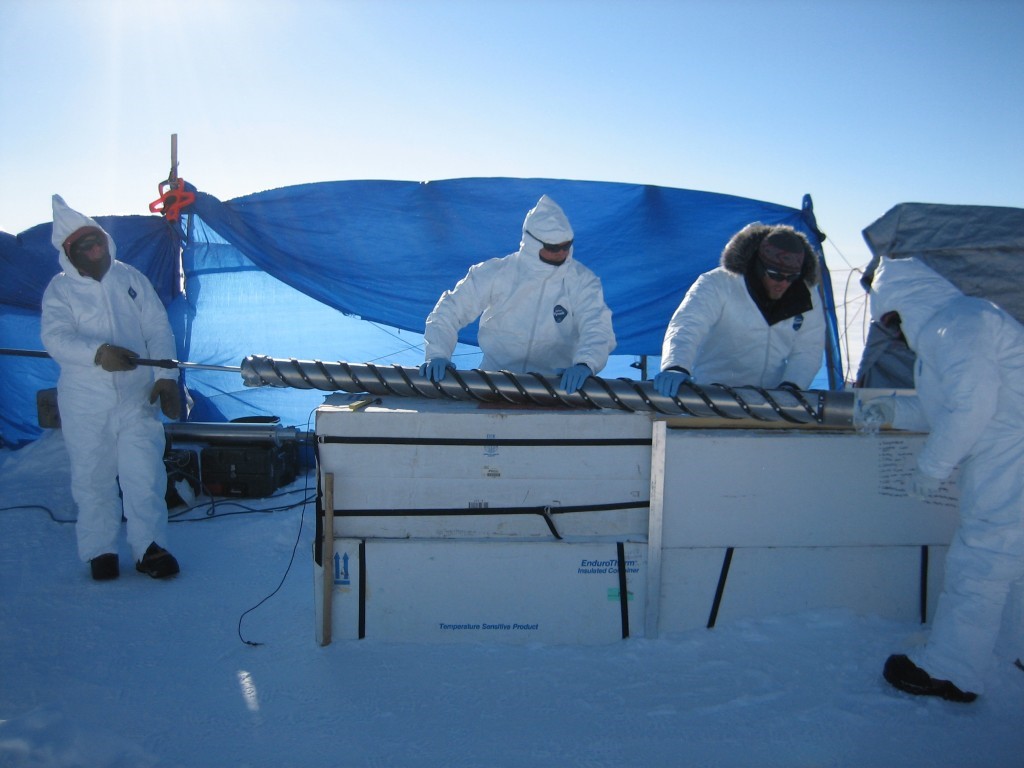
A freshly drilled ice-core from TUNU, Greenland containing a history of volcanic  eruptions is pushed out of the core barell [Credit: Olivia Maselli] 


Tropical volcanoes and large eruptions in the Northern Hemisphere high latitudes (such as Iceland and North America) -- in 536, 626, and 939 CE, for example -- often caused severe and widespread summer cooling in the Northern Hemisphere by injecting sulfate and ash into the high atmosphere. 
These particles also dimmed the atmosphere over Europe to such an extent that the effect was noted and recorded in independent archives by numerous historical eyewitnesses. Climatic impact was strongest and most persistent after clusters of two or more large eruptions. 
The authors note that their findings also resolve a long-standing debate regarding the causes of one of the most severe climate crises in recent human history, starting with an 18-month "mystery cloud" or dust veil observed in the Mediterranean region beginning in March, 536, the product of a large eruption in the high-latitudes of the Northern Hemisphere. 
The initial cooling was intensified when a second volcano located somewhere in the tropics erupted only four years later. In the aftermath, exceptionally cold summers were observed throughout the Northern Hemisphere. 
This pattern persisted for almost fifteen years, with subsequent crop failures and famines -- likely contributing to the outbreak of the Justinian plague that spread throughout the Eastern Roman Empire from 541 to 543 CE, and which ultimately decimated the human population across Eurasia. "This new reconstruction of volcanic forcing will lead to improved climate model simulations through better quantification of the sensitivity of the climate system to volcanic influences during the past 2,500 years," noted Joe McConnell, Ph.D., a DRI research professor who developed the continuous-flow analysis system used to analyze the ice cores. "As a result," McConnell added, "climate variability observed during more recent times can be put into a multi-millennial perspective -- including time periods such as the Roman Warm Period and the times of significant cultural change such as Great Migration Period of the 6th century in Europe." 
This reconciliation of ice-core records and other records of past environmental change will help define the role that large climatic perturbations may have had in the rise and fall of civilizations throughout human history. "With new high-resolution records emerging from ice cores in Greenland and Antarctica, it will be possible to extend this reconstruction of volcanic forcing probably all the way back into the last Ice Age," said Sigl. 


Source: Desert Research Institute [July 08, 2015]

sabato 21 febbraio 2015

I primi mammiferi


Earliest-known 

arboreal and subterranean 

ancestral mammals discovered 

  The fossils of two interrelated ancestral mammals, newly discovered in China, suggest that the wide-ranging ecological diversity of modern mammals had a precedent more than 160 million years ago. 


On the left are photos of the type specimen of Docofossor brachydactylus.  Docofossor was found in lake sediments of the Jurassic Ganggou fossil site  in Hebei Province of China. The fossil of Docofossor is preserved with dense  and carbonized furs around its skeleton. On the right is the fossil of  Agilodocodon scansorius. Found in lake sediments of the 165 million  years old Daohugou Fossil Site of Inner Mongolia of China, Agilodocodon  scansorius is preserved with a halo of dense, carbonized furs and hair  impressions. The horny claws on hands and feet are also preserved  [Credit: Zhe-Xi Luo, the University of Chicago] 


With claws for climbing and teeth adapted for a tree sap diet, Agilodocodon scansorius is the earliest-known tree-dwelling mammaliaform (long-extinct relatives of modern mammals). The other fossil, Docofossor brachydactylus, is the earliest-known subterranean mammaliaform, possessing multiple adaptations similar to African golden moles such as shovel-like paws. Docofossor also has distinct skeletal features that resemble patterns shaped by genes identified in living mammals, suggesting these genetic mechanisms operated long before the rise of modern mammals. These discoveries are reported by international teams of scientists from the University of Chicago and Beijing Museum of Natural History in two separate papers published Feb. 13 in Science (the papers can be found here and here). 
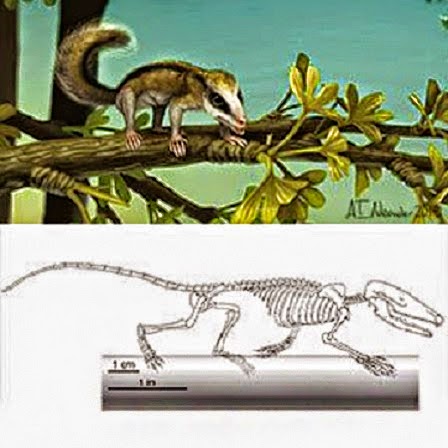


Skeletal and life style reconstructions of Agilodocodon scansorius, a docodont mammaliaform.  The skeletal features suggest that it was an agile and active animal living on trees.  Its incisors were specialized to feed on tree sap (exudate feeding), and its molars  suggest omnivorous feeding 
[Credit: April I. Neander/University of Chicago] 


"We consistently find with every new fossil that the earliest mammals were just as diverse in both feeding and locomotor adaptations as modern mammals," said Zhe-Xi Luo, PhD, professor of organismal biology and anatomy at the University of Chicago and an author on both papers. "The groundwork for mammalian success today appears to have been laid long ago." Agilodocodon and Docofossor provide strong evidence that arboreal and subterranean lifestyles evolved early in mammalian evolution, convergent to those of true mammals. These two shrew-sized creatures -- members of the mammaliaform order Docodonta -- have unique adaptations tailored for their respective ecological habitats.
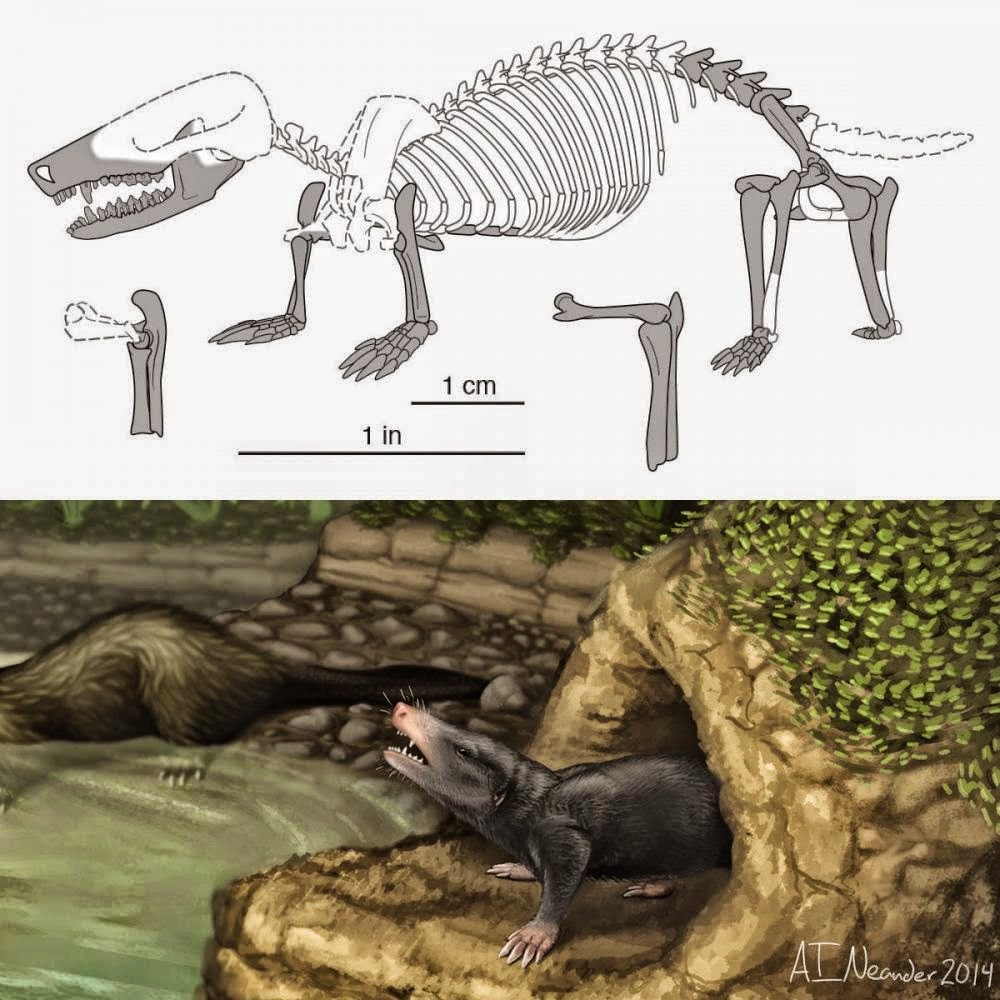


 Skeletal and life style reconstructions of Docofossor brachydactylus. Docofossor lived  in burrows on the lakeshore and fed on the worms and insects in the soil. Docofossor  is also unique in that it has one segment fewer of finger bone segments than most  other mammals, suggesting that it had a unique embryonic development  of its hands and feet [Credit: April I. Neander/University of Chicago] 


Agilodocodon, which lived roughly 165 million years ago, had hands and feet with curved horny claws and limb proportions that are typical for mammals that live in trees or bushes. It is adapted for feeding on the gum or sap of trees, with spade-like front teeth to gnaw into bark. This adaptation is similar to the teeth of some modern New World monkeys, and is the earliest-known evidence of gumnivorous feeding in mammaliaforms. Agilodocodon also had well-developed, flexible elbows and wrist and ankle joints that allowed for much greater mobility, all characteristics of climbing mammals. "The finger and limb bone dimensions of Agilodocodon match up with those of modern tree-dwellers, and its incisors are evidence it fed on plant sap," said study co-author David Grossnickle, graduate student at the University of Chicago. "It's amazing that these arboreal adaptions occurred so early in the history of mammals and shows that at least some extinct mammalian relatives exploited evolutionarily significant herbivorous niches, long before true mammals." 


An illustration of Agilodocodon and Docofossor. The skeletal features  of Agilodocodon (top left) suggeset it was an agile and active  arboreal animal. The skeletal features of Docofossor (bottom right)  suggest it lived in burrows and fed on worms and insects  [Credit: April I. Neander/University of Chicago] 


Docofossor, which lived around 160 million years ago, had a skeletal structure and body proportions strikingly similar to the modern day African golden mole. It had shovel-like fingers for digging, short and wide upper molars typical of mammals that forage underground, and a sprawling posture indicative of subterranean movement. Docofossor had reduced bone segments in its fingers, leading to shortened but wide digits. African golden moles possess almost the exact same adaptation, which provides an evolutionary advantage for digging mammals. This characteristic is due to the fusion of bone joints during development -- a process influenced by the genes BMP and GDF-5. Because of the many anatomical similarities, the researchers hypothesize that this genetic mechanism may have played a comparable role in early mammal evolution, as in the case of Docofossor. The spines and ribs of both Agilodocodon and Docofossor also show evidence for the influence of genes seen in modern mammals. Agilodocodon has a sharp boundary between the thoracic ribcage to lumbar vertebrae that have no ribs. However, Docofossor shows a gradual thoracic to lumber transition. These shifting patterns of thoracic-lumbar transition have been seen in modern mammals and are known to be regulated by the genes Hox 9-10 and Myf 5-6. That these ancient mammaliaforms had similar developmental patterns is an evidence that these gene networks could have functioned in a similar way long before true mammals evolved. "We believe the shortened digits of Docofossor, which is a dead ringer for modern golden moles, could very well have been caused by BMP and GDF," Luo said. "We can now provide fossil evidence that gene patterning that causes variation in modern mammalian skeletal development also operated in basal mammals all the way back in the Jurassic." 


Stem mammaliaforms—also known as stem mammals—are long-extinct relatives to   the extant mammals (crown Mammalia). Docodonts are a lineage of stem mammaliaforms.  Their morphologies provide evidence for the ancestral mammalian condition.  Their functional adaptations provide new insight on the ecological diversification  of the earliest mammals 
[Credit: April I. Neander/University of Chicago]


 Early mammals were once thought to have limited ecological opportunities to diversify during the dinosaur-dominated Mesozoic era. However, Agilodocodon, Docofossor and numerous other fossils -- including Castorocauda, a swimming, fish-eating mammaliaform described by Luo and colleagues in 2006 -- provide strong evidence that ancestral mammals adapted to wide-ranging environments despite competition from dinosaurs. "We know that modern mammals are spectacularly diverse, but it was unknown whether early mammals managed to diversify in the same way," Luo said. "These new fossils help demonstrate that early mammals did indeed have a wide range of ecological diversity. It appears dinosaurs did not dominate the Mesozoic landscape as much as previously thought." 

Author: Kevin Jiang 

Source: University of Chicago [February 14, 2015]

sabato 14 febbraio 2015

GREEN SAHARA

Rapid end of the Green Sahara 8000 years ago 

9,000 years ago most of the Sahara was not the ultra-arid desert as we know it today. Due to higher precipitation it was covered by large lakes and savannah that were populated by herds of wild game. Scientists from the GEOMAR Helmholtz Centre for Ocean Research Kiel and the Royal Netherlands Institute for Sea Research (NIOZ) now have discovered that vegetation at the end of the Green Sahara disappeared much faster than previously assumed. This probably forced the Neolithic populations to start farming. The study has been published in the international open-access journal PLOS ONE. 


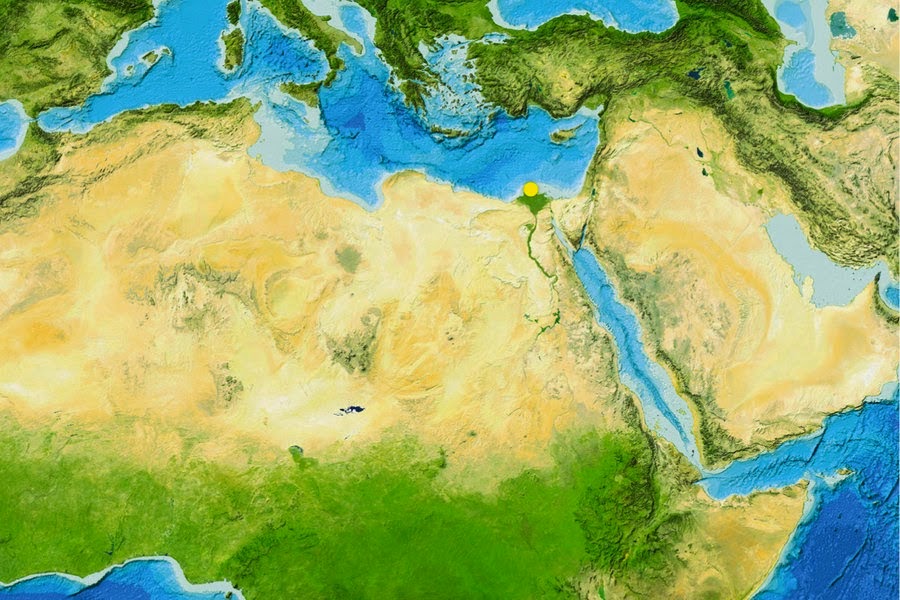
The Sahara is one of the most arid regions in the world. 9000 years ago, it was a green  savannah. Details on the transition could now be reconstructed from samples obtained  off the the mouth of the river Nile in the Mediterranean (yellow dot) [Credit: GEBCO world map 2014] 


Reconstructing the climate of the past is an important tool for scientists to better understand and predict future climate changes. This also applies to the relationships between human activities and environmental changes. In that respect, the Sahara Desert and the Nile valley are key areas since they underwent drastic environmental modification during the course of the last 10,000 years. In the same period, called Holocene by scientists, they were as well the scene of crucial steps of human evolution. At the beginning of the Holocene precipitation in northern Africa was much higher than today. The Sahara was a green savannah where large herds of wild game lived. But in the following millennia the region became one of the most arid areas on Earth. Now researchers from the GEOMAR Helmholtz Centre for Ocean Research Kiel and the Royal Netherlands Institute for Sea Research (NIOZ) have discovered that the vegetation in the Sahara changed much faster than previously assumed. “Though the changes in temperatures and precipitation needed millennia, the vegetation changed dramatically in the course of centuries or even decades”, says Dr. Cecile Blanchet. She is lead author of the study. The initial forcing of the climatic changes during the Holocene was a southward migration of the African monsoon and its associated rain belt. “But there are large regional discrepancies in timing and intensity of the changes, the underlying mechanisms of which remain equivocal”, explains Professor Martin Frank, palaeo-oceanographer at GEOMAR and co-author of the study. During the same epoch, Neolithic human populations also underwent important evolution, such as the initiation of food production and the sedentariness of previously mobile hunter-gatherer populations. 


Approximately 8,000 year-old rock carvings of two giraffes from Dabous, Niger,  documenting that the Sahara was a green fertile Savannah at that time [Credit: Albert Backer/WikiCommons] 


“Providing a more precise timeframe for the wet-dry transition at the end of the African Humid Period is therefore crucial to understand early human-environment relationships”, adds Professor Stefan Schouten from NIOZ, also co-author. For the study Blanchet, Frank and Schouten analyzed a marine sediment core collected off the mouth of the Nile River in 700 metres depth by the German research vessel POSEIDON. Using an innovative combination of geochemical methods they were able to detect traces of the vegetation and eroded soil which had been transported by the river down to the Mediterranean. This allowed them to precisely reconstruct the changes in vegetation, erosion and river runoff in the Nile watershed and their driving mechanisms during the past 9500 years. This high-resolution reconstruction shows that a rapid degradation of the vegetation occurred about 8000 years ago while the overall river runoff only decreased gradually. These asynchronous changes highlight the role of threshold mechanisms in controlling the timing of environmental changes. Furthermore, the rapid shifts in vegetation and sediment source occurred earlier than in other regional records and may have exerted a significant pressure on the Neolithic population in northern Africa. “Maybe these fast changes forced people to use domesticated cattle as a sustainable food resource instead of hunting and gathering”, says Dr. Blanchet. Finally the aridification may have forced most of the population to move to the fertile Nile valley, which ultimately gave rise to the development of the high cultures of the Egyptian Pharaonic Kingdoms. "Of course, further research is needed to confirm this relationship between climate and human evolution. But with our results, we have strong evidence that even a slow climate change can cause rapid and dramatic changes in the environment, which would surely impact human societies" says Dr. Blanchet. 

Source: GEOMAR Helmholtz Centre for ocean research [February 10, 2015] 

venerdì 21 novembre 2014

DI CAVALLI, RINOCERONTI E TAPIRI

I Perissodattili (ungulati dispari, relativamente alle zampe posteriori) hanno una comune origine? Sì, e si sapeva già. 

Ma che avessero avuto una comune origine nel sub-Continente Indiano quando questo era ancora un'isola che viaggiava sicura verso l'ineluttabile scontro con il Continente Asiatico (per dare origine alla più alta catena mondiale di montagne), questo è una novità, offerta dalla Johns Hopkins University.


Vi esisteva uno strano animale, il Cambaytherium thewissi  (la cui ricostruzione sembra il disegno di un bambino), che - a quanto sembra - è il più antico progenitore mai scoperto  del gruppo dei perissodattili: la data dei fossili è 54,5 milioni di anni fa.
La scoperta è stata fatta per caso, nel corso di lavori di scavo ai margini di una miniera di carbone, presso Mumbay, in India. I lavori sono stati finanziati dalla National Geographic Society.


Horses and rhinos originated on Asian subcontinent while it was still an island 


Working at the edge of a coal mine in India, a team of Johns Hopkins researchers and colleagues have filled in a major gap in science's understanding of the evolution of a group of animals that includes horses and rhinos.

That group likely originated on the subcontinent when it was still an island headed swiftly for collision with Asia, the researchers report Nov. 20 in the online journal Nature Communications. 


An artist’s depiction of Cambaytherium thewissi  
[Credit: Elaine Kasmer]


Modern horses, rhinos and tapirs belong to a biological group, or order, called Perissodactyla
Also known as "odd-toed ungulates," animals in the order have, as their name implies, an uneven number of toes on their hind feet and a distinctive digestive system. Though paleontologists had found remains of Perissodactyla from as far back as the beginnings of the Eocene epoch, about 56 million years ago, their earlier evolution remained a mystery, says Ken Rose, Ph.D., a professor of functional anatomy and evolution at the Johns Hopkins University School of Medicine. 
Rose and his research team have for years been excavating mammal fossils in the Bighorn Basin of Wyoming, but in 2001 he and Indian colleagues began exploring Eocene sediments in Western India because it had been proposed that perissodactyls and some other mammal groups might have originated there. 
In an open-pit coal mine northeast of Mumbai, they uncovered a rich vein of ancient bones. Rose says he and his collaborators obtained funding from the National Geographic Society to send a research team to the mine site at Gujarat in the far Western part of India for two weeks at a time once every year or two over the last decade. 
The mine yielded what Rose says was a treasure trove of teeth and bones for the researchers to comb through back in their home laboratories. 
Of these, more than 200 fossils turned out to belong to an animal dubbed Cambaytherium thewissi, about which little had been known. 
The researchers dated the fossils to about 54.5 million years old, making them slightly younger than the oldest known Perissodactyla remains, but, Rose says, it provides a window into what a common ancestor of all Perissodactyla would have looked like. 
"Many of Cambaytherium's features, like the teeth, the number of sacral vertebrae, and the bones of the hands and feet, are intermediate between Perissodactyla and more primitive animals," Rose says. 
"This is the closest thing we've found to a common ancestor of the Perissodactyla order." Cambaytherium and other finds from the Gujarat coal mine also provide tantalizing clues about India's separation from Madagascar, lonely migration, and eventual collision with the continent of Asia as Earth's plates shifted, Rose says. In 1990, two researchers, David Krause and Mary Maas of Stony Brook University, published a paper suggesting that several groups of mammals that appear at the beginning of the Eocene, including primates and odd- and even-toed ungulates, might have evolved in India while it was isolated. Cambaytherium is the first concrete evidence to support that idea, Rose says. 
But, he adds, "It's not a simple story."
 "Around Cambaytherium's time, we think India was an island, but it also had primates and a rodent similar to those living in Europe at the time," he says. 
"One possible explanation is that India passed close by the Arabian Peninsula or the Horn of Africa, and there was a land bridge that allowed the animals to migrate. 
But Cambaytherium is unique and suggests that India was indeed isolated for a while." Rose said his team was "very fortunate that we discovered the site and that the mining company allowed us to work there," although he added, "it was frustrating to knowing that countless fossils were being chewed up by heavy mining equipment." 
When coal extraction was finished, the miners covered the site, he says. His team has now found other mines in the area to continue digging.


Source: Johns Hopkins Medicine 

[November 20, 2014]


sabato 16 agosto 2014

'Nuovi' rettili volanti.

Bones from nearly 50 ancient flying reptiles 

discovered

   Scientists discovered the bones of nearly 50 winged reptiles from a new species, Caiuajara dobruskii, that lived during the Cretaceous in southern Brazil, according to a study published August 13, 2014 in the open-access journal PLOS ONE by Paulo Manzig from Universidade do Contestado, Brazil, and colleagues. 


This is a reconstruction of three ontogenetic (growth) stages of the new pterosaur  Caiuajara dobruskii 
[Credit: Maurilio Oliveira/Museu Nacional-UFRJ] 


The authors discovered the bones in a pterosaur bone bed in rocks from the Cretaceous period. They belonged to individuals ranging from young to adult, with wing spans ranging from 0.65-2.35m, allowing scientists to analyze how the bones fit into their clade, but also how the species developed as it matured. 
After the initial analysis, scientists determined that the bones represent a new pterosaur, Caiuajara dobruskii, which is the southernmost known occurrence of this particular clade. Several features of the Caiuajara dobruskii head differ from all other members of this clade, including the presence of a bony expansion projecting inside the large opening in the skull in front of the eyes, and the rounded depressions in the outer surface of the jaw. Younger and older reptiles mainly varied in the size and angle of the bony crest on the top of the head. The crest appeared to change from small and inclined in juveniles, to large and steep in adults. According to the authors, the bone analysis suggests this species was gregarious, lived in colonies and may have been able to fly at a very young age.

Source: PLOS [August 13, 2014]

venerdì 1 agosto 2014

Entomologia nell'Ambra preistorica

Decades-old amber collection offers new views of a 


lost world 


Scientists are searching through a massive collection of 20-million-year-old amber found in the Dominican Republic more than 50 years ago, and the effort is yielding fresh insights into ancient tropical insects and the world they inhabited. 


Sir David Attenborough narrates and appears in a video about the digital curation of a  20-million-year-old amber collection at the Illinois Natural History Survey at Illinois 
[Credit: Kaitlin and Kevin Southworth] 


When the collection is fully curated, a task that will take many years, it will be the largest unbiased Dominican amber collection in the world, the researchers report. 
Perhaps the most striking discovery thus far is that of a pygmy locust, a tiny grasshopper the size of a rose thorn that lived 18- to 20-million years ago and fed on moss, algae and fungi. 
The specimen is remarkable because it represents an intermediate stage of evolution in the life of its subfamily of locusts (known as the Cladonotinae). 
The most ancient representatives of this group had wings, while modern counterparts do not. 
The newly discovered locust has what appear to be vestigial wings — remnant structures that had already lost their primary function. "Grasshoppers are very rare in amber and this specimen is extraordinarily well-preserved," said Sam Heads, a paleontologist at the Illinois Natural History Survey, a division of the Prairie Research Institute at the University of Illinois. 


Scientists have found a fossilized pygmy locust that represents an intermediate stage  in the evolution of this group of insects [Credit: Sam Heads] 


Heads, laboratory technician Jared Thomas and study co-author Yinan Wang found the new specimen a few months after the start of their project to screen more than 160 pounds of Dominican amber collected in the late 1950s by former INHS entomologist Milton Sanderson. 
Sanderson described several specimens from the collection in a paper in Science in 1960, a report that inspired a generation of scientists to seek out and study Dominican amber, Heads said. 
The bulk of the Sanderson amber collection remained in storage, however, until Heads uncovered it in 2010. Heads has named the new pygmy locust Electrotettix attenboroughi, the genus name a combination of electrum (Latin from Greek, meaning "amber") and tettix (Greek, meaning "grasshopper"). 
The species is named for Sir David Attenborough, a British naturalist and filmmaker (not to be confused with Richard Attenborough, David's actor brother who appeared in the movie "Jurassic Park"). 
"Sir David has a personal interest in amber, and also he was one of my childhood heroes and still is one of my heroes and so I decided to name the species in his honor -- with his permission of course," Heads said. (Attenborough narrates and appears in a new video about the Sanderson collection and the specimen that bears his name.) 

The process of screening the amber is slow and painstaking. Much of the amber is clouded with oxidation, and the researchers must carefully cut and polish "windows" in it to get a good look at what's inside. 

In addition to the pygmy locust, Heads and his colleagues have found mating flies, stingless bees, gall midges, Azteca ants, wasps, bark beetles, mites, spiders, plant parts and even a mammal hair. 
The pygmy locust was found in a fragment that also contained wasps, ants, midges, plant remnants and fungi. 
Such associations are rich in information, Heads said, offering clues about the creatures' physiological needs and the nature of their habitat. 
"Fossil insects can provide lots of insight into the evolution of specific traits and behaviors, and they also tell us about the history of the time period," Heads said. "They're a tremendous resource for understanding the ancient world, ancient ecosystems and the ancient climate - better even, perhaps, than dinosaur bones." The discovery is reported in the journal ZooKeys. 

Source: University of Illinois at Urbana-Champaign [July 30, 2014]

Read more at: http://archaeologynewsnetwork.blogspot.it/2014/07/decades-old-amber-collection-offers-new.html?utm_source=feedburner&utm_medium=feed&utm_campaign=Feed:+TheArchaeologyNewsNetwork+(The+Archaeology+News+Network)#.U9tnWCh7DfW
Follow us: @ArchaeoNewsNet on Twitter | groups/thearchaeologynewsnetwork/ on Facebook